Green roofs and roof gardens require thorough study and planning
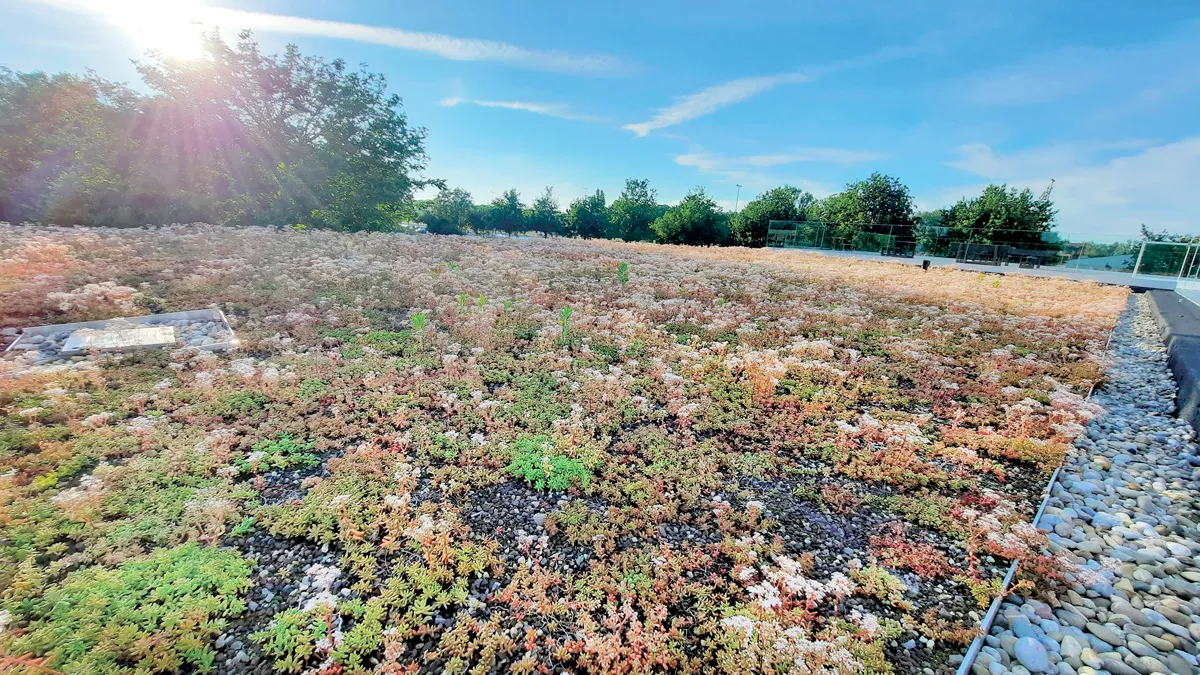
Every extra square metre of green space benefits nature, the climate and overall liveability. Driven by this belief, businesses and private individuals, as well as local authorities, have been investing more and more in green roofs and roof gardens in recent years. In principle, anything is possible today, from the simplest sedum roof to a fully fledged roof park with trees, paths and water features. However, designing, installing and maintaining them is not quite the same as doing so for a conventional garden. Here are some key considerations.
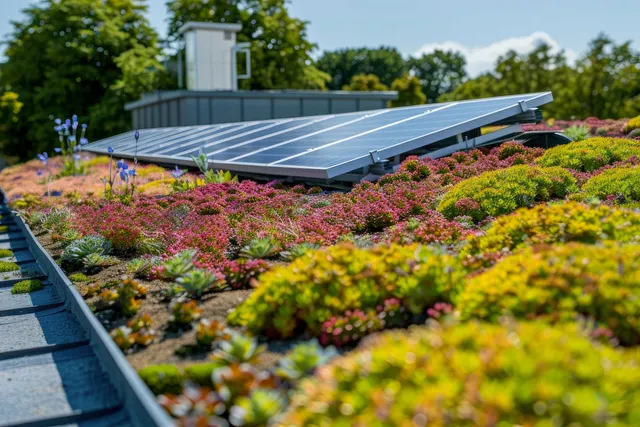
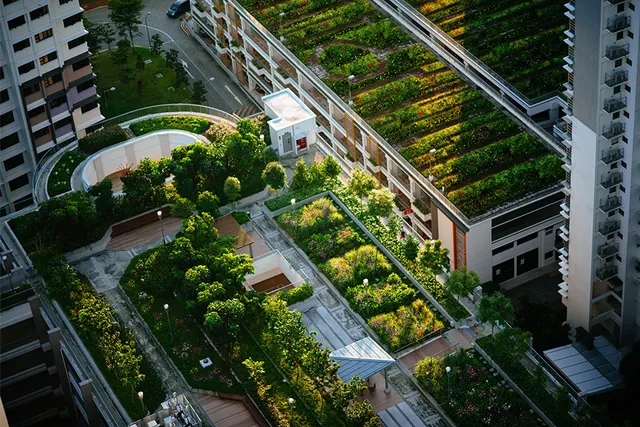
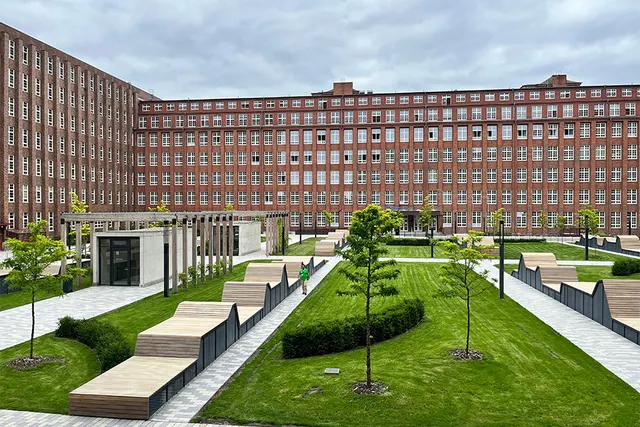
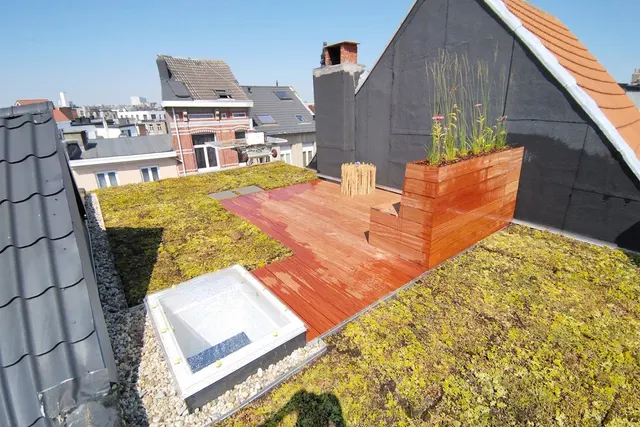
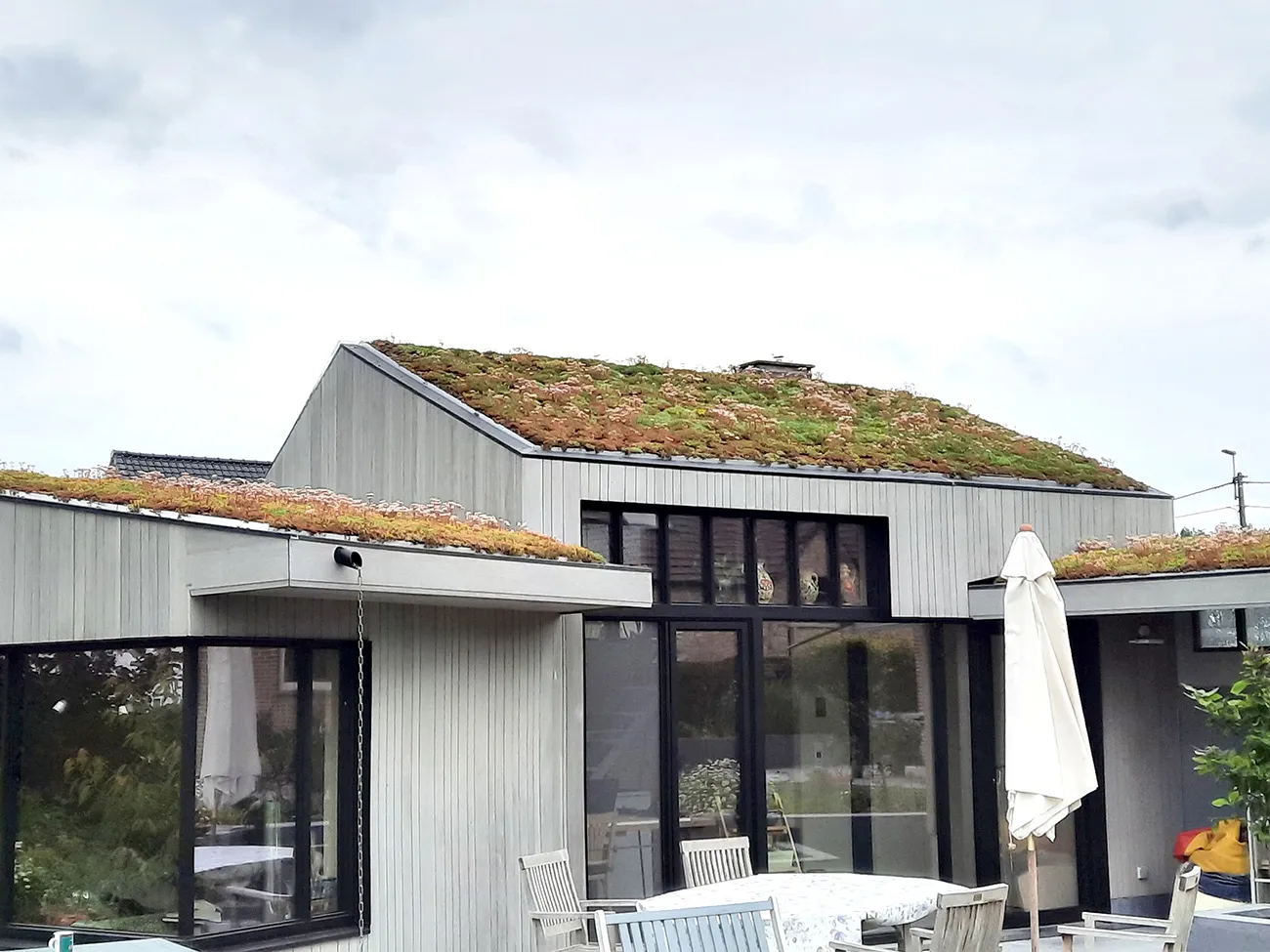
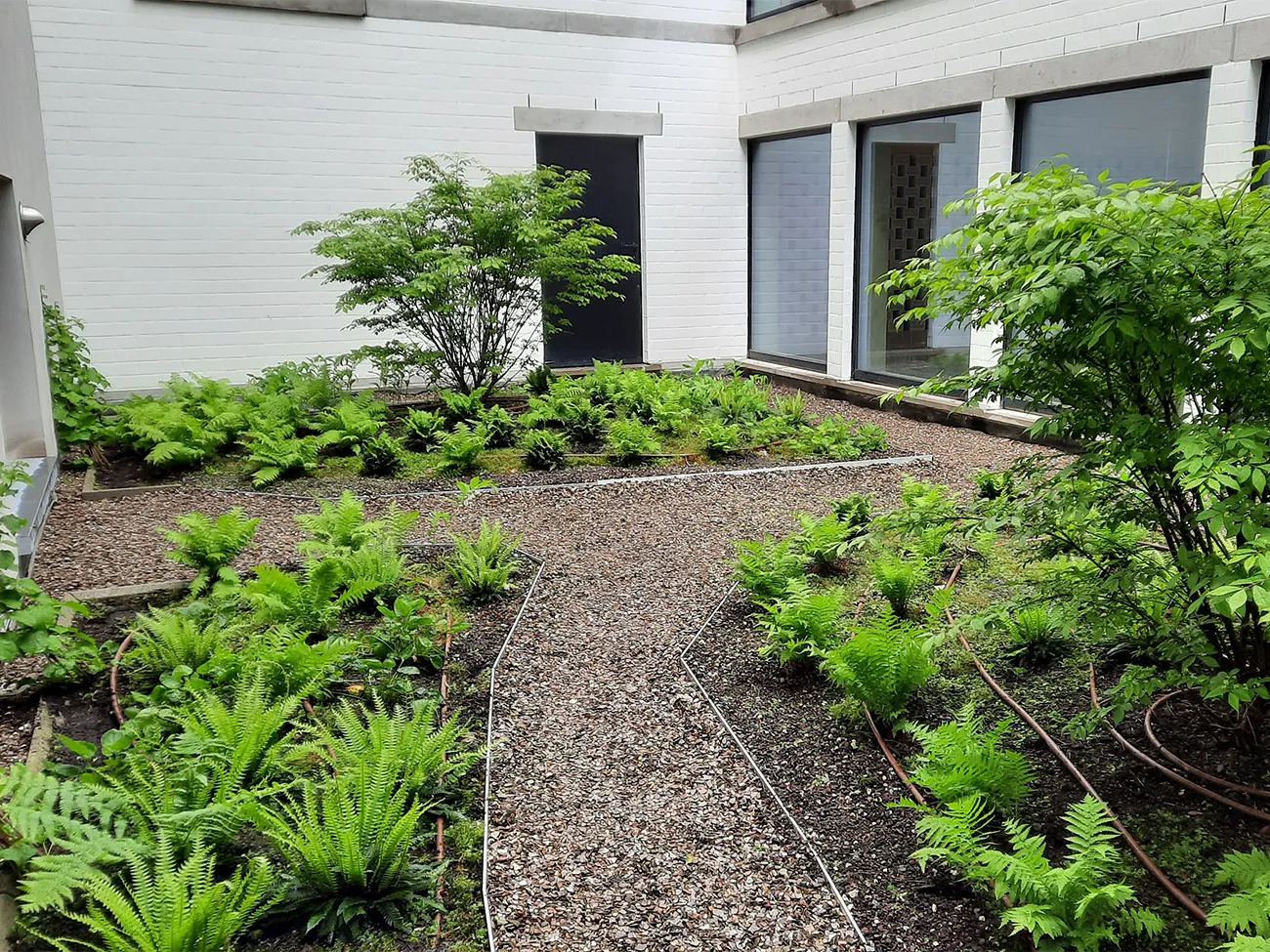
Green roofs come in many shapes and sizes, with the best-known distinction being between intensive and extensive green roofs. For a long time, private individuals tended to favour extensive roofs, featuring vegetation that can largely sustain itself. But, with the rise in high-profile intensive green roof projects, more and more people are now discovering the so-called roof garden. This features a wider variety of planting, including shrubs and multi-stemmed trees, and may even incorporate terraces, paths and other conventional garden features.
Make the most of the benefits
Whatever the type, every green roof offers a number of specific benefits. The first is its positive impact on biodiversity. Additional green space creates more opportunities for both flora and fauna, and even the simplest extensive green roof can support pollinator-friendly herbs and flowers. Other important environmental benefits include capturing particulate matter and CO2, and reducing the urban heat island effect.
The role of green roofs in sustainable water management is particularly relevant today. Rainwater that would otherwise flow directly from the roof into the sewer is retained by a green roof: it is first stored in the substrate and system build-up, then released gradually into the sewer, a rainwater tank, an infiltration facility or even other systems.
Climate considerations alone provide ample reason to green as much available roof space as possible. But there are other positive effects too. A green roof provides an extra protective layer over the roof waterproofing, limiting, for example, damage from UV-A radiation or hailstorms and thereby extending its lifespan.
Finally, a more subjective but no less significant benefit is the positive effect on the liveability of cities, both through the addition of green space and the gain in usable area.
Know your roof
In principle, a green roof can be installed on almost any roof, including pitched roofs. There is just one essential requirement: load-bearing capacity. With the exception of some specialist lightweight systems, a load-bearing capacity of 100 kg/m2 is the minimum for an extensive green roof. If the client has set their sights on a fully fledged roof garden, the saturated weight can quickly reach 500, 800 or even 1,000 kg/m2, depending on the planned layout and planting. Before proceeding with the design and installation, it is therefore essential to make sure that the roof can support such loads over the long term. For structural assessments, particularly on demanding projects, consult a structural engineer or another specialist partner.
Ideally, the roof waterproofing should also be thoroughly inspected before installation. If it is not intact, or is so old that problems may be expected within the next five to ten years, there is little point in starting the work. Once installed, it is very difficult and therefore costly to fix leaks or other problems beneath the green roof. If you are not sufficiently familiar with the potential risks, it is best to have a roofer inspect the roof. If there is a problem anywhere, have the roof waterproofing repaired first, of course.
Understand the impact of height
Given the wide range of possibilities, it may be tempting to think of installing a green roof or roof garden as ‘just’ a garden project at height. But working at that extra height is not quite so straightforward.
First, there are practical implications. You need to arrange vertical transport to get all the materials onto the roof, and scheduling is often less flexible than for a conventional garden project.
Second, working at height requires additional safety measures, including fall protection and appropriate personal protective equipment (PPE). Larger sites are also subject to a registration requirement.
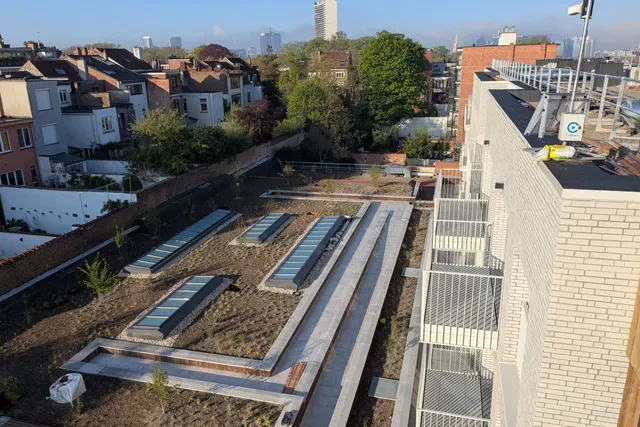
Larger projects must also meet additional fire safety standards, including requirements for sterile zones. At present, these are usually covered with gravel, but both WTCB and the Belgian Federation for Roof and Façade Greenery are investigating possible alternatives.
Finally, one factor to consider from the design stage onwards is the natural environment on the roof. This includes the depth and composition of the substrate, on the one hand, and the generally more extreme climatic conditions, on the other. These ultimately determine which plants can thrive on the roof, and conditions there are by no means always comparable with those for planting in open ground eight metres below. Choosing plants for intensive green roofs and roof gardens in particular requires specific experience and expertise, which can also be obtained from various manufacturers if needed.
Choose a durable system build-up
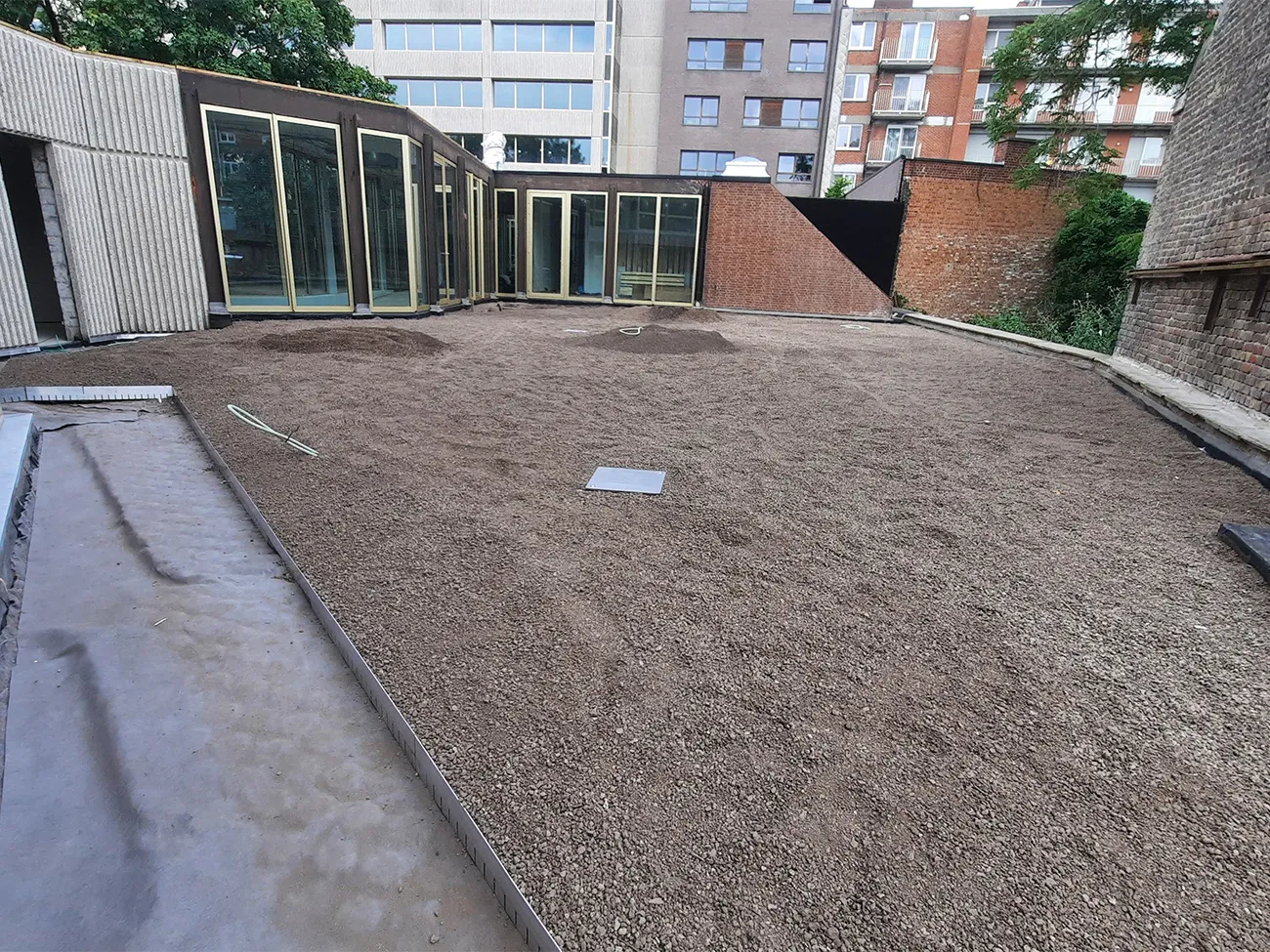
Planting is merely the finishing touch on a green roof. Beneath it is a complete system, comprising the substrate and drainage layer, among other components. To deliver a high-quality, durable green roof, the system build-up must meet a number of minimum requirements.
When it comes to the substrate, its composition is the first consideration. The organic material must, of course, be suited to the planned planting, but care must also be taken to avoid contaminated substrates or additives. German manufacturers verify substrate quality with the FLL label. In Belgium, the Federation for Roof and Façade Greenery is working on a comparable quality label. The same federation also specifies a minimum substrate depth of 6 centimetres, ideally 8 centimetres, combined with a water retention capacity of 35 litres/m2. This should ensure that green roofs do not simply wither during prolonged dry spells.
To prevent the system from becoming acidic over time, it is also important to allow for air circulation. Various drainage components on the market provide this function in addition to drainage and water retention.
Keep up with maintenance
Every natural system needs feeding. Maintenance on an extensive green roof is indeed minimal, but an annual application of fertiliser is still necessary, for example.
For intensive green roofs, the first two years are especially critical, while the system is still literally coming to maturity. After that, maintenance to keep it in good condition every two to three years is generally sufficient, although everything naturally depends on the specific design. If lawn areas are included, for example, they will also need regular mowing in summer.
In any case, it is very important to preserve the right plants and herbs and remove problematic species. Acacia, for example, has such an aggressive root system that it can even bore through the roof waterproofing, so it must always be removed. In short, maintenance also requires a clear understanding of the ecosystem developing on the roof.
Question about this story? Ask your question
Keep following this
Get an email when a new story is published. No account needed.
- ThemeGreen roofs and buildings
- SubjectGreen roofs