Key considerations when choosing a substrate
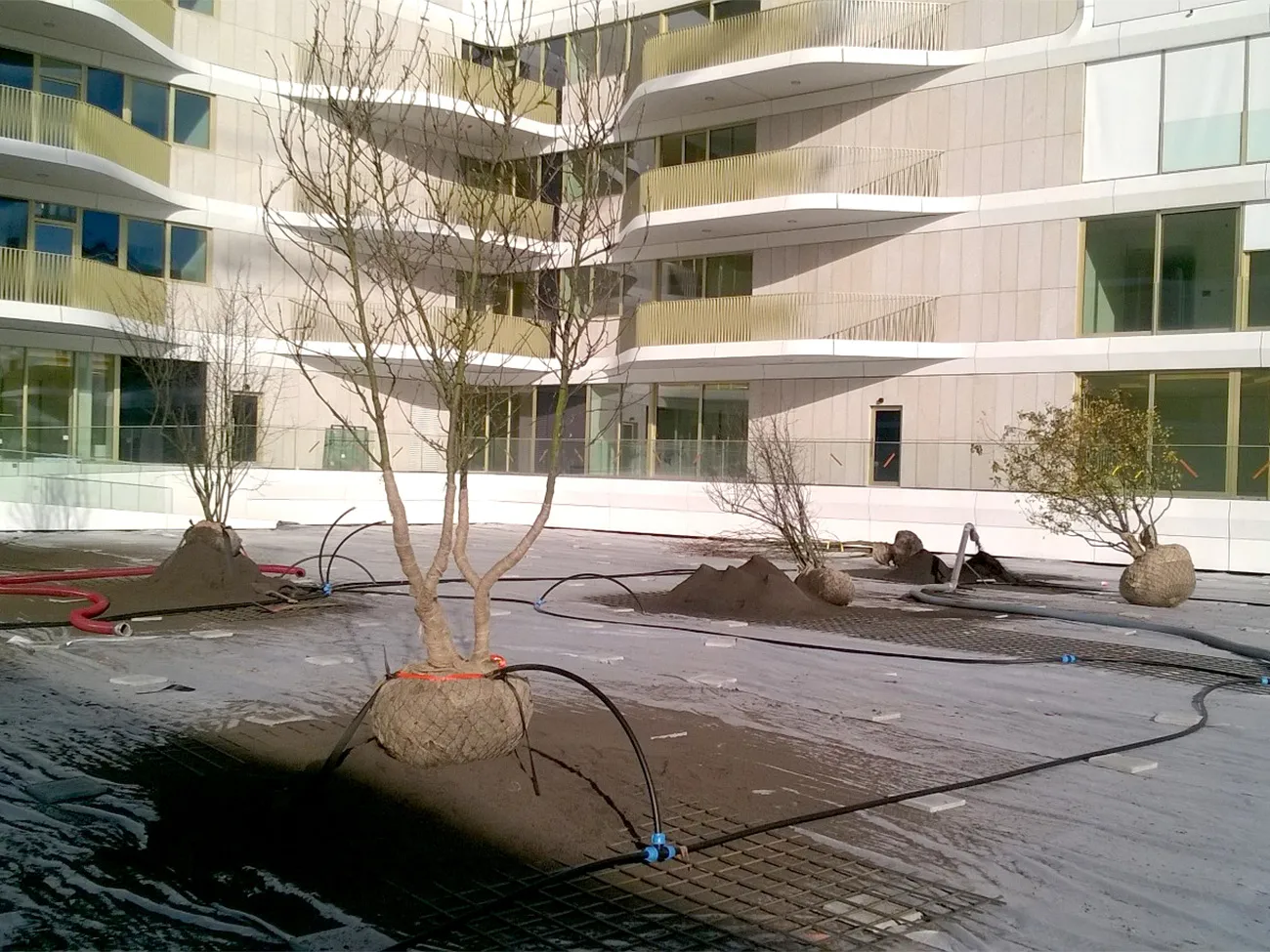
Substrate plays a decisive role in the design of a green roof. It not only determines the soil conditions in which the plants must thrive, but also affects the roof’s water storage capacity, the quality of the rainwater eventually discharged from it, and even the roof’s functional potential. There is therefore good reason to pay close attention to the composition of this essential layer.
It should be clear that ordinary garden soil is not a suitable base for green roofs. As it is easily compacted, it quickly becomes acidic, with the risk that the drainage layer will become clogged. Green roof substrates are therefore made from a combination of mineral components, such as lava, perlite and clay granules, and a generally smaller proportion of organic material, such as humus, compost and woodland soil.
Origin
In Belgium, green roof substrates have traditionally often been sourced from Germany, but AcTerra means that the country now has its own local substrate manufacturer. The ingredients come from Belgian soil, are regularly inspected by the FAVV and are thoroughly analysed before use.
“A green roof does not stay in place for ever,” says Bart Geerts, explaining the importance of these analyses. “In time, the substrate will inevitably be removed. At that point, it is important that the soil can be processed sustainably and reused, for example in new substrate mixes.”
Water quality is another reason. “Water storage capacity is one of the major benefits of a green roof, but the rainwater that passes through the system will eventually end up in the sewer, a rainwater tank or the soil. So it is important to know exactly what is being leached from all those mineral components.”
Planting
The ingredients and their proportions determine the substrate’s properties and, consequently, its possible applications. To meet the requirements of different types of planting, AcTerra creates a bespoke mix for each project.
“Our mineral components include fired clay granules, expanded clay granules and perlite. We do not use materials such as porphyry or limestone chippings, as they have no water-retention capacity.”
“We have various types of humus and compost, including wood, green and even peat compost, as well as natural woodland soil. This comes from Flemish natural forests, where it has long lived in symbiosis with oak and beech trees. As a result, the soil is rich in bacteria and fungi, so we can introduce the necessary soil life into the substrate straight away. For some more sensitive plants, such as rhododendrons, this is essential for good root development.”
Functionality
AcTerra can also add highly pressure-resistant minerals to create a load-spreading substrate that can be driven on. “Not every green roof is necessarily elevated,” explains Bart Geerts. “Sometimes it is a basement or underground car park with a green or park area above it, perhaps at ground level. There may not need to be a road there, but the area may need to be accessible to the fire brigade or other emergency services. Even if you plan to have a lawn or low-growing plants, the structure still needs sufficient load-bearing capacity. That calls for a specially adapted, more specific substrate.”
Question about this story? Ask your question
Keep following this
Get an email when a new story is published. No account needed.
- ThemeHealthy soil and smart water management
- SubjectGreen roofs