Smart rainwater management at Agristo
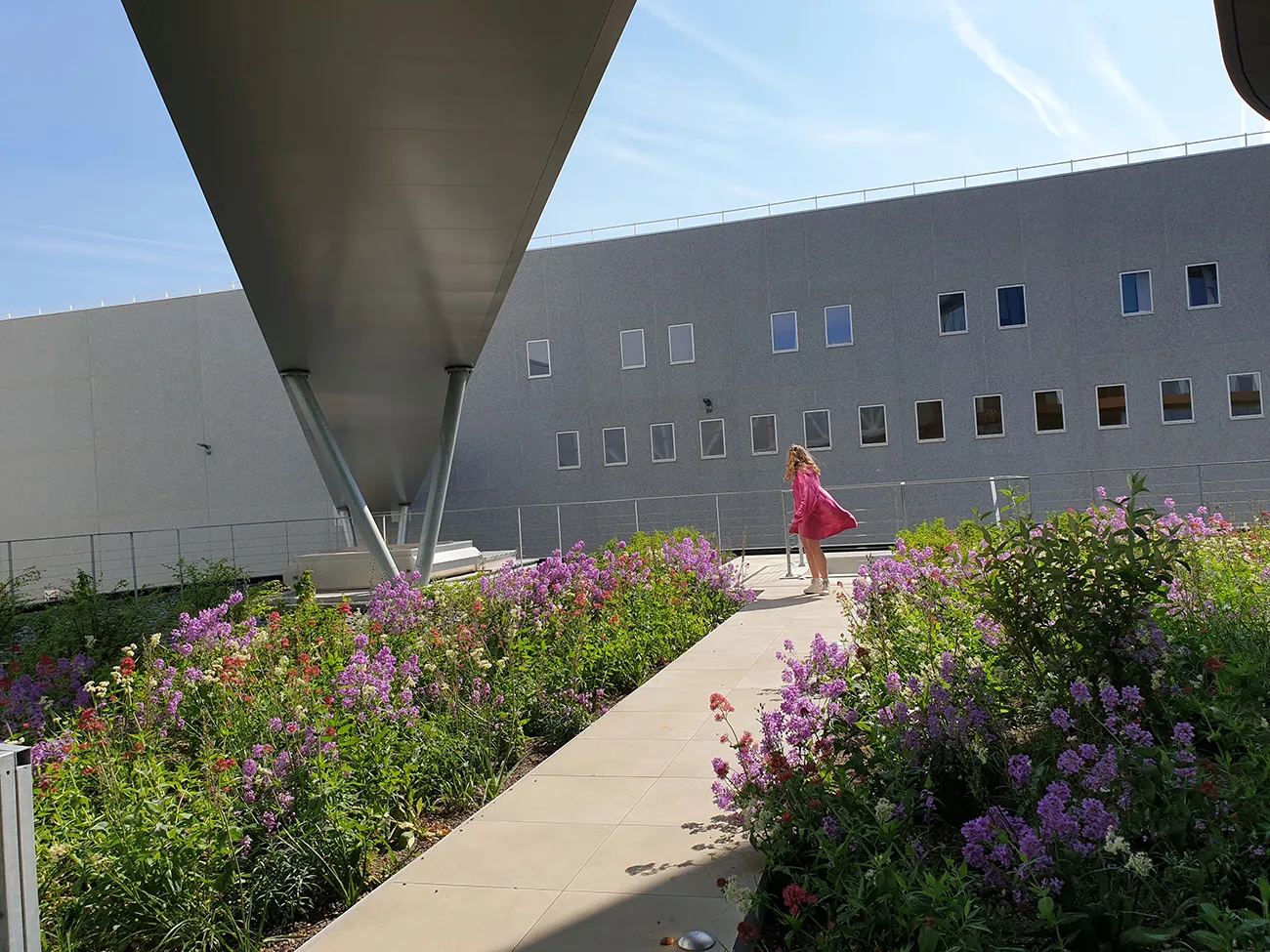
In Wielsbeke, West Flanders, potato processing company Agristo has built a new office building over the past few years. It is set to become a regional calling card, not only for its aesthetics and use of sustainable materials, but also for the high ecological ambitions it represents. The colourful roof garden, for example, helps retain rainwater and release it gradually. Green space and roof garden specialist Naturoof was and remains responsible for its installation and maintenance.
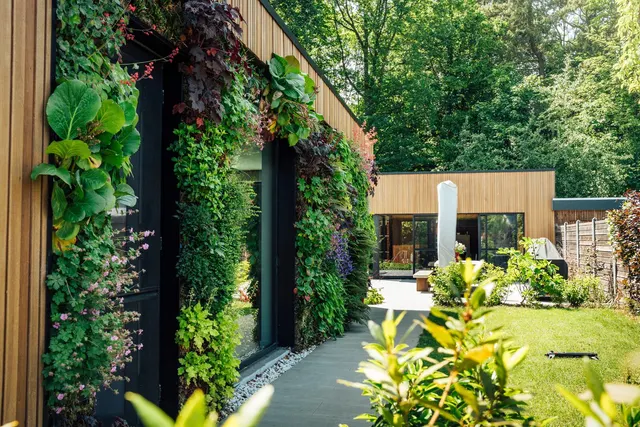
Natural greenery plays an unmistakable role in the design of Agristo’s new office building. The company explicitly requested green space, and architectural firm OYO also made it a central feature of the building.
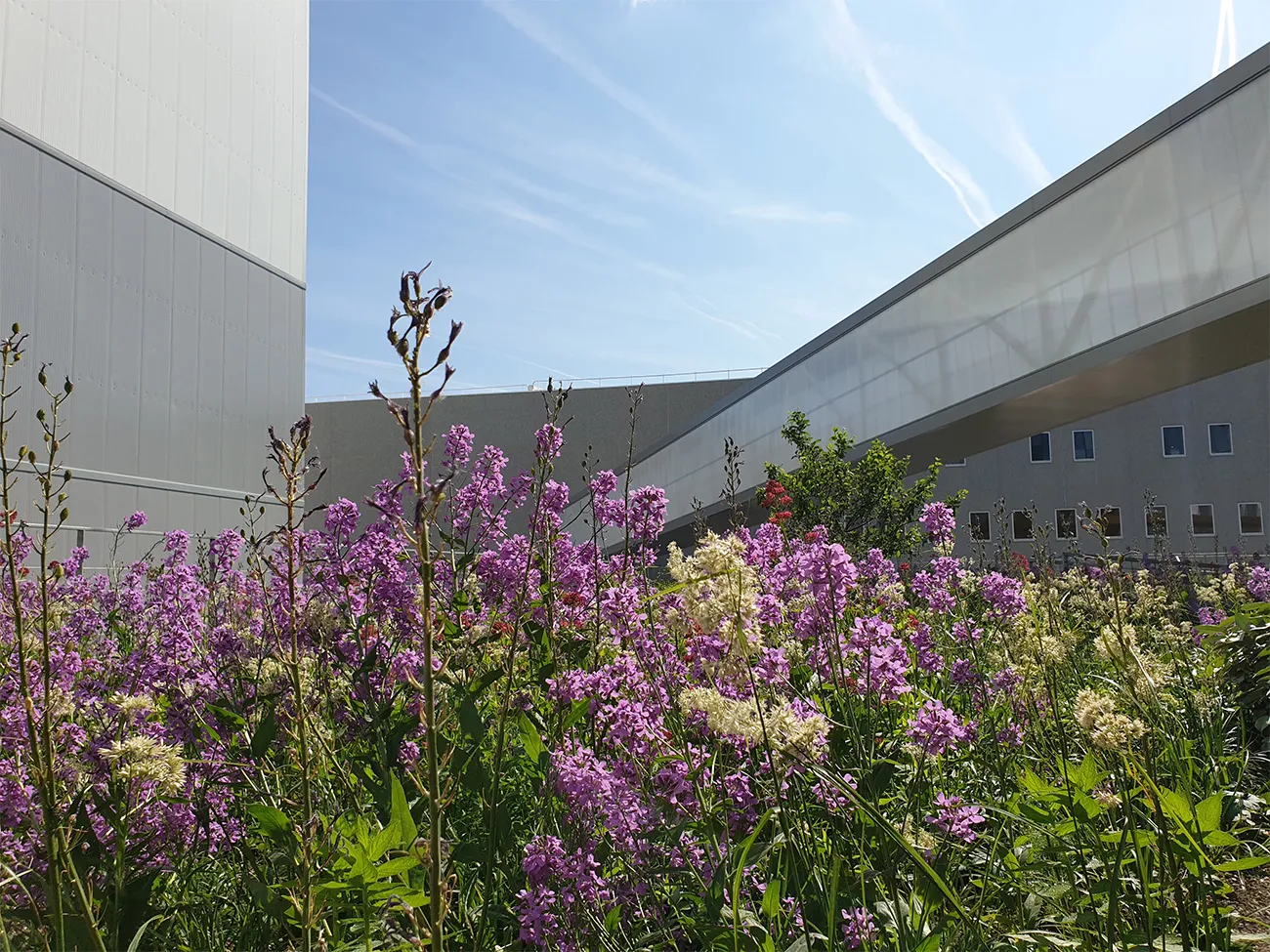
A different look each season
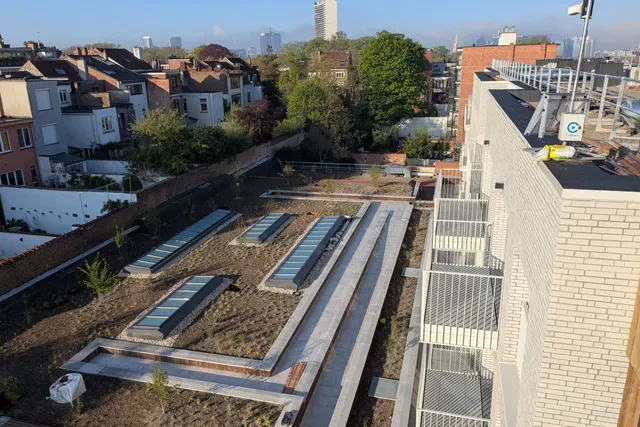
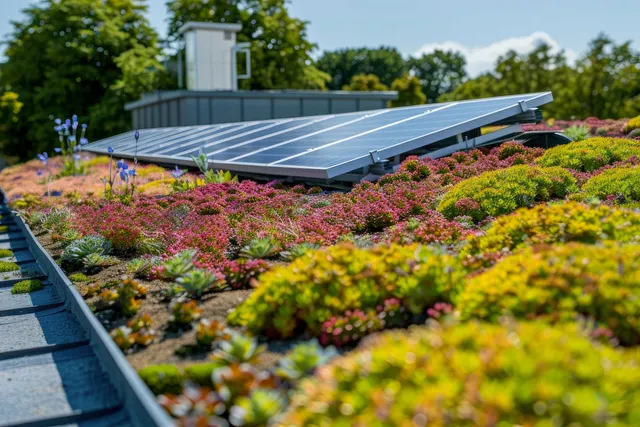
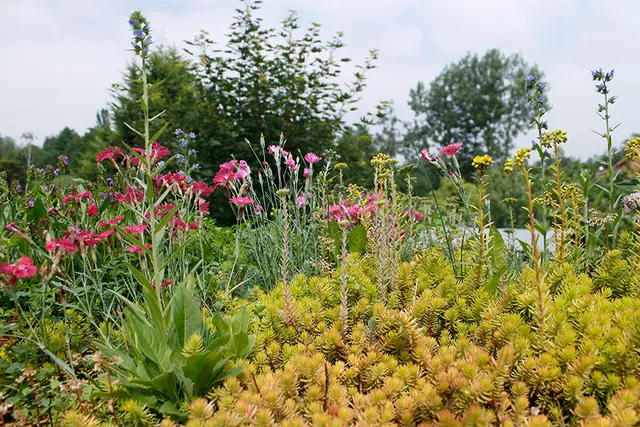
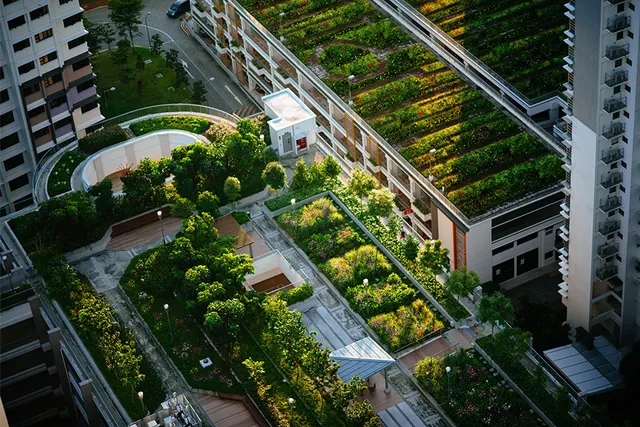
Together with landscape architect Erik De Waele, the architectural firm incorporated green terraces on every level, several green areas on the ground floor above the underground car park, and a roof garden of more than 2,000 m2 on the first floor. Shrubs and hedges of varying heights create an interplay of levels, while trees and multi-stemmed trees serve as eye-catchers. A mix of perennials, bulbs and tubers completes the roof garden and provides successive flowering periods, giving it a different look each season.
Roof construction
Most of the roof garden on the first floor was built over a retention system. The roof surface below was laid flat, without a slope towards the roof outlets. An absorbent, mechanically protective membrane was laid over the root-resistant roofing, followed by 85 mm-high Optigrün water retention boxes. A further 34 cm of roof garden substrate was then added as the growing medium. Larger mounds were created around the trees.
Mounds were also created alongside the existing benches. Rigid XPS insulation boards were laid in steps over the retention system to create extra volume without adding too much weight to the roof construction.
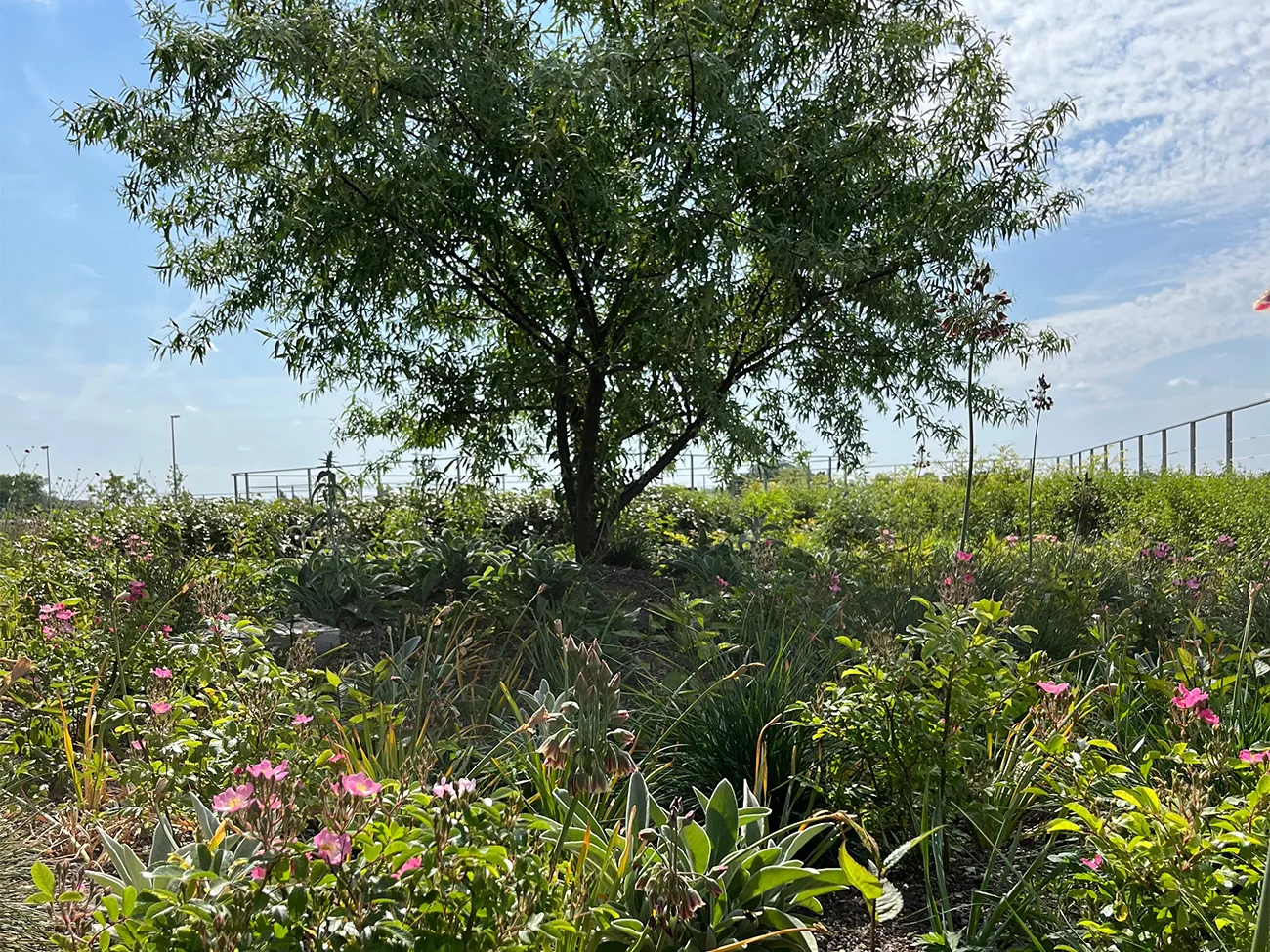
Retention roof
Retention roofs temporarily store rainwater, slowing its run-off and reducing pressure on the sewer system. At the same time, a retention system also provides an ecological, low-maintenance roof garden. The water retention boxes hold around 80 litres of water per square metre. Vertical capillary wicks draw water upwards to a capillary filter fleece, which then distributes it horizontally and makes it available to the plants. The water retention boxes thus create an alternative water table, making an irrigation system unnecessary.
Agristo nevertheless installed four automatic watering units to top up the retention crates during prolonged dry spells. They operate using a simple float system, which in principle only needs to be checked once a year.
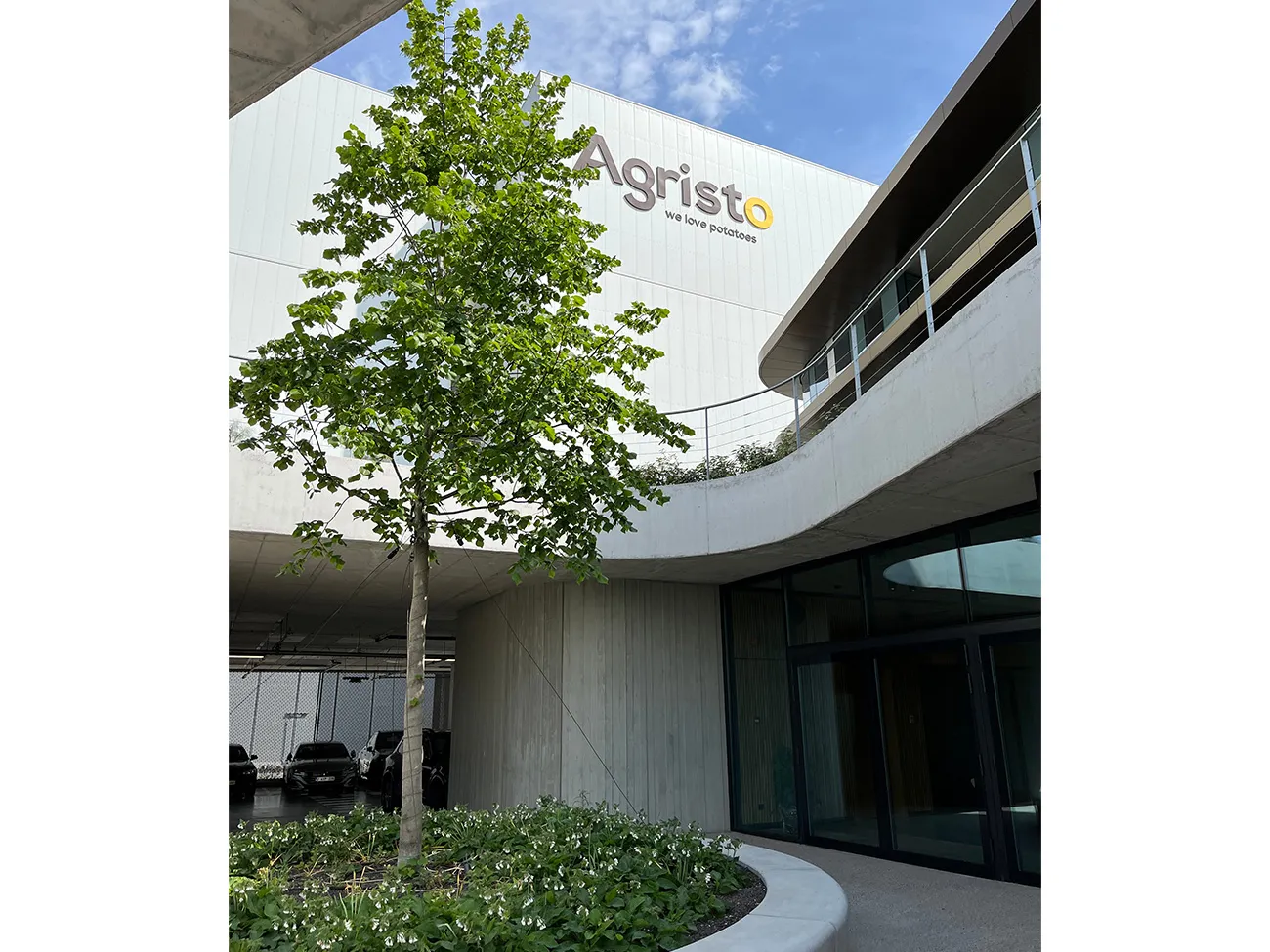
Bringing everyone closer to nature
However, the retention system could not be used everywhere. In some areas, for example, the roof surface was finished at a higher level than the rest, while the weight of the roof construction had to be limited around the canopies. These areas were therefore built using a more traditional roof garden system with water-retaining drainage boards.
An irrigation system with drip lines allows low-growing perennials, grasses and sedum to flourish here too. This not only boosts biodiversity, but also protects employees from constant direct sunlight and creates a natural 360° backdrop for every workspace. From anywhere in the building, people can look out onto greenery and remain connected to nature.
Question about this story? Ask your question
Companies in this story

Keep following this
Get an email when a new story is published. No account needed.
- ThemeHealthy soil and smart water management
- SubjectGreen roofs
- CompanyNaturoof