The basics of an extensive green roof
More and more roofs are turning green. As a provider of green roof system solutions, ZinCo can only welcome this trend. However, the pioneer has found that there are still quite a few misconceptions about installation and maintenance.
Discover the benefits and avoid the misconceptions
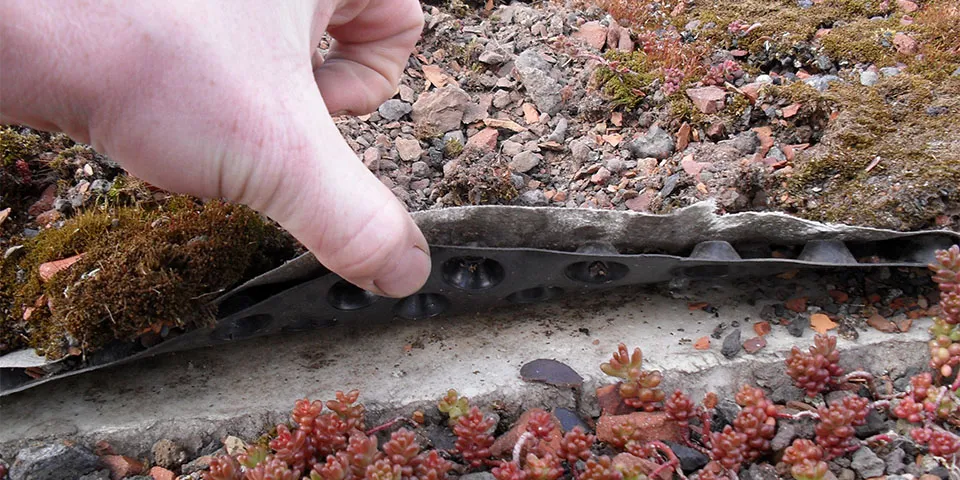
Common mistakes in green roof construction: the drainage layer is too thin, no water storage layer is provided, and too little substrate has been used.
Why install a green roof?
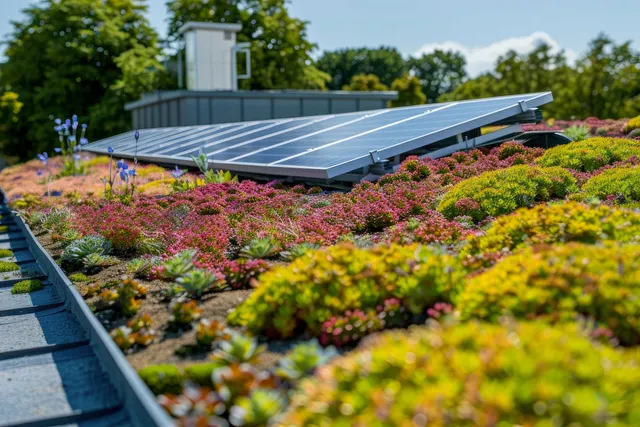
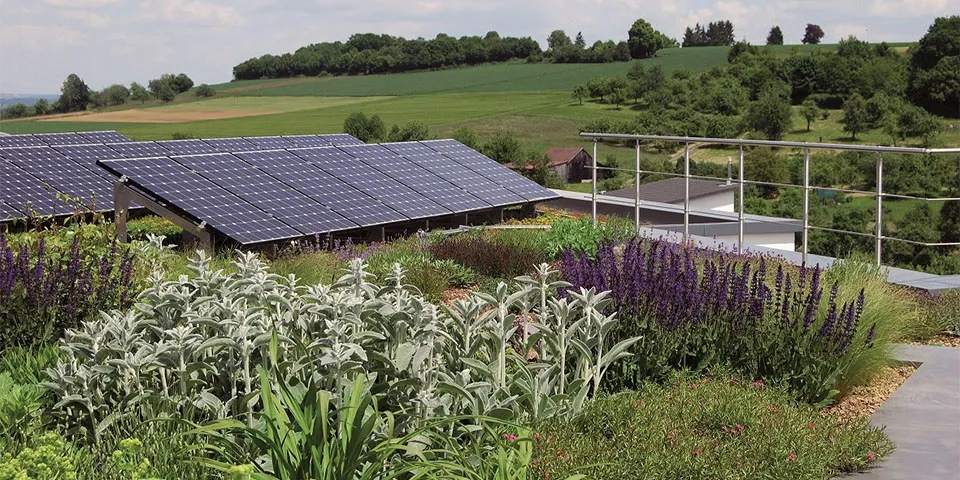
By capturing fine particles, introducing biodiversity and slowing the flow of rainwater, a green roof offers environmental benefits first and foremost. Visually, it creates a pleasant focal point, and some cities offer grants. An extensive green roof also provides sound insulation, extends the service life of the roof waterproofing, and can have a positive effect on the yield of solar panels. However, it does not provide additional thermal insulation, despite what is sometimes thought.
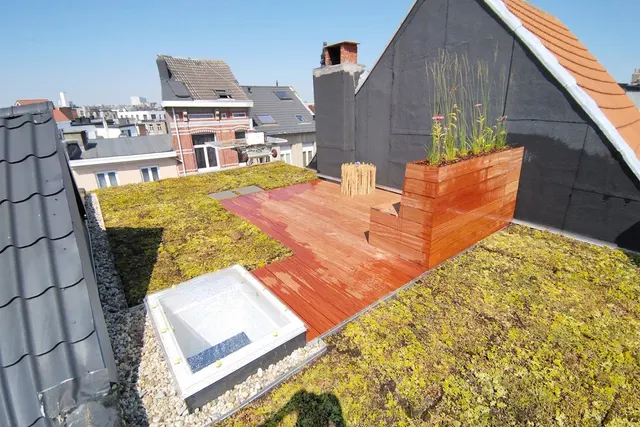
Extensive green roofs are generally planted with sedum and require little maintenance, unlike intensive green roofs.
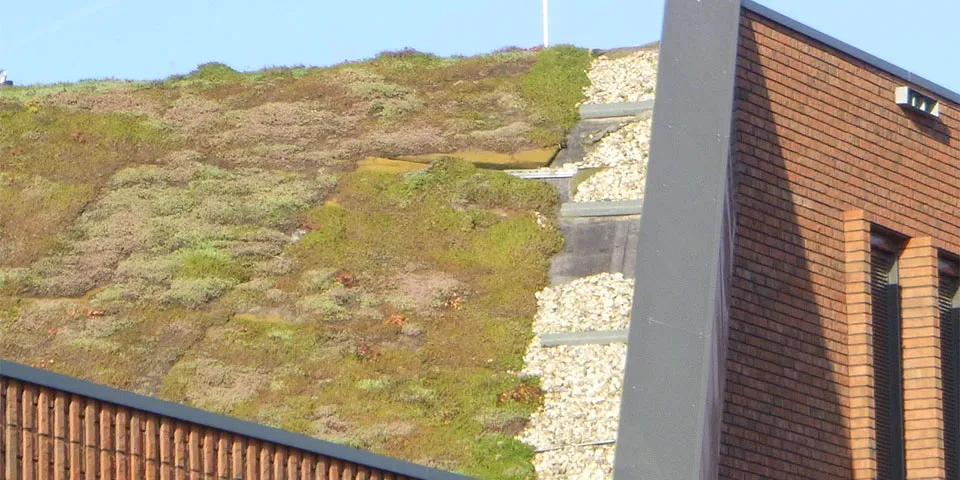
On pitched roofs, an unsuitable system can cause the entire green roof to slide off.
A sound foundation
Because the system build-up is low in height and weight, extensive green roofs are suitable for use on many types of roof. However, the possibilities are not endless. For a green roof to function properly, allow for a standard weight of
100 kg/m2.
Before installation, the roof’s load-bearing capacity must be checked, along with the watertightness and root resistance of the roof waterproofing. Only then can the system be built up, starting with protection for the waterproofing, followed by a drainage system with water storage, a filter, a dedicated substrate layer and, finally, the planting.
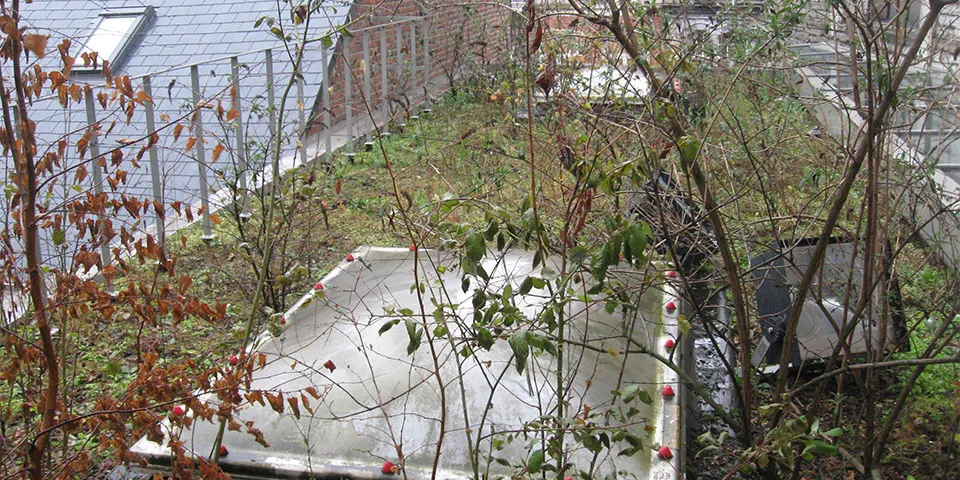
A lack of maintenance allows unwanted plants to proliferate.
The right drainage system
A good drainage system involves more than drainage alone. A water storage layer is an absolute must, yet it is often overlooked. This common mistake is easy to avoid, however. ZinCo combines all the essential components of a good drainage system in a single product: Fixodrain XD20, suitable for roofs with a slope of between 1,5% and 15%. An additional benefit? The rolls simply clip together, preventing unwanted root penetration.
System build-ups must also be adapted to the roof slope. The wrong (drainage) system can cause the substrate to remain constantly saturated with water, leading to plant death. On pitched roofs, it can even cause the entire
green roof to slide off.
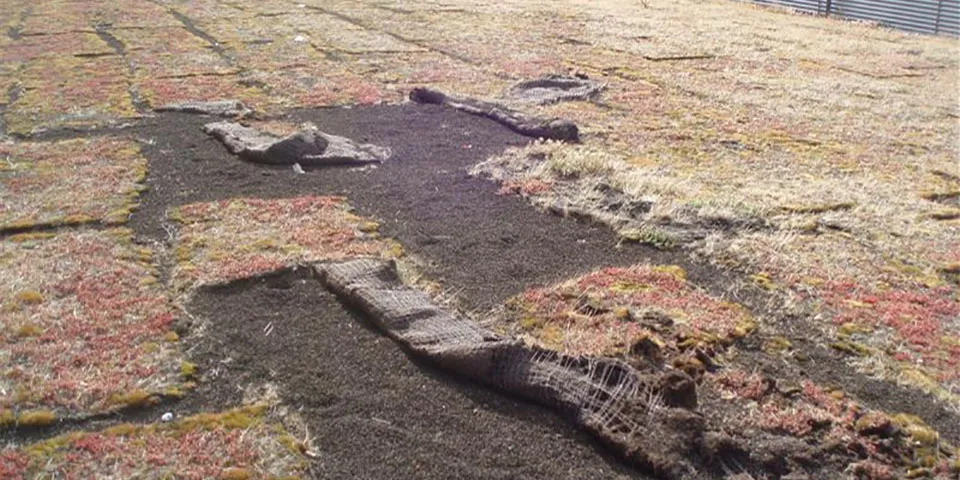
A lack of maintenance allows unwanted plants to proliferate. The wrong (drainage) system leads to waterlogging, constant saturation of the substrate layer and, ultimately, plant death.
Substrate tailored to requirements
The substrate is selected according to factors including the planting, water management and aeration. Unsuitable or contaminated substrate can cause the original planting to disappear or, conversely, unwanted plants to take hold. The use of sand, for example, is not permitted, and mineral wool is also less suitable. The German FLL guidelines (Forschungsgesellschaft Landschaftsentwicklung Landschaftsbau) provide an excellent guide to making the right choice.
Once again, layer depth is a crucial consideration. Both too much substrate and a layer that is too thin, at 3 à 4 cm, have negative consequences. The substrate should therefore be at least 6 cm deep after settling.
Needless to say, the system build-up must not cover the roof outlets.
More than sedum
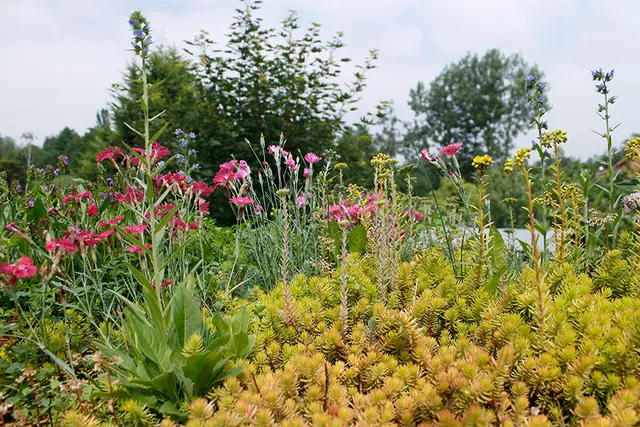
Although sedum planting is the norm on extensive green roofs, other options are certainly available. Using pre-grown planting (Multitops), an extensive green roof can support a wide range of biodiversity and a long, colourful flowering period, provided the substrate is slightly deeper, at around 8 cm. Of course, not all plants are suitable for a green roof, but ZinCo is happy to offer advice and also has a range of tried-and-tested mixes, including the Bijen en Vlinder Multitops.
Where sedum is established by sowing cuttings or using pre-grown mats, Multitops are planted individually. In all cases, it is essential to
water the planting thoroughly after installation.
Contrary to what is often thought, installing gravel strips is merely a recommendation from the WTCB (Wetenschappelijk en Technisch Centrum voor het Bouwbedrijf), not an absolute requirement. The client can, of course, make it a requirement.
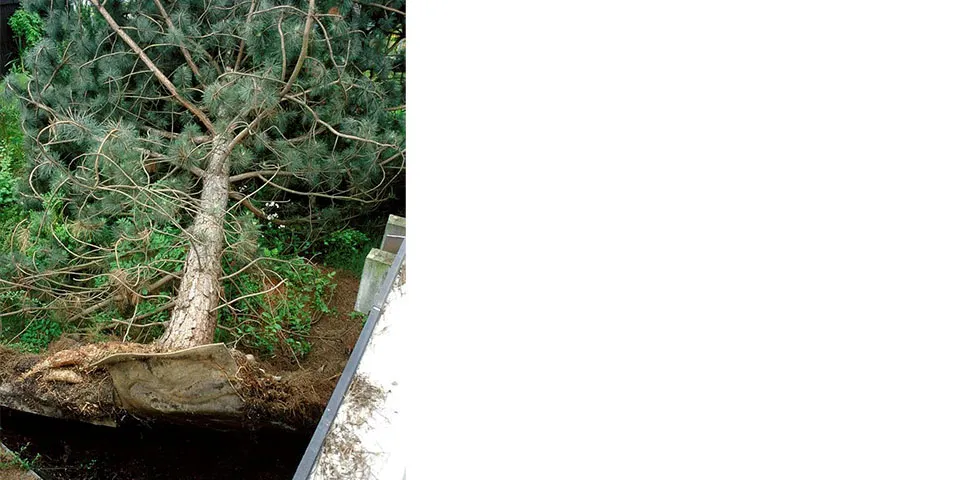
The wrong planting can have disastrous consequences.
Maintenance
Although an extensive green roof is largely self-maintaining, you should not assume that it requires no attention. Limited maintenance is essential, particularly during the first year: removing unwanted plants, resowing or replanting, and applying fertiliser if necessary. The waterproofing at junctions and roof edges must also be checked, as must the water outlets and gutters, which should be cleared. Extensive green roofs with Multitops require somewhat more maintenance. This includes mowing twice a year.
Finally, as the climate warms, the plants may need some extra watering from time to time. Remember that they are exposed to even more extreme conditions on the roof than their counterparts at ground level!
Question about this story? Ask your question
Companies in this story
Keep following this
Get an email when a new story is published. No account needed.
- ThemeGreen roofs and buildings
- SubjectGreen roofs
- CompanyZinCo