‘Leaudegem’ is not rocket science, it’s simply nature
Decentralised wastewater treatment in Ledegem
One record after another fell this summer. With barely 23 millimetres of rainfall in total, July and August were the driest months since records began in 1833. That is according to figures from the KMI. The heat took its toll not only on Flanders, but across Europe. In Ledegem, in West Flanders, a smart and simple approach was chosen to tackle water shortages.
Riverbeds ran dry, inland shipping was disrupted, lorries had to supply entire regions in France with drinking water, and crops were scorched in fields everywhere. Drought warnings were issued for 47 per cent of Europe’s land area, while the alert threshold was exceeded in 17 per cent. Even the most ardent climate sceptic must have realised this past summer how inextricably the fate of the human species is bound up with water. During that same long, hot summer, the ‘Leaudegem’ sanitation project was completed in Ledegem, West Flanders.
Zoning and implementation plans (VMM)
In Flanders, all sanitation projects are set out in the zoning and implementation plans of the Flemish Environment Agency (VMM). Discharge conditions are laid down in VLAREM Title II and vary according to the zone in which domestic wastewater discharge is classified: the central area, the collectively optimised outer area, the outer area to be collectively optimised, or the outer area to be individually optimised.
A zoning plan can be updated annually to reflect the actual situation, taking completed sewerage projects into account. Everything is then set out in a Water Implementation Programme (WUP). The ‘Area-wide Implementation Plan’ (GUP) builds on the zoning plan and governs the implementation and scheduling of the sanitation projects still to be carried out, as well as their coordination. Priorities and the associated timetable are also established.
An untenable situation
In the case of Sint-Pietersstraat, where discharges into a roadside ditch via a sewer pipe had been causing odour nuisance for years, this meant the problem could not be addressed for another 12 to 15 years or so. Connecting the wastewater to the transport system would also involve a very substantial investment. The cost is shared by the municipalities and Flanders. Flanders reimburses local authorities for 75 per cent of completed sewerage projects.
This situation is found in many places across Flanders: the outer area to be collectively optimised still includes more than 340,000 homes. The challenge is to transport wastewater from remote areas to wastewater treatment plants (RWZIs). The basic idea among the authorities was to provide sewerage to outer areas last, but very little progress has been made, and in any case far too slowly. A further 8,500 to 10,000 kilometres of sewerage still needs to be laid. This is an untenable situation.
Water treatment using plant-based systems
Ledegem is taking the initiative and opting for a decentralised solution, backed by a subsidy project. As part of the European Blue Deal, the Flemish Ministry of Environment developed a framework to support demonstration projects. The search was therefore on for innovative, alternative and high-quality solutions for wastewater treatment in outer areas without sewerage.
One such solution is local water treatment using plant-based systems (constructed wetlands). When a restaurant in Kuurne managed to recycle kitchen wastewater and toilet greywater into drinking water using a constructed wetland, the story made the television news. Mobile water treatment plants have also been used to treat wastewater at music festivals in Flanders and the Netherlands.
Ledegem becomes Leaudegem
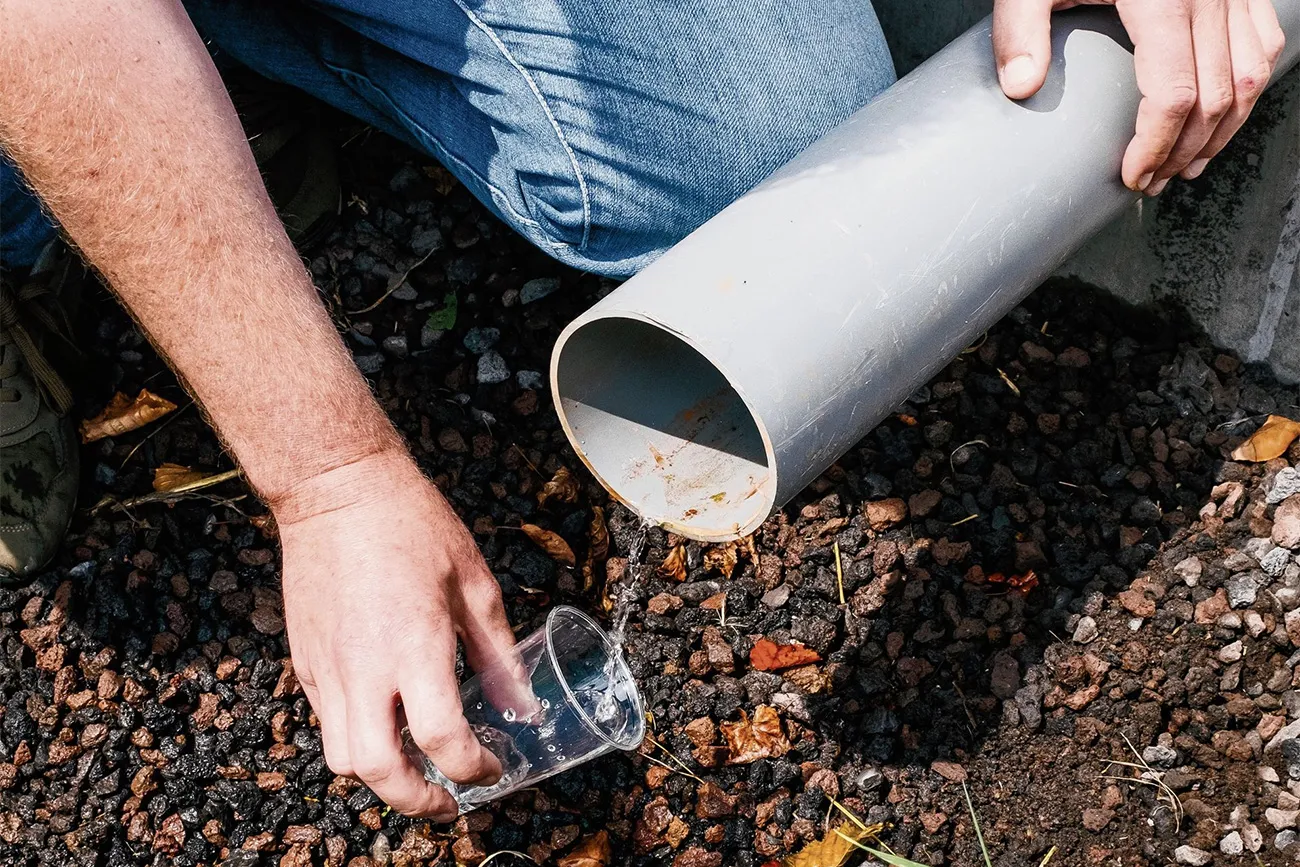
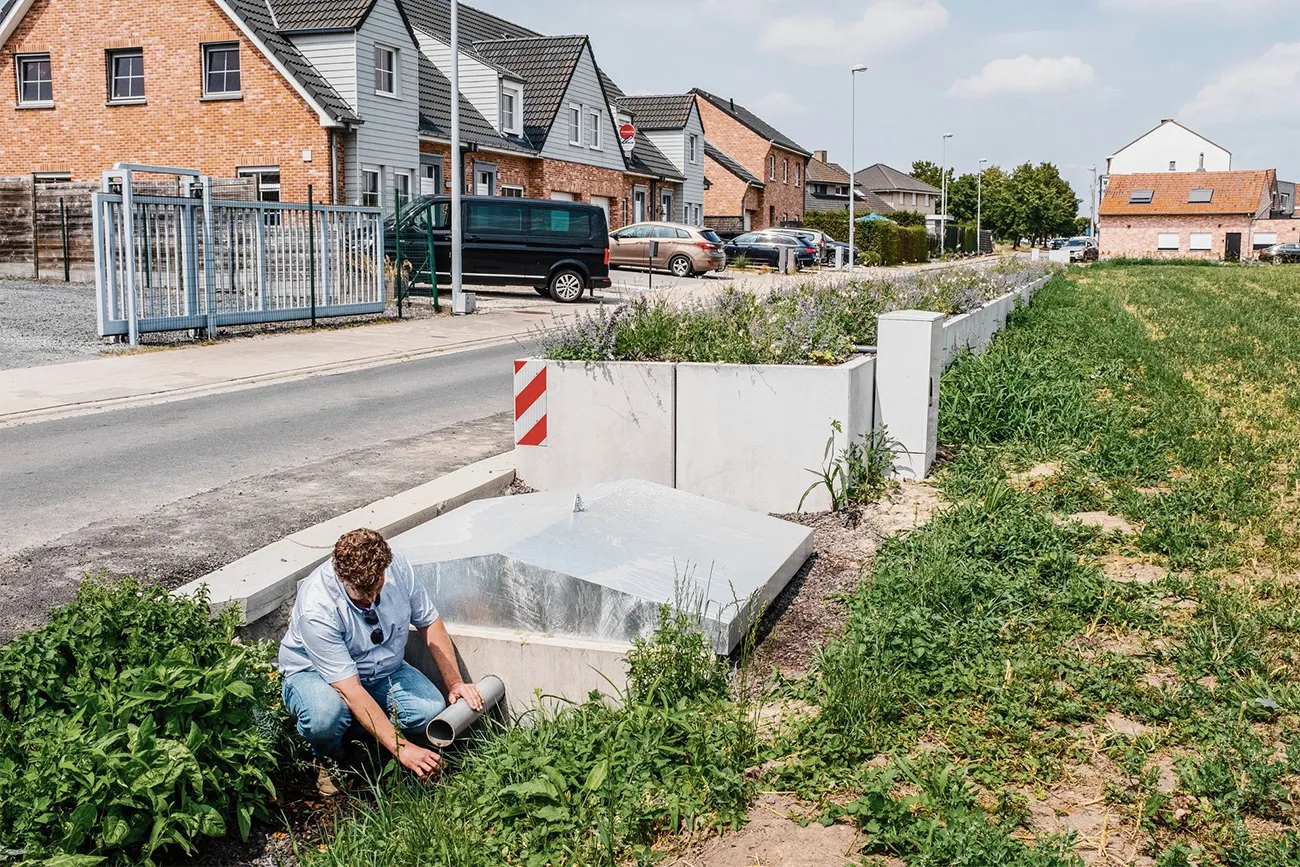
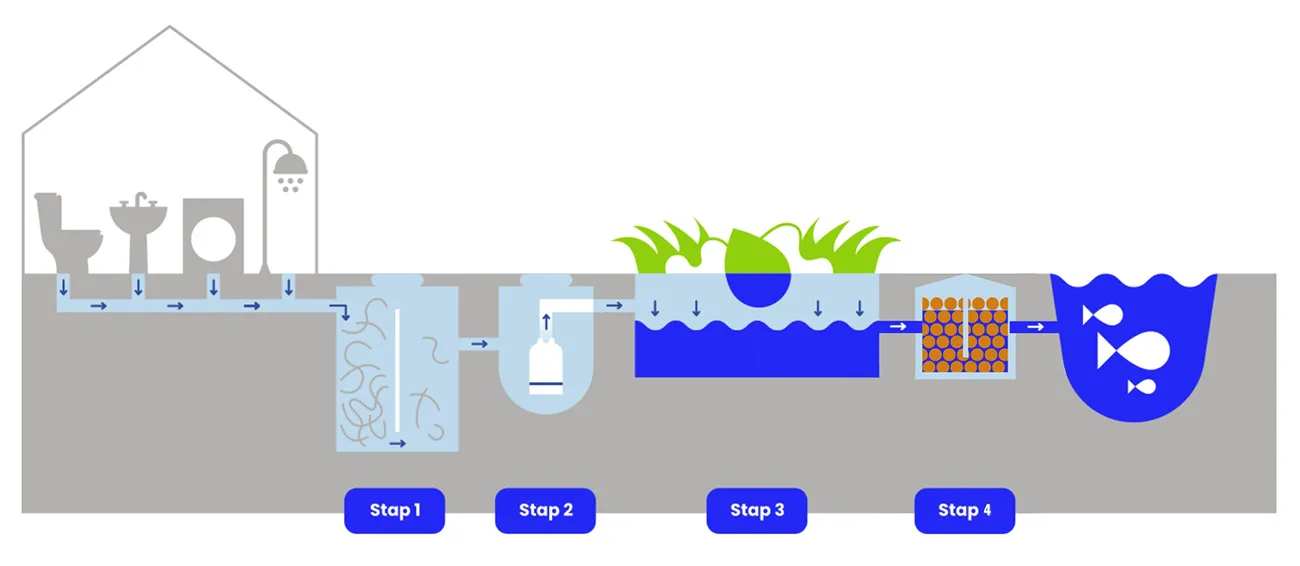
Then there is the Leaudegem project, with HelloWater as the lead technical partner. It is not rocket science, just nature. First, all the wastewater is collected in a primary settling tank (step 1). It is then injected or pumped into a constructed wetland (step 2). The interaction between plants and microbial life in the substrate (step 3) already achieves removal rates of between 96% and 100% for organic load, suspended solids and ammonium (BENOR-certified treatment efficiency).
Next, an innovative post-treatment process called FOSCUBE ensures extensive phosphate removal (step 4).
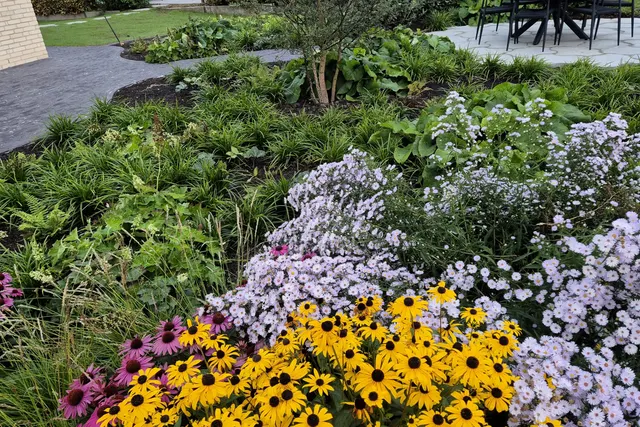
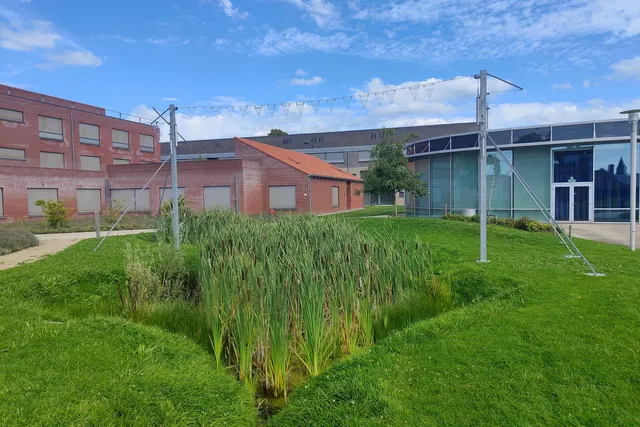
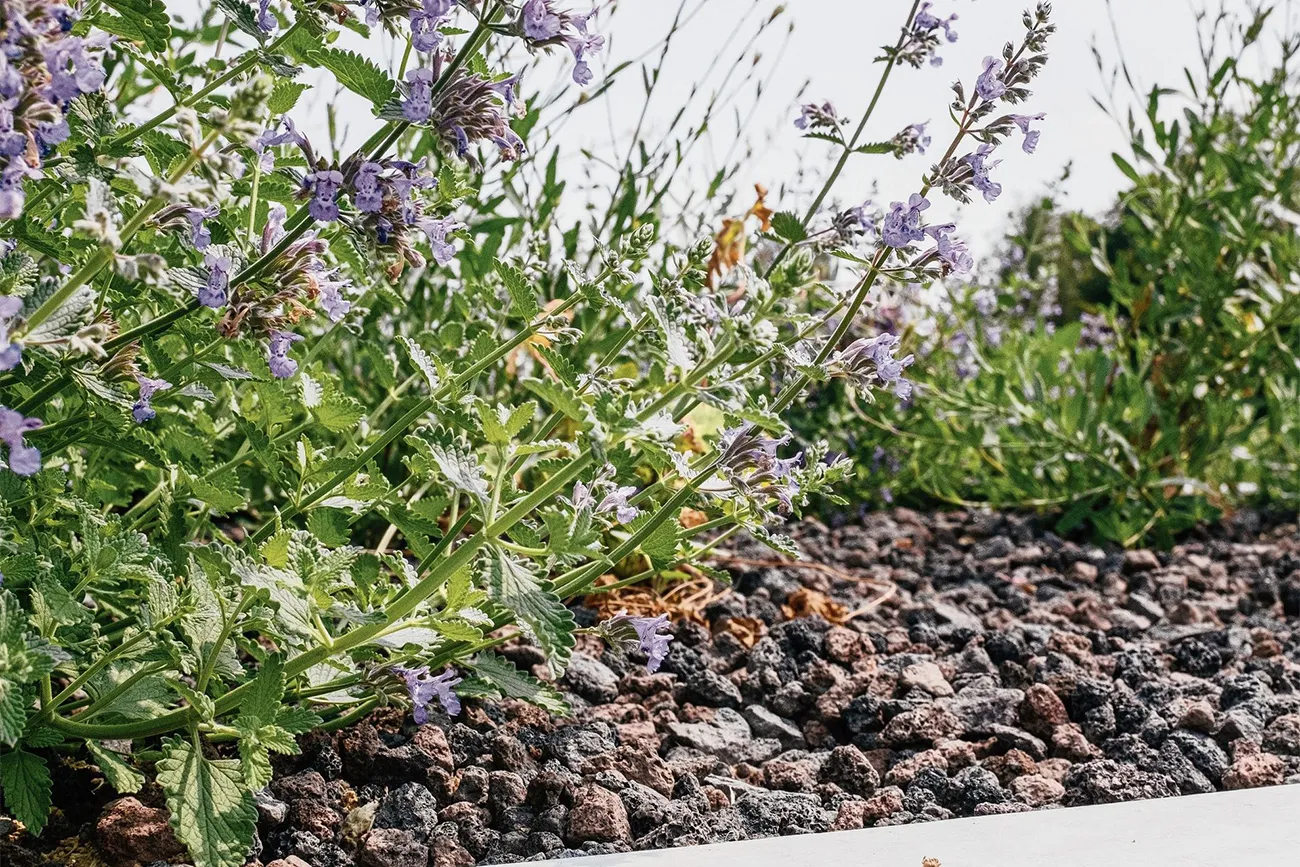
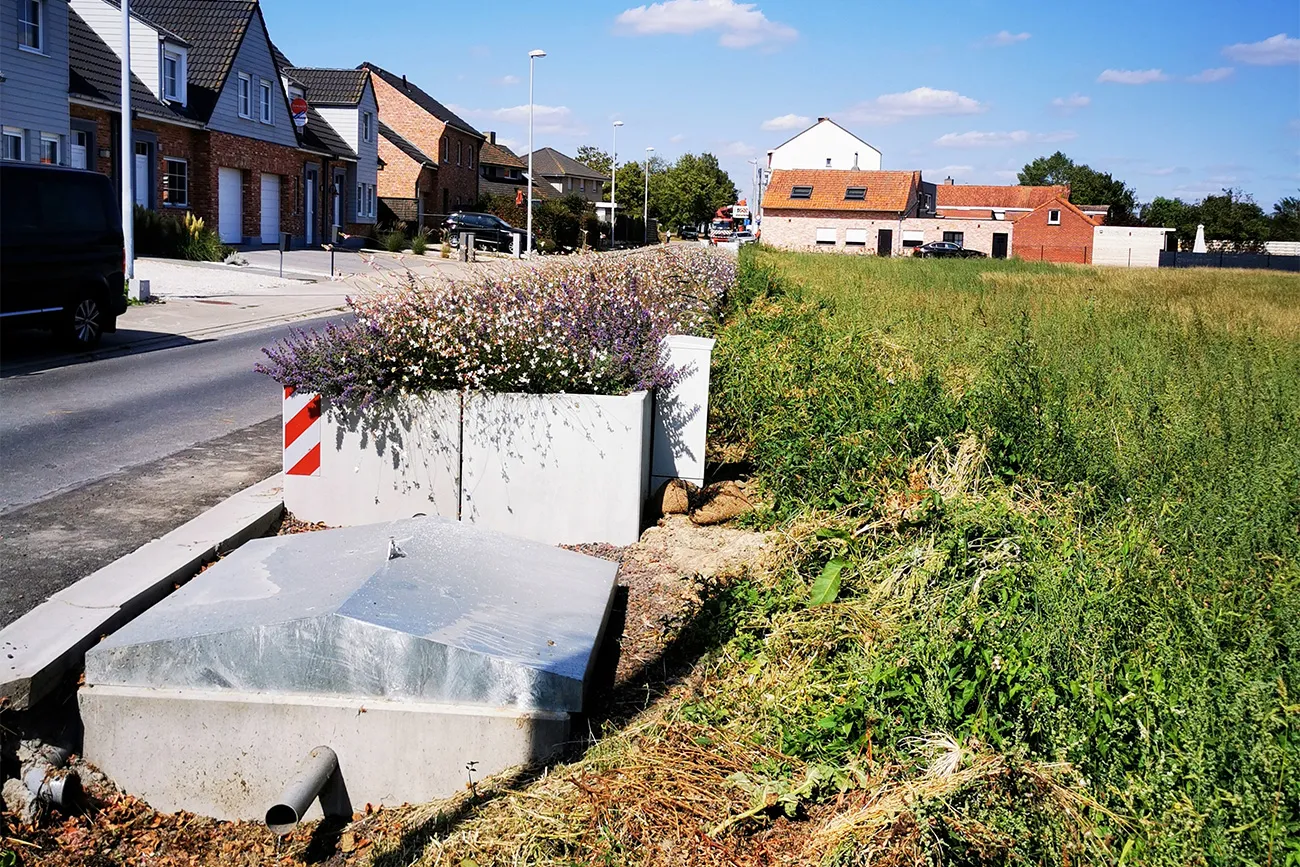
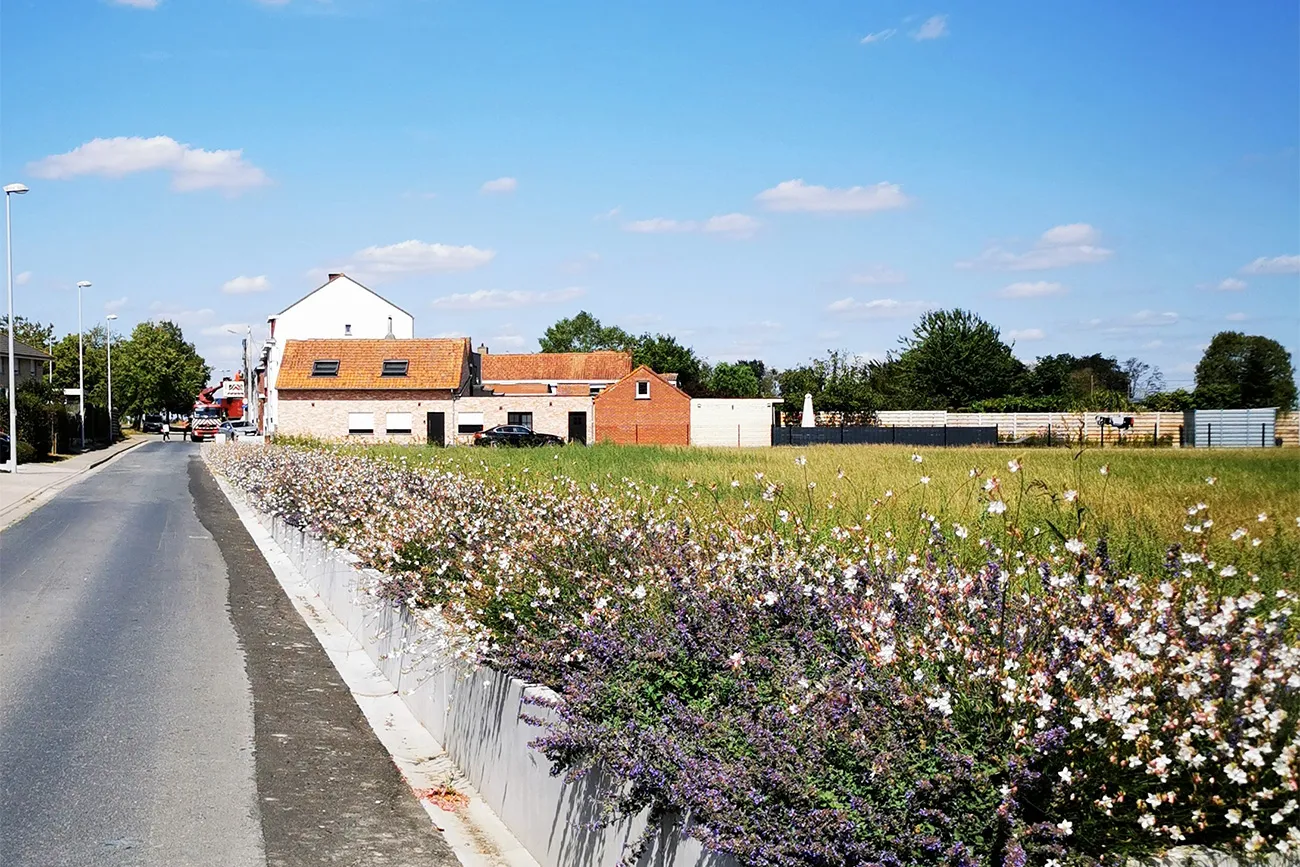
One potential drawback of plant-based treatment is the amount of space required. In Ledegem, the constructed wetland was installed directly in the roadside ditch, avoiding the need to use agricultural land or other valuable land. The surface is covered with flowering plants, which also boost biodiversity. The installation itself consists of prefabricated elements that can easily be removed or added. This makes the system flexible and scalable as more homes are added. CBS Beton, based in Wielsbeke, was brought in to supply the prefabricated elements.
Working with CBS Beton
CBS Beton is the specialist in precast concrete elements for the agricultural and infrastructure markets. CBS Beton products are used in general construction works, industrial projects, agriculture and horticulture, silos and agricultural buildings, biogas plants, public-sector contracts and private projects.
Marc Vandeputte, marketing and communication manager at CBS Beton: “Our retaining walls make it easy to accommodate changes in level at slip roads, gentle slopes, hard shoulders and car parks. Our L-shaped retaining walls (CLF10GS range) are used as modern infrastructure solutions in earthworks, road construction, landscape architecture and water engineering. The walls have a smooth finish and meet the highest concrete quality standards.”
“CBS Beton was also the first Belgian manufacturer to obtain a BENOR certificate, ensuring that its retaining walls meet all Belgian and European quality expectations in the sector. We supplied 400 kilometres of CLF10GS L-shaped retaining walls for this innovative water treatment system.”
Wouter Igodt: “Our collaboration with CBS Beton began with a view to making the system more sustainable. Cement has a well-known CO2 footprint, which we wanted to reduce in our water treatment plants. To do so, we called on Resourcefull. They offer an alternative to cement based on by-products from the metallurgical and mining sectors. CBS Beton and Resourcefull had already joined forces in an Interreg project, Upcycling Concrete. So the collaboration, including supply and installation, went very smoothly.”
“Leaudegem embraced a co-creative approach under the slogan: ‘You go faster alone, you go further together’. The modular, sustainable water treatment systems have delivered a result we can all be proud of.”
Een zakelijke vraag aan CBS Beton? Get in touch
Companies in this story
Keep following this
Get an email when a new story is published. No account needed.
- SubjectSoil & water
- CompanyCBS Beton