The right conditions and substrates for high-performing green spaces and efficient water management
Text Niels RouvroisImage Acterra
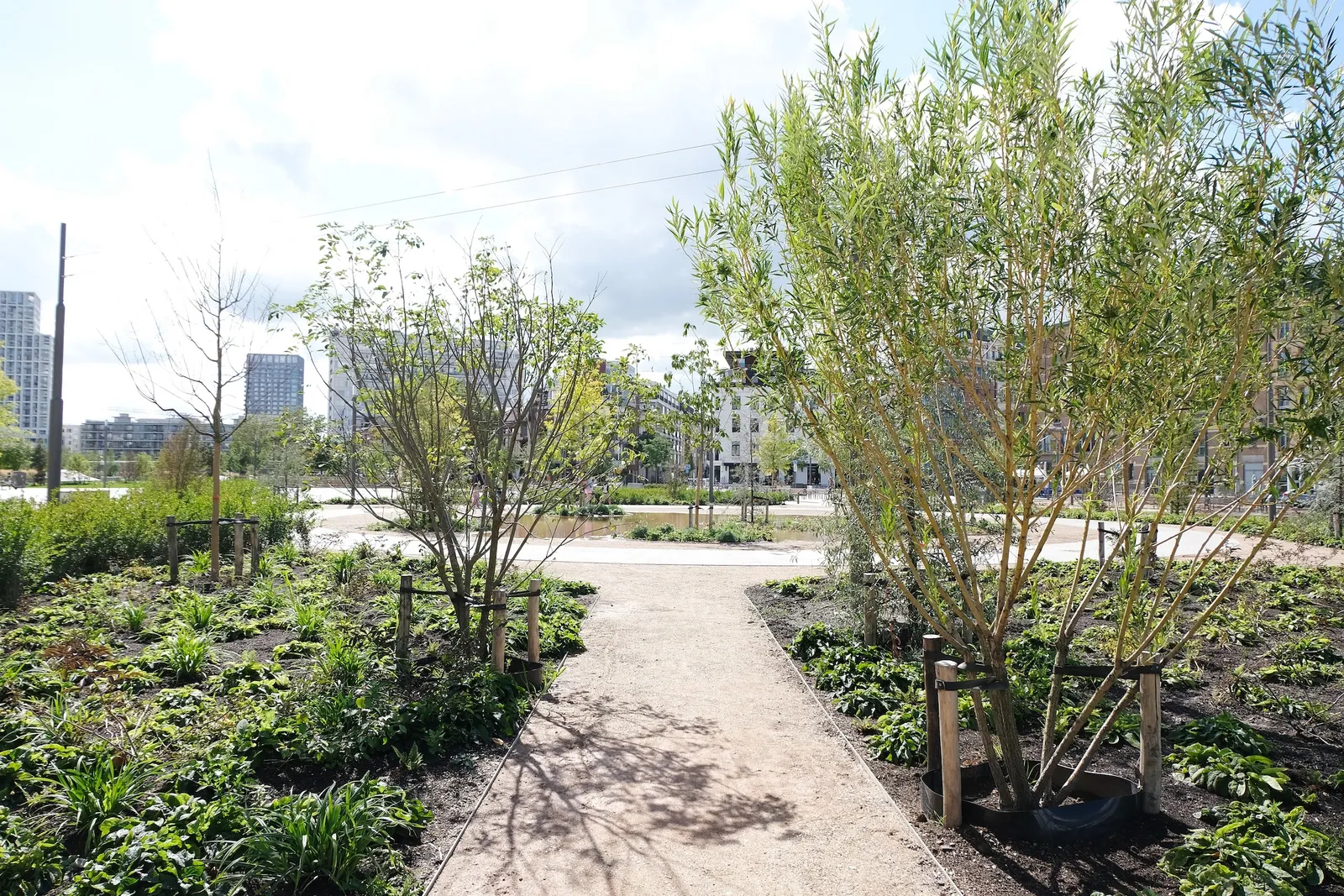
Climate change and increasing urbanisation inevitably bring new challenges for water management and the integration of green spaces into the public realm. According to Bart Geerts, managing director of ‘soil innovator’ Acterra, an important solution lies in combining rainwater management and planting intelligently, for example through roof gardens or other green infrastructure.
Rainwater management is becoming increasingly important. This is especially true in urban areas, where hard surfaces prevent water from infiltrating sufficiently. Integrating green spaces into projects, both urban and infrastructure-related, is now more the rule than the exception.
Retention roof stores water
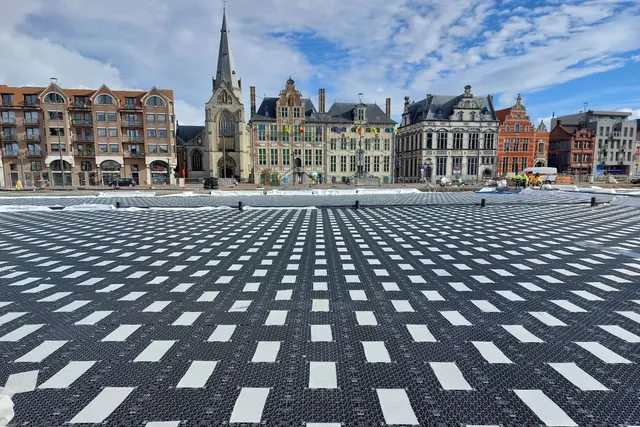
Acterra has been producing high-quality planting substrates for garden construction, public spaces and infrastructure projects for more than 20 years. Bart Geerts stresses the importance of water retention in the design process. Water retention literally means holding water. In this context, the aim is to store water directly on the roof and use it there for planting. The largest retention roof in Belgium was recently built as part of the redevelopment of the Gedempte Zuiderdokken in Antwerp.
For this project, Acterra supplied TerraViva® Bomenzand 450, various planting substrates and a helophyte substrate. The latter is a clay- and loam-like mix, custom-formulated for the project and consisting of 50% carbon-rich sand mix and lava. Geerts says: “Simple techniques can direct water into the substrate, creating a green environment that also provides cooling. This approach also contributes to biodiversity. Using adapted substrates made from locally sourced materials creates a better environment for plants and animals. We have therefore moved away from conventional (lava) substrates and now focus on formulations using ingredients available close to our production sites.”
Rainwater regulations
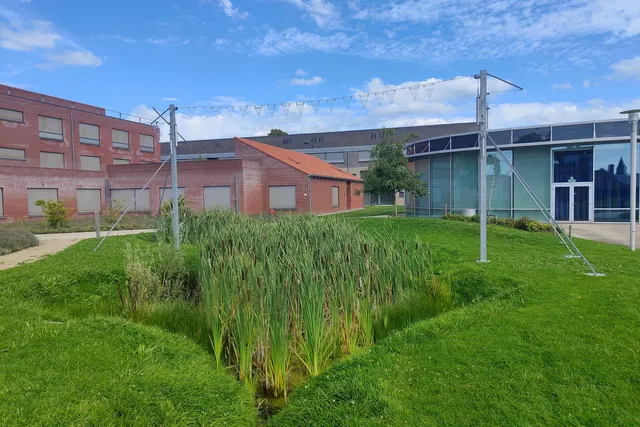
The 2023 regional rainwater regulations state that new developments must retain and infiltrate as much rainwater as possible. Geerts believes there is still plenty of scope for improvement: “It is essential to be creative in how we approach this, without causing groundwater pollution. Too often, people assume that a swale has to be a deep pit, when infiltration works better through surface-based solutions.”
Geerts stresses that green integration and water management should ideally be studied carefully from the earliest stage of a project: “From the moment a building is sited on the land, we need to have the key information: groundwater levels, soil types, existing vegetation … For example, if there is a lot of reed growing, you know the soil is waterlogged. This is crucial information for both the green-space design and the choice of substrates.”
Nature takes time
One of the major challenges in integrating green spaces is the tension between the time nature needs to develop and the speed at which construction projects are completed. “Nature will always reclaim what has been taken from it, but this process normally takes decades. What we are doing with substrates is essentially buying time. This needs to be handled very carefully and patiently. I therefore advocate giving natural development more room and taking a long-term view in construction projects. A truly sustainable ecosystem needs time to form.”
“Integrating green spaces and rainwater management into the public realm calls above all for a systematic, carefully considered approach, with attention to soil conditions, the right materials and substrates, and early involvement of experts. Only then can sustainable, climate-resilient urban spaces be created,” Geerts concludes.
Question about this story? Ask your question
Keep following this
Get an email when a new story is published. No account needed.
- ThemeHealthy soil and smart water management
- SubjectSoil & water