More beautiful gardens through water infiltration
As a professional, you are increasingly faced with sites that cannot be worked because of excessive rain, and with difficulties carrying out sowing and planting work because of drought. This causes frustration for your customer when the completion of their garden is delayed. And if puddles remain after the work is finished, they are certain to come back to you, thoroughly annoyed. The same goes for plants with drooping leaves and yellowing grass. The changing weather brings problems. Unless you adapt to this new way of thinking and focus on sponge gardens.
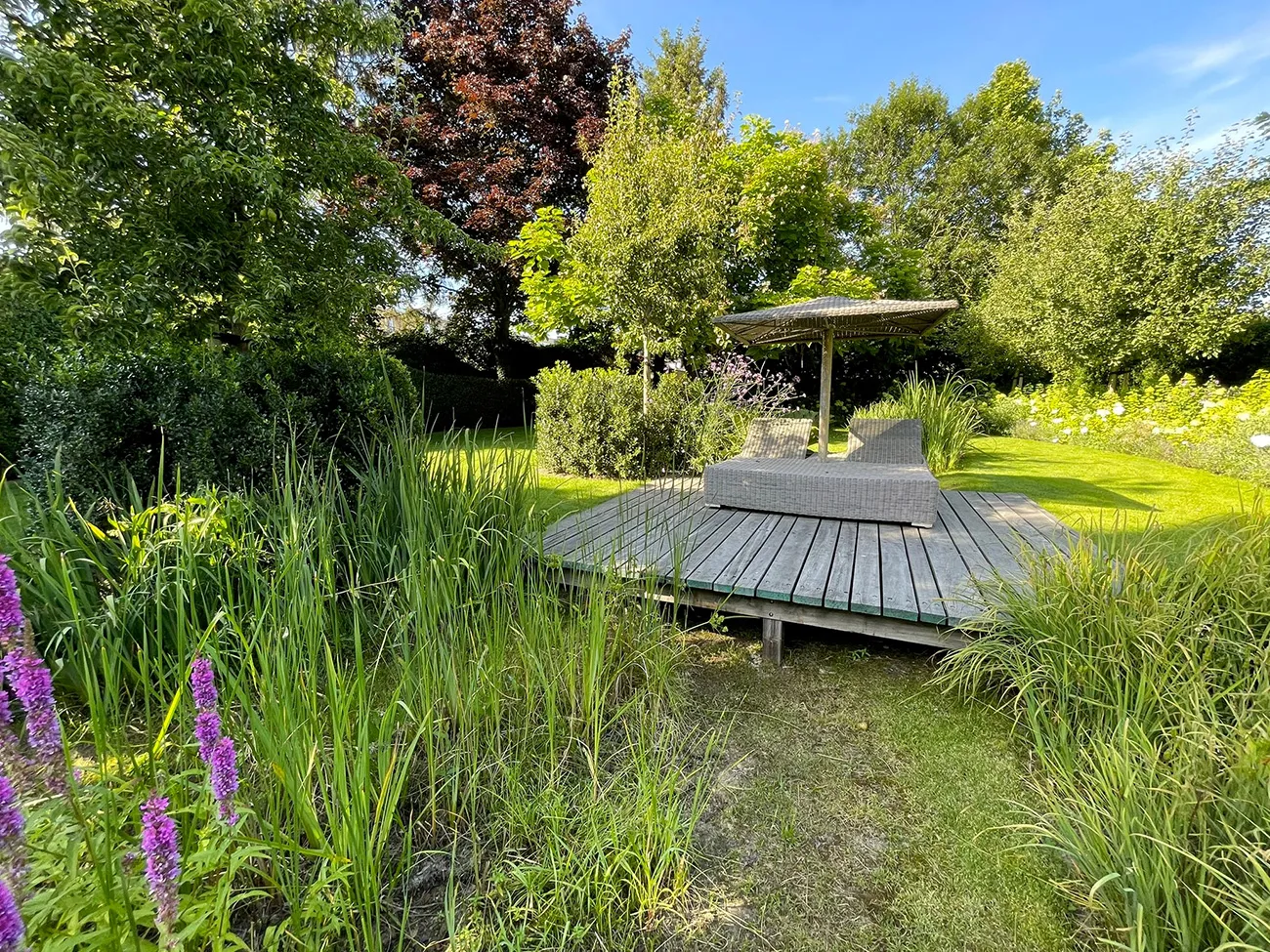
Sponge garden and jardin-éponge are new terms in Belgium. In Great Britain, these types of gardens are called raingardens. Do not translate that literally. Who wants a rain garden? It sounds wet. Sponge garden gives a better idea of what it means: a garden that acts like a sponge, absorbing water when it is available and holding on to it until plants and nature need it.
As a garden contractor, you will immediately think of using polymers. They do indeed work like tiny sponges. Every 100 grams of product can easily hold a bucket, or eight litres, of water and release it later, time and again, for years. Be sure to keep using them to help lawns, vegetable gardens and borders withstand drought, while allowing water to infiltrate and be absorbed more easily.
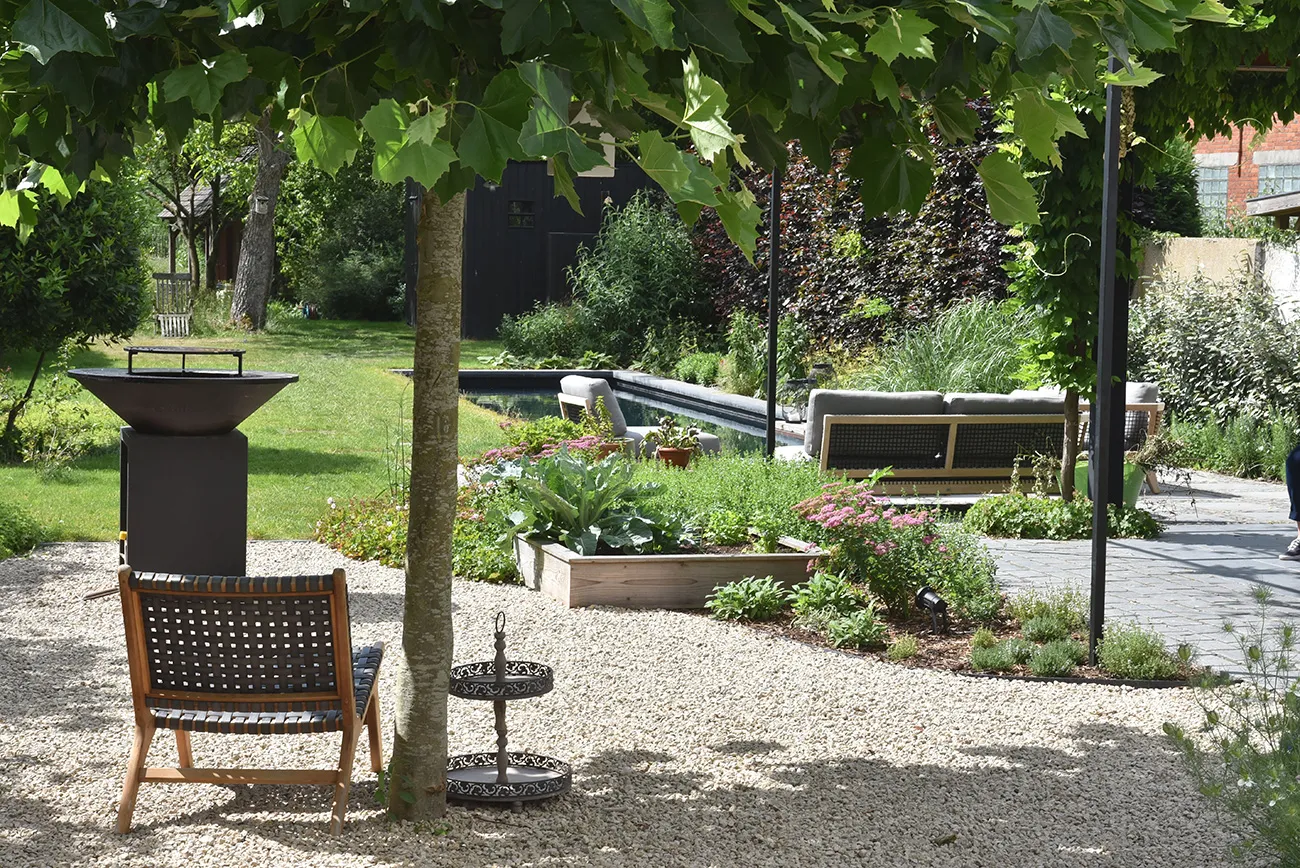
Keep it out of the sewer
A sponge garden, however, is about much more than polymers. Its aim is to absorb all the rainwater that falls on the plot. That includes water landing on the driveway, patio and other paved areas, as well as on the house and outbuildings. This is the only way to solve moisture and drought problems, both for your customer and, more broadly, for nature in the surrounding area, even further afield. Rainwater that you allow to infiltrate the soil goes deeper than the active root zone of plants. It percolates deep into the ground and even replenishes groundwater reserves. And those reserves are badly needed.
In early February 2023, the Flemish Environment Agency, VMM, once again pointed out that groundwater levels were low to very low at almost half of its monitoring points. Admittedly, this is an improvement on a few months earlier, but it is mainly thanks to the abundant, even extreme, rainfall in December 2022 and January 2023. Rainfall then reached 110 and 91 litres respectively, compared with the normal 87 and 75 litres (source: meteo.be). There is still a lot of catching up to do. Our gardens and nature are counting on us.
An adequately high groundwater level helps plants get through dry periods in good health. On the one hand, capillary action and, on the other, roots penetrating deep into the soil and exerting their natural suction bring the two together. That is, provided the soil has a good structure and has not been compacted during construction work, for example. But of course, you can address that professionally by incorporating soil improvers and using non-inversion tillage.
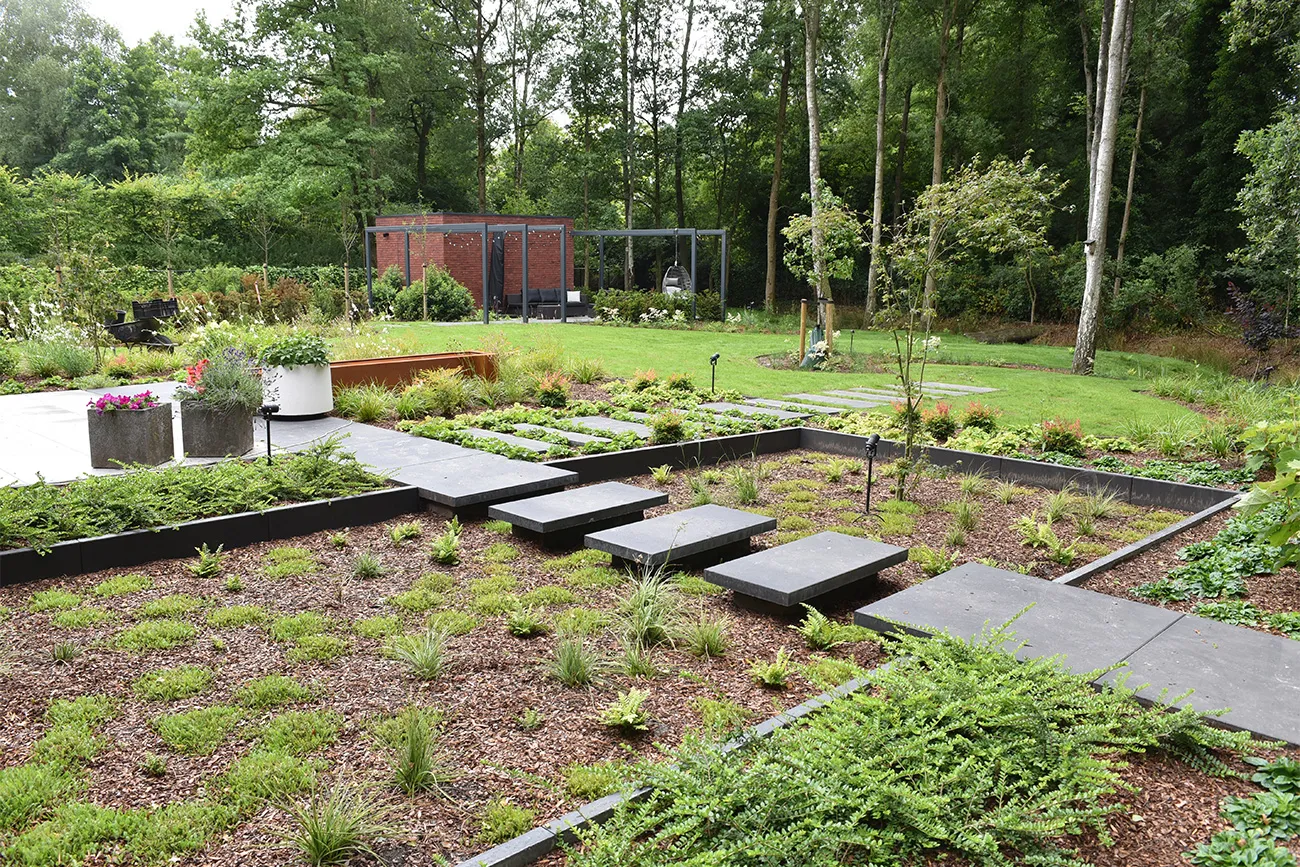
Paving is perfectly acceptable
So persuade your customer to make their garden as water-friendly as possible. The most far-reaching approach is, naturally, to do away with all paved areas. You and I know that this is going too far. Your customer wants a driveway to the garage or carport, a garden path to the front door or garden shed, and, of course, a comfortable patio, possibly even two or more. There is nothing wrong with that. And yes, traditional materials can still be used.
However, do not let water running off these surfaces flow into the sewer. That takes it out of the garden, away from the plants that need it, and even away from groundwater reserves. Instead, give paving stones or slabs a slope towards a planted area, and provide a generously sized dispersal or infiltration zone there. If the soil is heavy, you can improve its ability to absorb water by incorporating sand and other coarse-grained material. Is there already a drainage channel or gully in an existing garden? Install an infiltration crate as an alternative to connecting it to the sewer.
If your customer is open to an even greener solution, suggest water-permeable or permeable paving. Water-permeable paving works through open joints, while permeable paving is made of material that lets water flow straight through it. It is up to you to recommend the most suitable material, from concrete products to clay pavers, from ceramic, natural stone or concrete slabs to timber and composite decking.
A successful, garden- and nature-friendly way of draining rainwater requires the sub-base to be just as permeable, or even more permeable, than the paving itself. So do not use concrete or sand-cement. Instead, use coarse-grained material that leaves plenty of voids while ensuring the paving remains stable.
Grass grids or grass pavers are another option, of course. Although you should not take the word grass too literally. Instead of filling the open spaces with growing medium and greenery, you can fill them with gravel or pebbles, which offer even better water permeability. This also brings us to gravel or pebble driveways and garden paths secured in stabilisation grids.
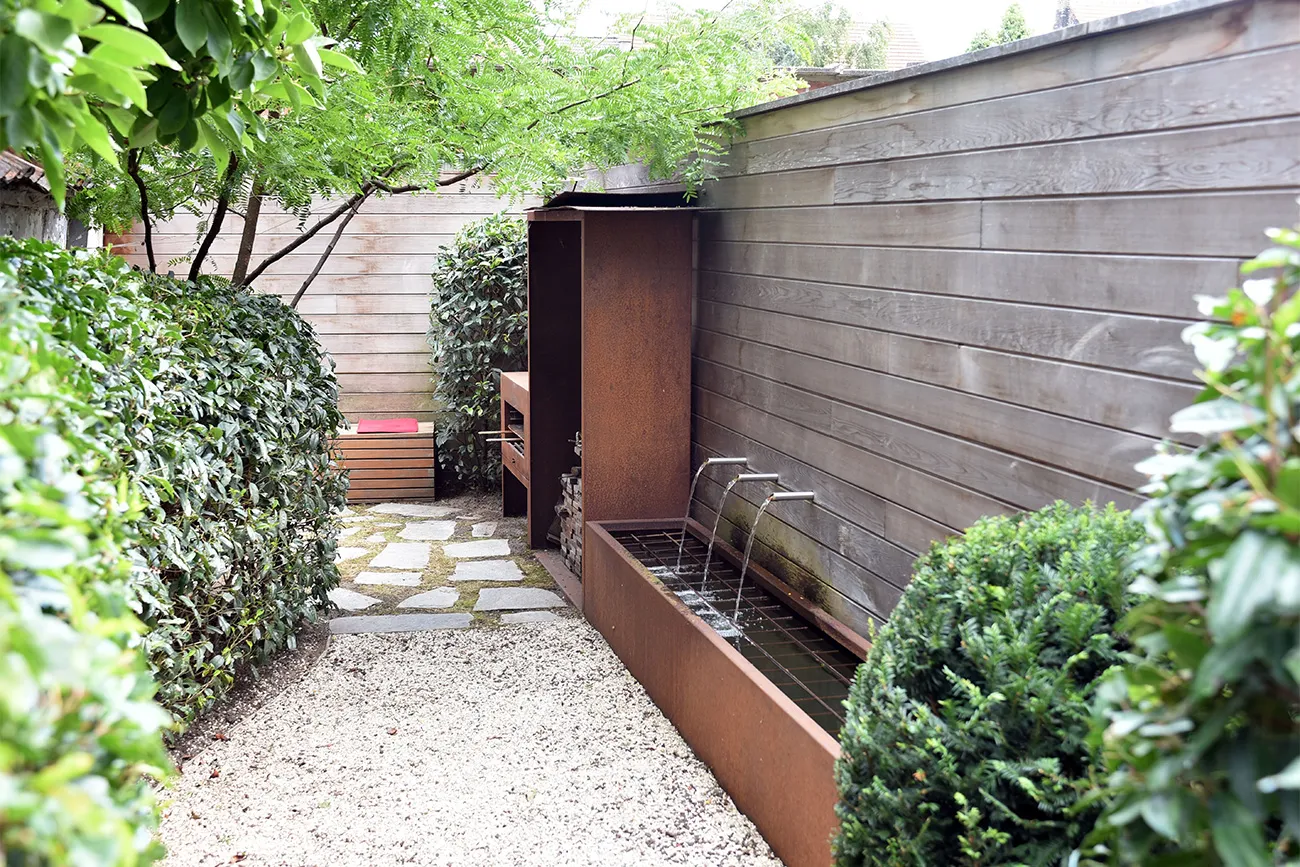
Roof water is a bonus
When creating a new water balance, be sure not to overlook the roof area, whether pitched or flat, of the house and every outbuilding on the plot. Every square metre in Belgium captures 910 litres of water a year (source: KMI Climate Atlas). Some of it is probably collected in a rainwater tank and used for flushing toilets, washing and laundry. In Flanders, installing a rainwater tank, also known as a hemelwaterreservoir, is in fact mandatory for new-build and renovation work.
Even so, there will still be surplus water, or roof areas from which water is not collected. Suggest the most suitable way for your customer to direct it into the garden. A swimming pond is not the answer, at least not if the aim is to create a sponge garden. The water is trapped in a watertight basin and therefore cannot reach garden plants or groundwater reserves. It can only evaporate.
A pond, meaning a pond without a waterproof lining, or a rain garden, a wadi at garden level and planted accordingly, are better solutions. A pond also creates a little piece of nature in the garden, offering a direct invitation to many amphibians, dragonflies and other insects, followed in turn by garden birds. The drawback, however, is that a good pond needs to be about 70 cm deep, so it will retain water except during extremely long periods of drought. This poses a danger to children and pets.
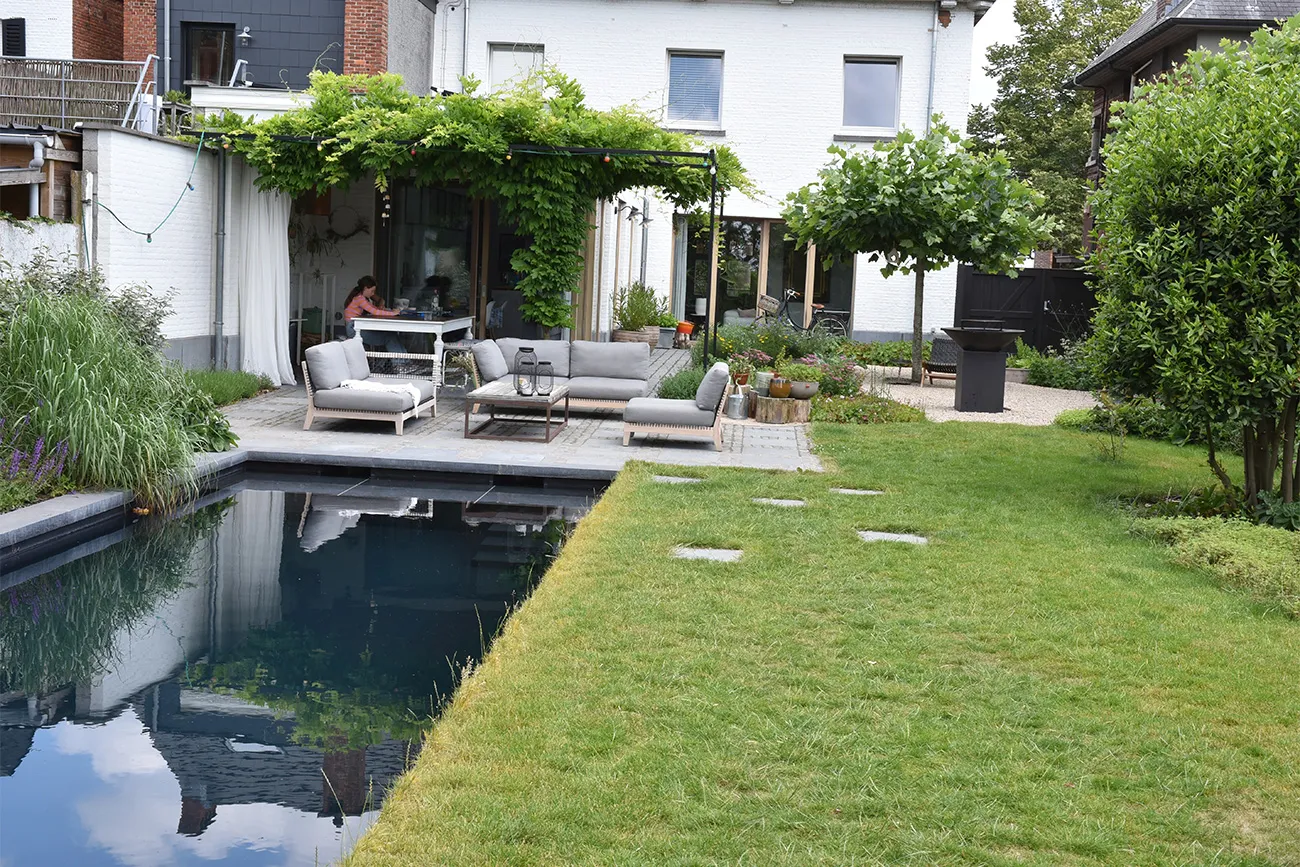
For most of your customers, a rain garden is a better option. A well-designed rain garden allows all the water entering it to infiltrate within a few hours at most. It has a larger surface area available, and the water usually remains hidden among and beneath the plants. On clay and loam soils, however, you may need to improve the infiltration capacity if you want to avoid having to make the rain garden extremely large to hold a lot of water. Always play it safe, though, and install an overflow that leads to an infiltration crate or, if there really is no other option, to the sewer.
It is even better to slow the flow of water into the rain garden. Start with the roof. You can do this with a green roof featuring a sufficiently deep substrate layer or a drainage board with water-retention capacity. This slows down 40 to as much as 100% of rainfall during a shower.
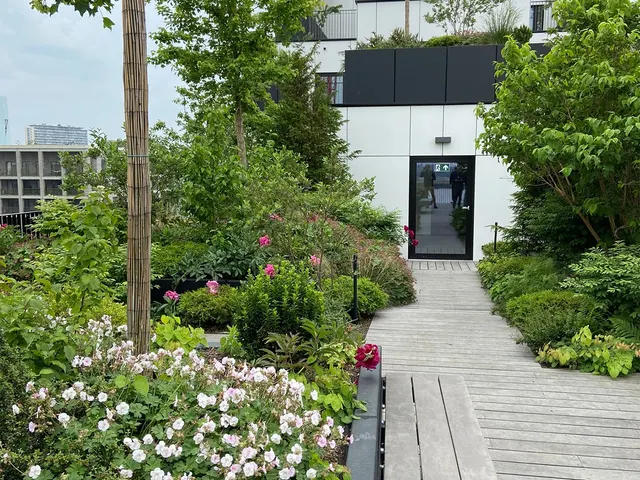
Green roofs are also very important to a garden concept for another reason. They turn black roofs green, giving people a view of plants from the upper floors. They provide a preview of the garden below. They also help cool the garden. This is an argument that resonates with your customers. Alongside water and drought, climate and ecology remain major concerns for them. They simply want all of this in a garden tailored to their tastes. A sponge garden makes that combination possible.
Want more information and tips? Zakboek voor de sponstuin/Manuel pratique du jardin-éponge, a garden that tackles the problems caused by increasingly long periods of drought and extremely hot days interspersed with periods of heavy rain.
Zakboek voor de sponstuin, ISBN 9789401489928 and Manuel pratique du jardin-éponge, EAN 9789401489942 (Marc Verachtert and Bart Verelst, 22.99 euros, 176 pp., paperback, published by Lannoo. Also available as an e-book)
Question about this story? Ask your question
Keep following this
Get an email when a new story is published. No account needed.
- SubjectIn conversation