Building green with TANGRAM: wellbeing, space and value at the heart of the design
Text Kris VandekerckhoveImage TANGRAM
For Bart Mispelblom Beyer, co-founder of TANGRAM Architekten in Amsterdam, sustainability is not a label but a way of thinking. “Most stories about ‘green’ are nonsense,” he says bluntly. “Greenwashing has been popular for decades. We try to challenge that by seeing sustainability not as a sum of technologies, but as an interplay of space, nature and human wellbeing.”
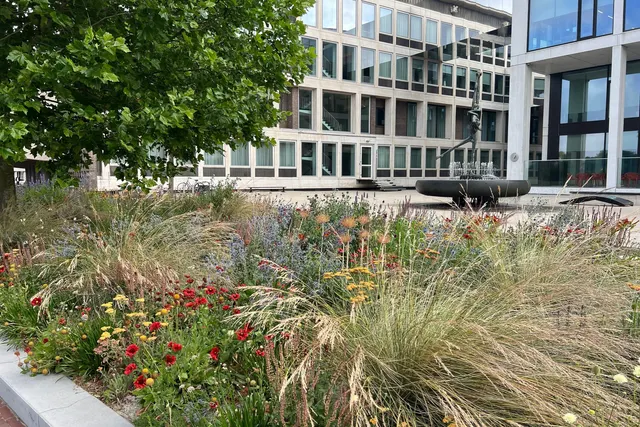
Where others simply ‘add’ greenery, for example a tree in a planter or a roof garden as an excuse, TANGRAM Architekten makes it an integral part of the architecture. The practice has worked for years with three guiding principles: Urban, Healthy and Green. “If you design a building that takes up a lot of the city, it should give something back too,” says co-founder Bart Mispelblom Beyer.
The building as a sponge
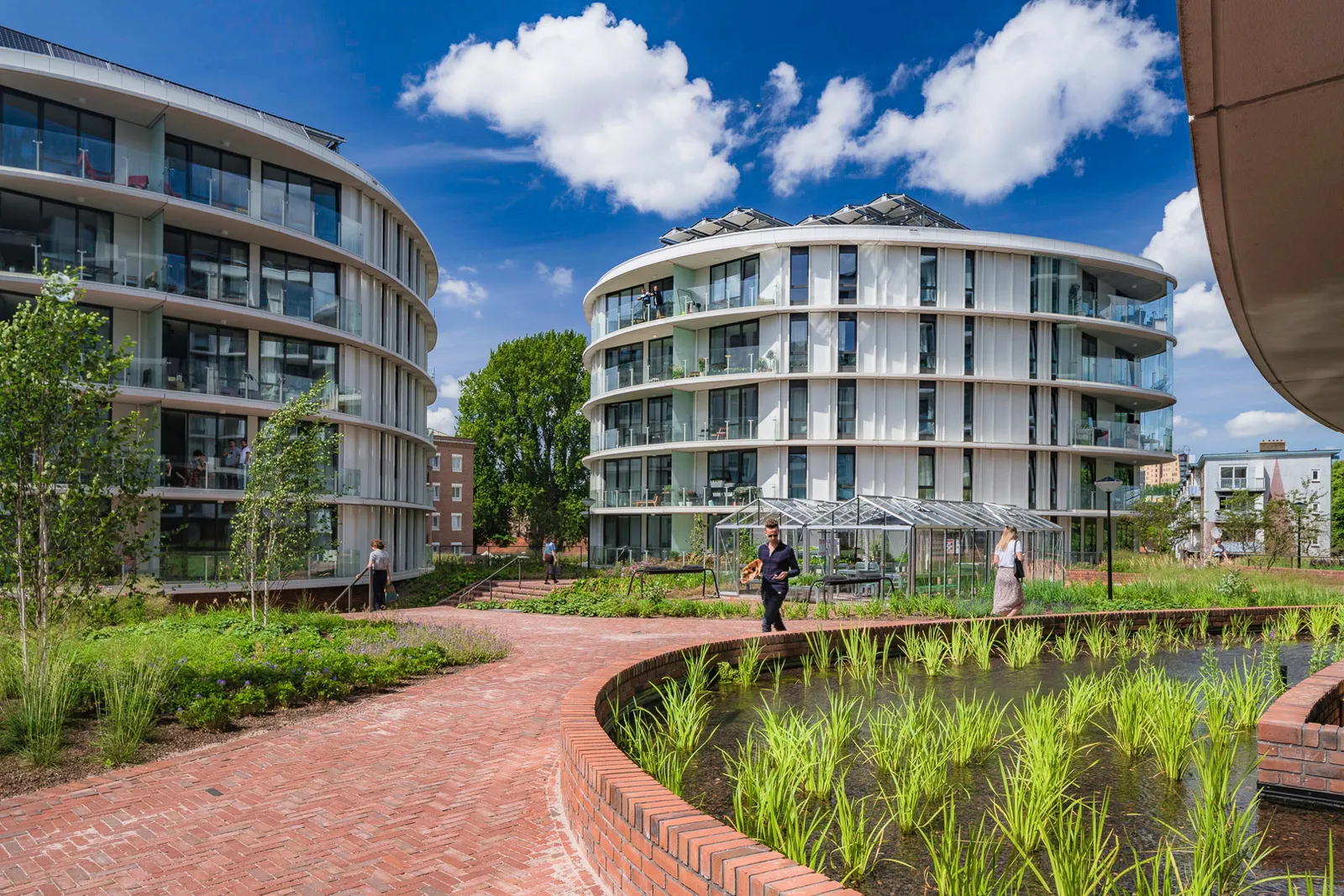
This is put into practice in projects such as Rhapsody in West (Amsterdam). The building literally functions as a sponge. Rainwater is collected in a thick layer of growing medium, where trees grow and sustain themselves.
“Without that layer, the sewers in the surrounding area would not be able to cope. The building retains water, purifies the air and dampens noise. Residents can still hear the motorway, but experience it differently. That is perception, and perception determines wellbeing.”
Soft values, tangible effects
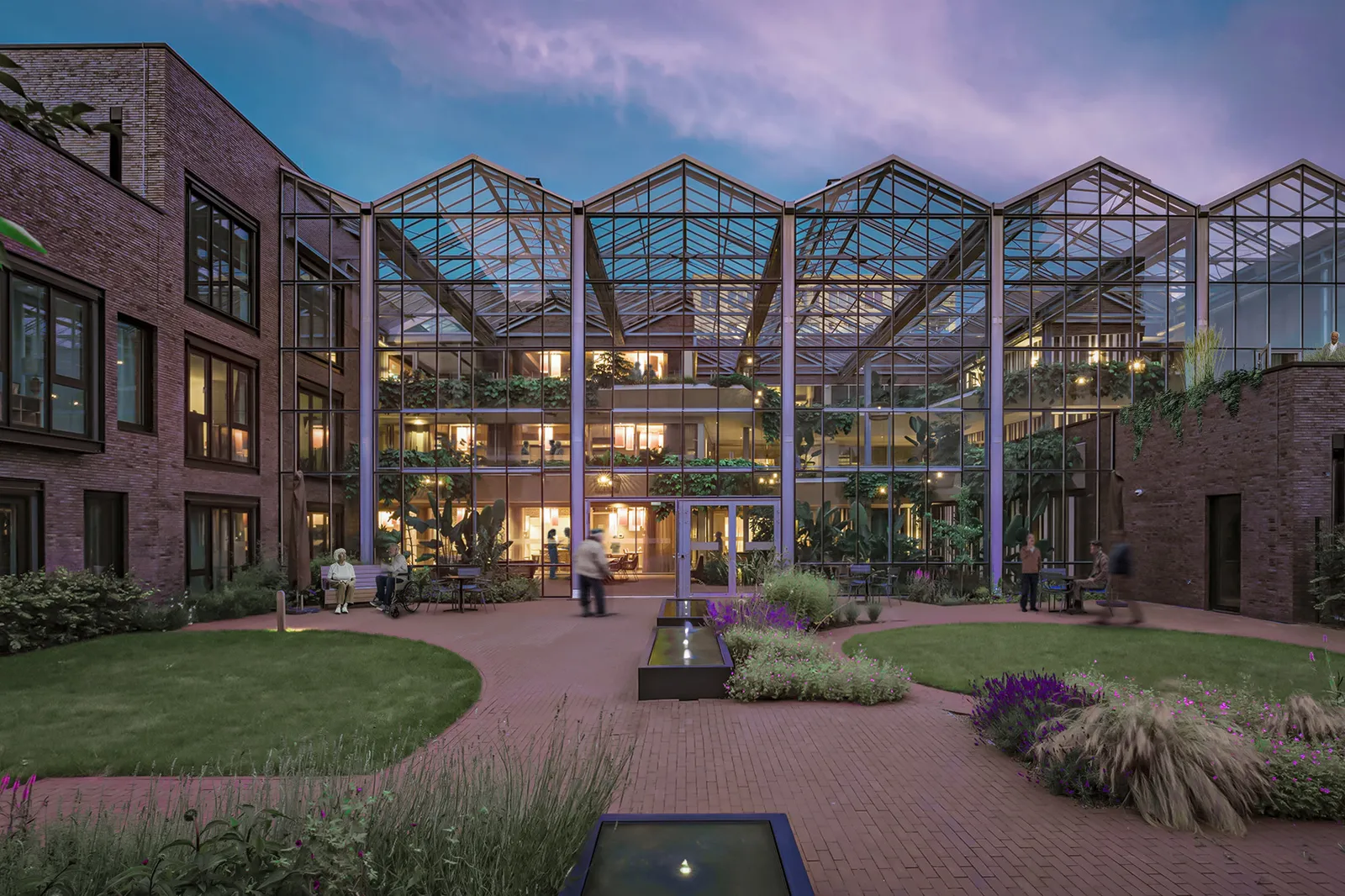
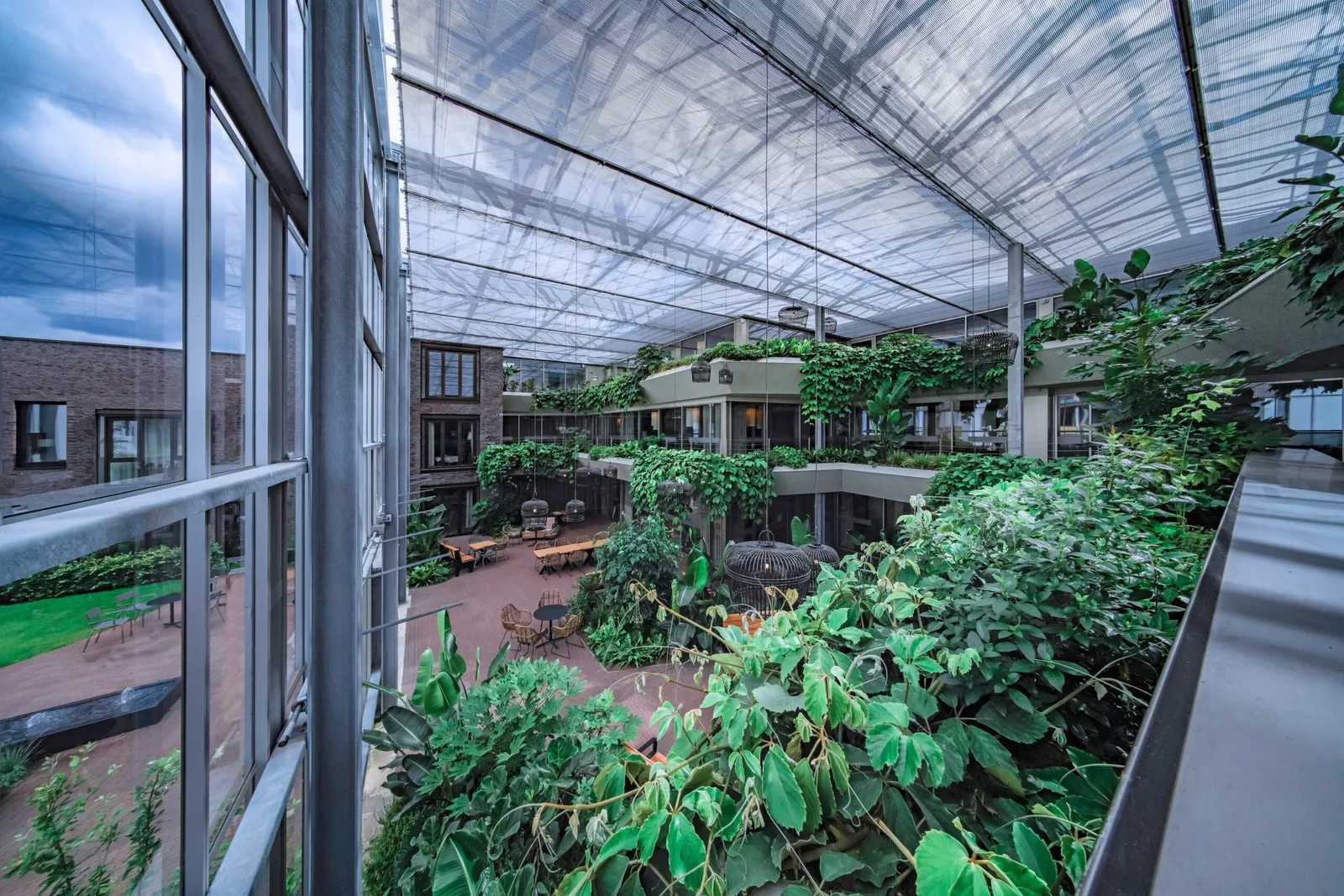
For more than ten years, TANGRAM has been exploring how architecture can contribute to health and happiness. Zuidoever, a residential care home for people with dementia on the Zuidas, is a good example. The building is arranged around a lush courtyard garden, which has since become a small forest. “The air is humid, it smells pleasant, and people naturally seek out the space. As a result, they get to know one another and help each other. Demand for care falls, medication use is halved and sickness absence is ten times lower than average.”
The additional cost of the greenery was substantial, but it was recouped within four years. “That shows that soft values such as wellbeing, social interaction and orientation deliver a measurable return. The construction sector still lacks the language to describe this in concrete terms.”
AI does not know happiness
According to Mispelblom Beyer, this is also a limitation of artificial intelligence. “AI understands hard data such as energy, light and ventilation, but not soft values. Happiness, orientation and comfort cannot simply be modelled.”
That is why TANGRAM is working with TU Delft, Erasmus Universiteit Rotterdam and Universiteit Leiden to investigate how people experience space. “Only when you understand what people see, hear and feel can you turn that into data and use it in the design.”
From cost to value
TANGRAM is working with CBRE Global Investors on a handbook for future-proof housing for older people. “These are parties that invest seriously. They understand that greenery, health and mixed forms of housing increase property value over the long term,” says Mispelblom Beyer.
“Developers often think in terms of costs, while investors look at the total value over the full life cycle. Healthy residents, lower care costs and less staff turnover translate directly into returns.”
Space as a system
According to Mispelblom Beyer, greenery only takes on meaning as part of a larger whole. “A series of parks or courtyards is only valuable if they are connected. They then become ‘green rooms’, places where people can find their bearings.”
This applies to cities as well as buildings. “We design with contrasts in light, sound and materials. This helps people find their way naturally. That is the essence of liveable architecture.”
Question about this story? Ask your question
Keep following this
Get an email when a new story is published. No account needed.
- SubjectGarden maintenance