Damme creates its first bee-friendly parking area
Text Elise NoyezImage Stad Damme
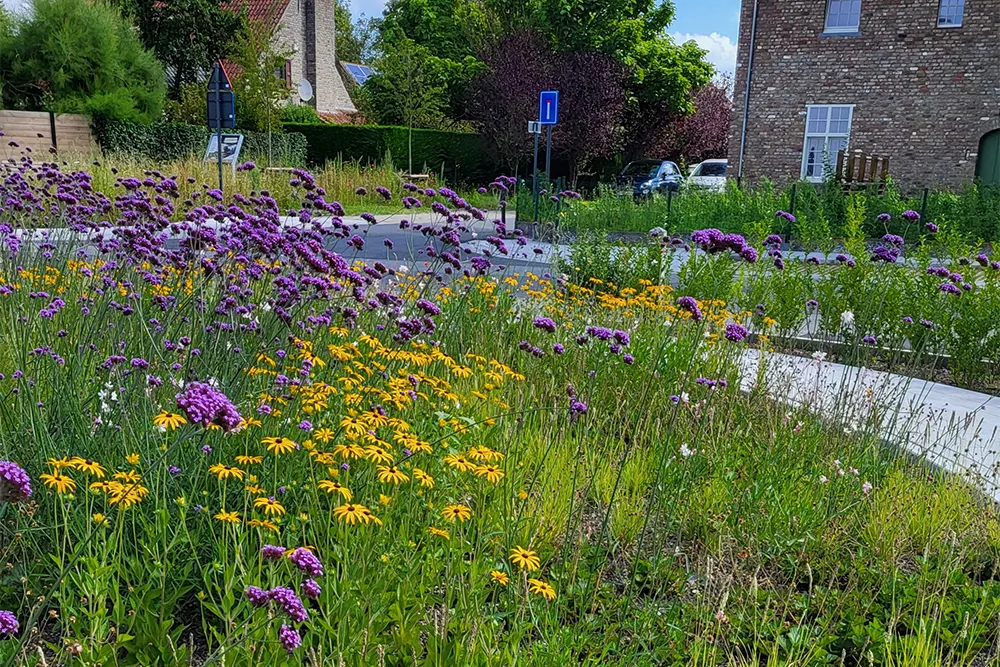
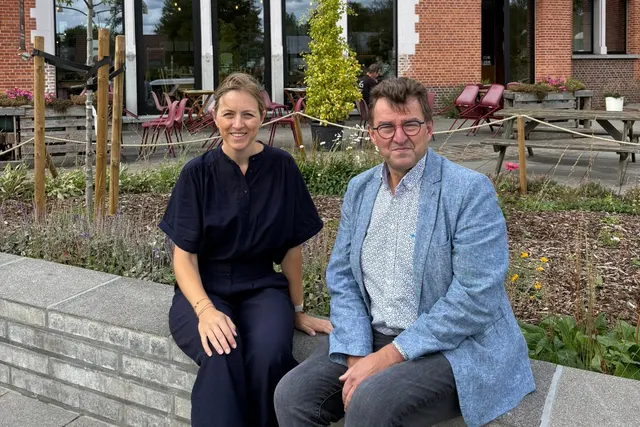
In our City in the Spotlight section, each edition features a city or municipal authority and looks at the initiatives being taken to strengthen nature management, green spaces and biodiversity. As a bee-friendly municipality, Damme in West Flanders took another, and so far unique, step over the past year towards making more space for pollinators. With a bee-friendly parking area, green-space expert Chantal Van Rie hopes not only to raise the city’s score in the bee-friendly municipality scheme from four bees to the maximum of five, but also to inspire other municipalities.
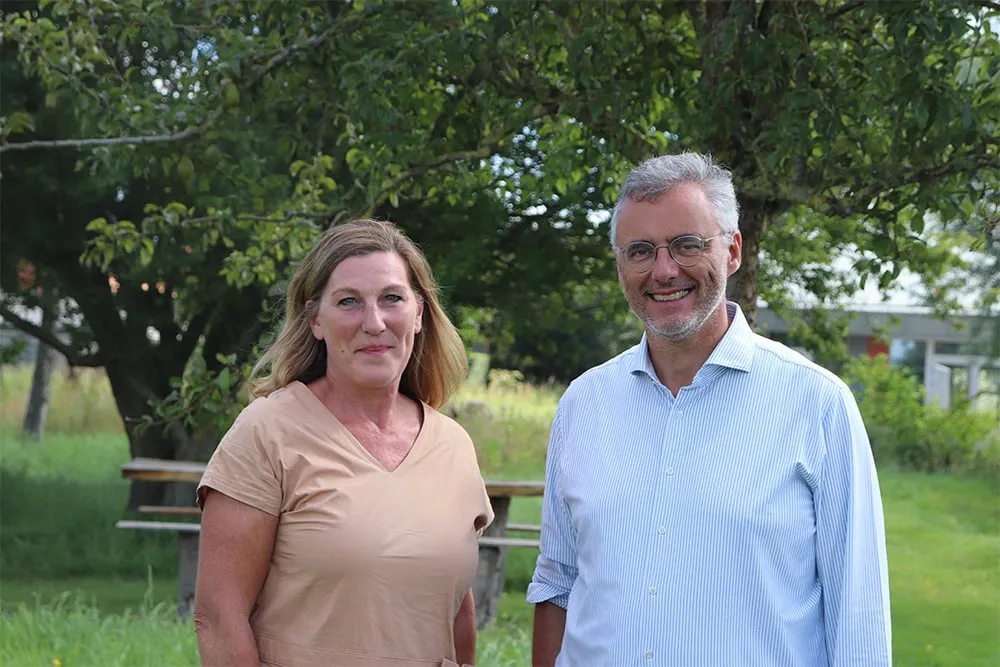
“In recent years, we have already invested considerably in space for bees and other pollinators,” says Chantal, who left her job in education around ten years ago to train in green-space management and take up a position in Damme’s urban development department. “Under the Bijdankt! campaign, for example, we have created plenty of new habitat for bees since 2015. In 2019, together with Dominique Persoone, not only a well-known chocolatier but also a beekeeper and Damme resident, we created Flanders’ most beautiful bee-friendly garden. And since 2020, we have been involved in the Kruisbestuivers bee project with Regionaal Landschap Houtland, Stad-Land-schap ’t West-Vlaamse hart, Inagro and the municipality of Knokke-Heist. These initiatives have earned us a score of four bees from VVOG. With the new bee-friendly parking area, we aim to reach the five-bee mark.”
More than just depaving
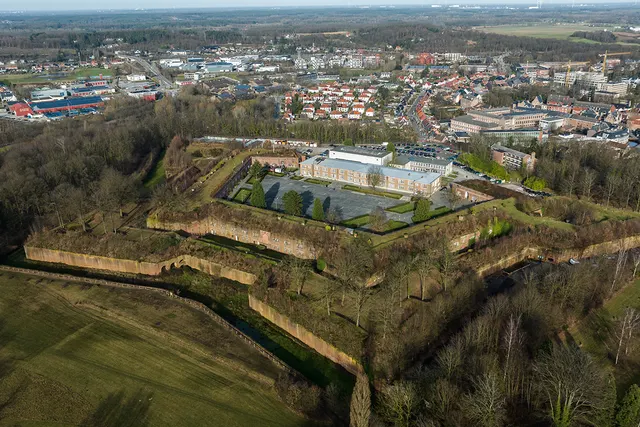
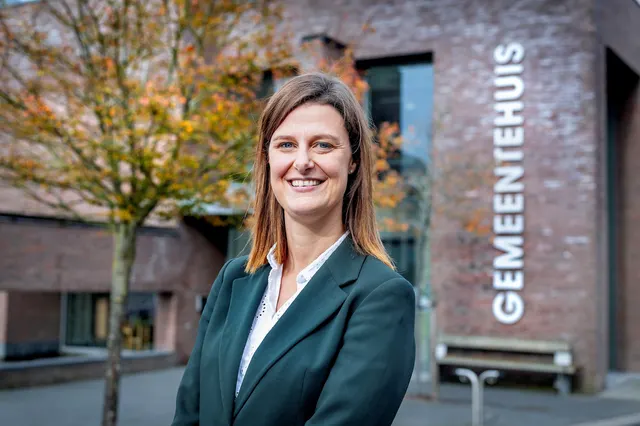
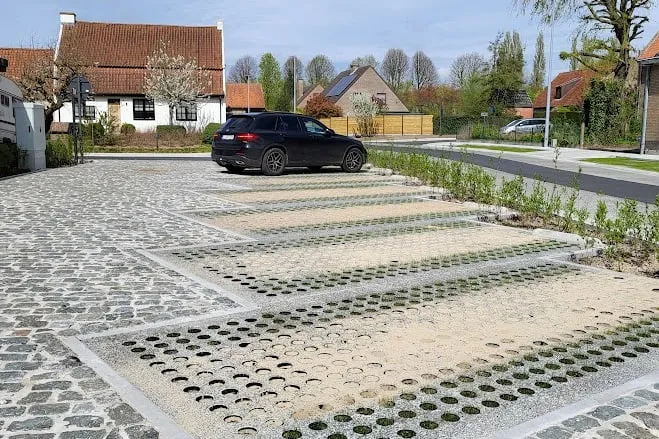
Damme had been planning to create a new habitat for solitary mining bees for some time, but finding a suitable project took a while. “Like many other municipalities, we are making a major effort to depave. So we saw the construction of seven new permeable parking bays as the ideal opportunity to bring two sustainability goals together.” Mayor Joachim Coens adds: “Damme is a Cittaslow city. That means we place great importance on biodiversity. In various parts of our city, we are therefore trying to depave areas while ensuring a high-quality natural environment on the one hand and a good quality of life for our residents on the other. The bee parking area in Moerkerke is a perfect example of this approach.”
But combining a car park with a bee habitat was not straightforward. Mining bees nest in a sand bed at least 35 to 40 cm deep, but this generally lacks the load-bearing capacity needed to support a permeable surface. Damme joined forces with engineering consultancy Lobelle, contractor Verhegge and supplier Deschacht to find a suitable solution. They opted for the patented Drainix® permeable paving system. Chantal explains: “The advantage of this system is that the entire parking area is laid using a single slab, so you can work with a considerably wider surface than with conventional grass pavers. In our pilot project, we used crushed stone for the wheel tracks, while the entire central area of the parking space was filled with the required sand bed.”
Test case
The exact composition of the sand bed is still being tested. “There is no clear consensus on which type of sand mining bees prefer. That is why we see this pilot project as a test case. The parking spaces were built using different types of sand: pure sandy loam, two different grades of river sand and several mixtures. So far, the bees seem to be nesting mainly in the sandy loam, but we will monitor developments for at least two years. This will allow us to make a well-informed choice for future projects, several of which are already in the pipeline.”
Space to forage
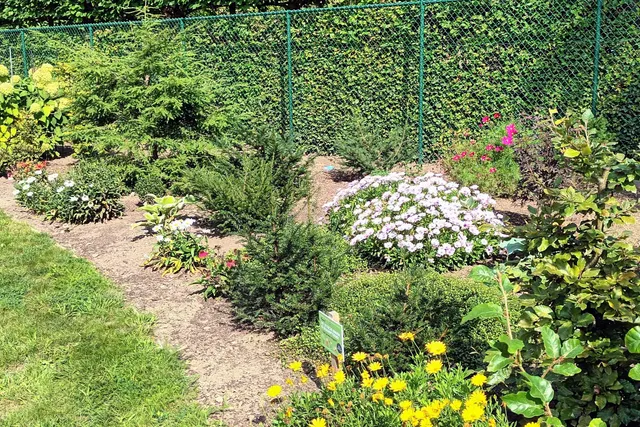
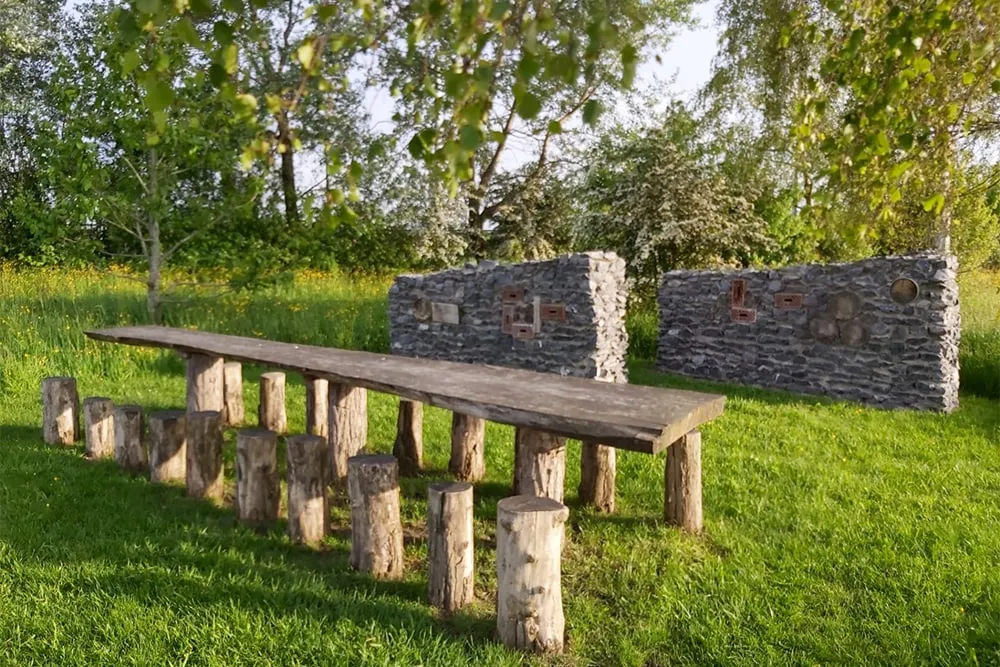
The project also paid due attention to the area around the parking bays. “There is little point in creating a habitat if bees cannot find the food sources they need nearby. This is particularly important for mining bees, which have a limited flight range, so there needs to be enough foraging space close at hand. We planted additional flowering trees and a new wildflower meadow around the car park, and the edge of the parking area was planted with a long-flowering perennial mix that we call the ‘Moerkerke-mix’. This bee-friendly plant mix includes species with long flowering periods and open flower heads, and we use it throughout the sub-municipality of Moerkerke. This creates a recognisable look along the streets and also encourages residents to plant the same species in their gardens. The surrounding gardens and the cooperation of our residents are also essential for the bee population.”
Question about this story? Ask your question
Companies in this story
Keep following this
Get an email when a new story is published. No account needed.
- ThemeGreen space for everyone
- SubjectCity in the spotlight
- CompanyDeschacht