How depaving works in practice in Oostkamp
Text Elise NoyezImage Gemeente Oostkamp
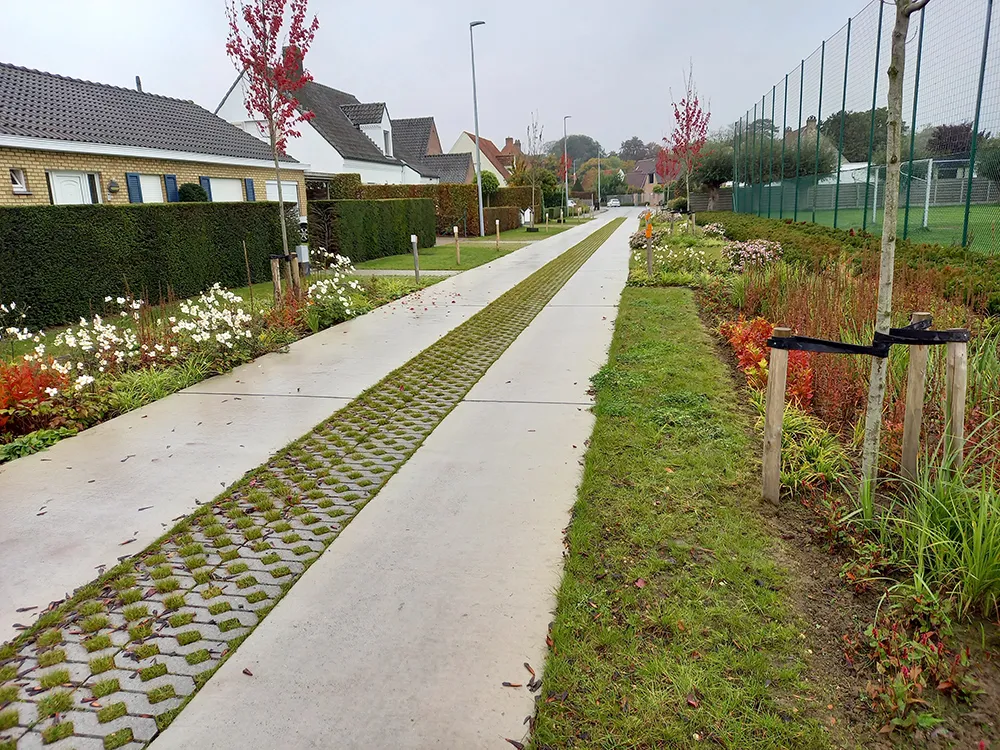
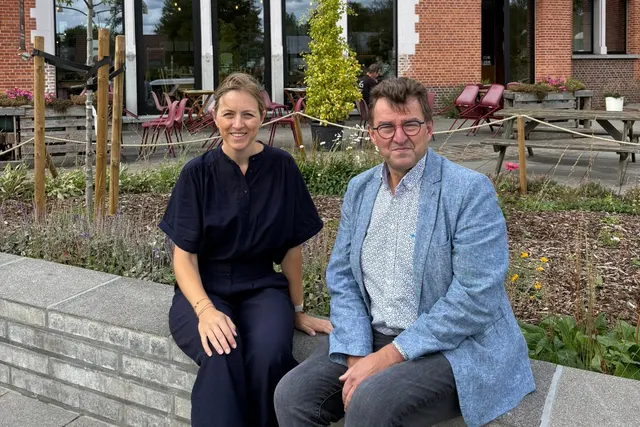
In each edition of our City in the Spotlight feature, we hear from a city or municipal authority about the initiatives it is taking to strengthen nature management, green spaces and biodiversity. In Oostkamp, they are well aware that depaving urban and town centres is a crucial part of this. After several individual depaving and greening projects at neighbourhood level, a major traffic and parking route in the commercial centre is now also being transformed. Mayor Jan de Keyser and alderman Delphine Roels explain exactly how it is being done.
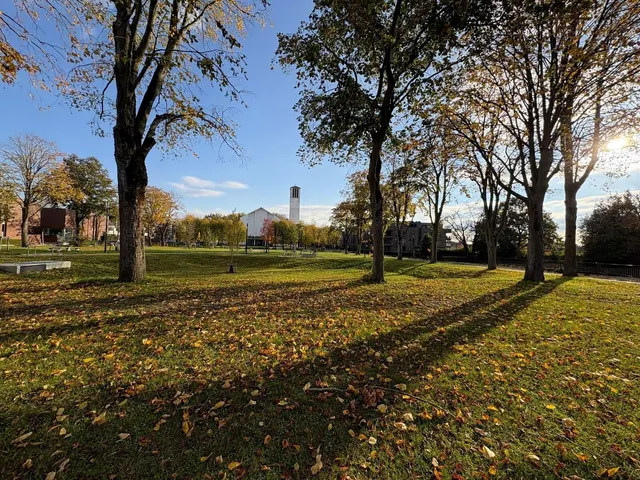
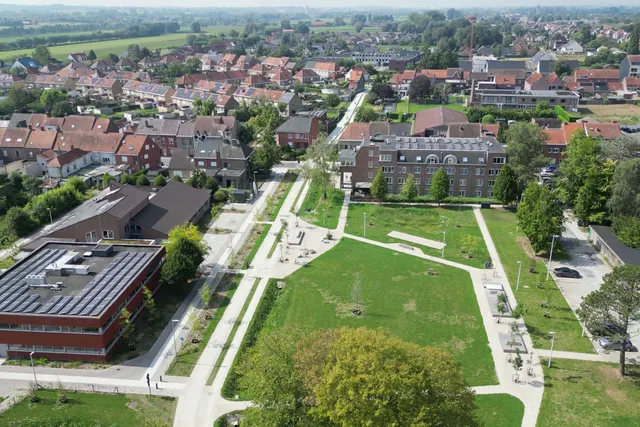
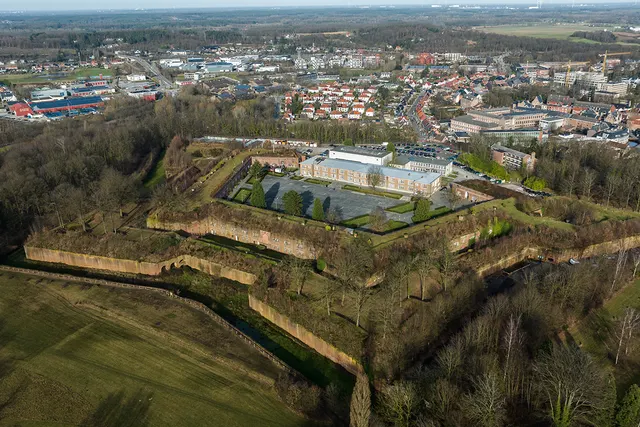
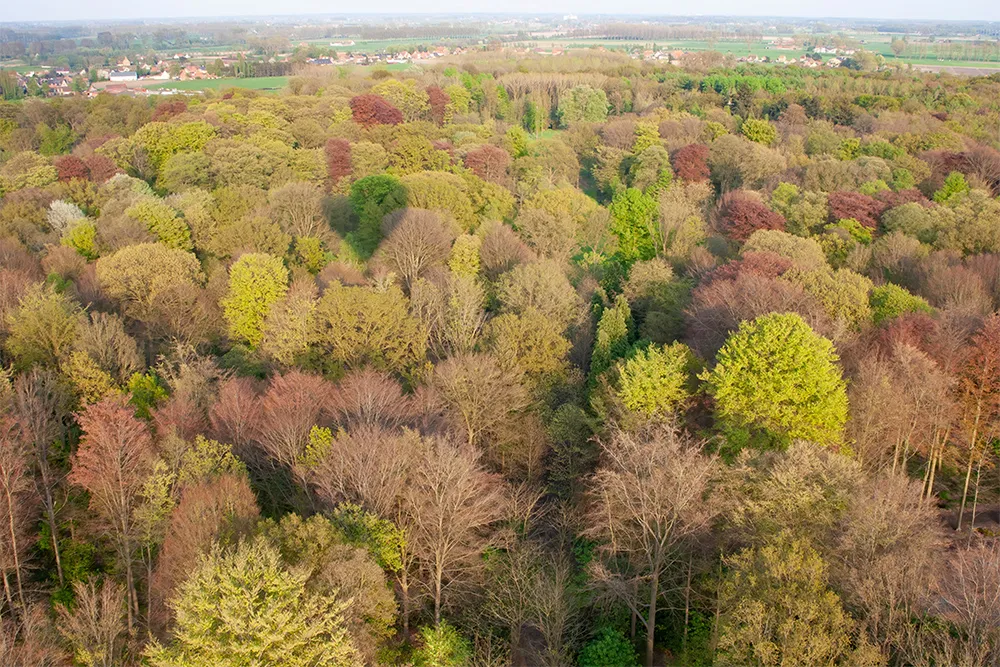
Oostkamp is far from a grey municipality. Despite its close links with neighbouring Bruges, this enterprising municipality also stands out as the most wooded in West Flanders. “We owe that above all to the many castle estates built historically as stopping points on the route to the coast,” says Mayor Jan de Keyser. “But the active farming and horticulture in our area also play an important part in its green character. The green thread had not yet been fully carried through in the commercial centre. But because we want to pass Oostkamp on to the next generation in a sustainable way, and are convinced that space for greenery and social interaction is crucial to that, last year we began climate-resilient redevelopment of the centrally located Schooldreef. More than 1,800 m2 of paving has already been removed.”
Space for people and water
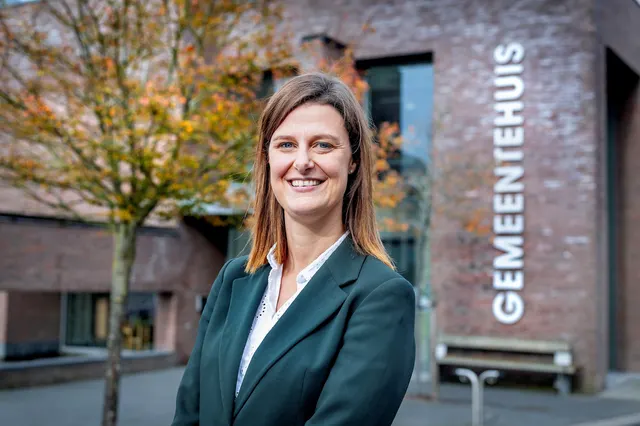
There is another reason why depaving was such an explicit choice in the redevelopment of Schooldreef, adds Delphine Roels, alderman for Public Space Management. “Oostkamp lies in the lower reaches of several important streams, and its proximity to Bruges also means that flooding sometimes affects our streets. So it was essential for us to combine the focus on creating an attractive public space with making room for water.”
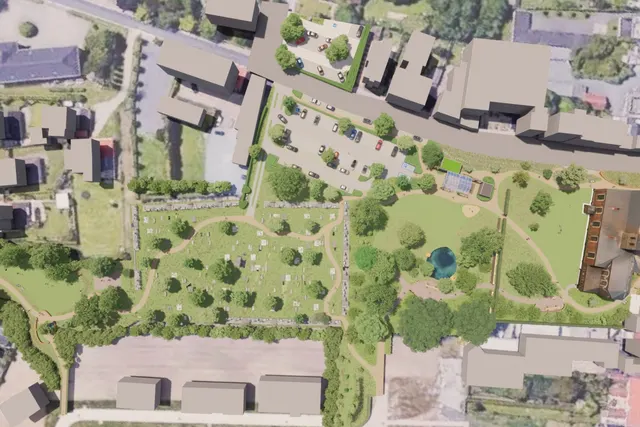
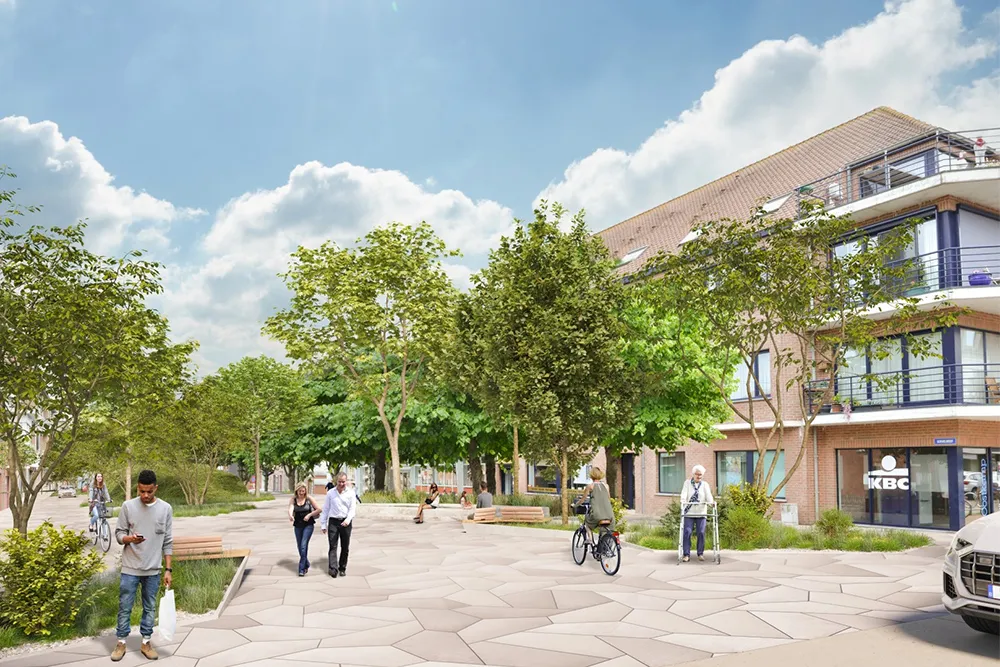
This is being achieved by removing the parking spaces on the central reservation and closing Schooldreef to through traffic. Through traffic is no longer possible, and at ground level the street is divided into two zones. At the junction with the N50, a public space with hospitality venues and shops will provide ample room for pedestrians and cyclists to move around. The other side of the street is becoming a residential area with a park-like feel, connected to Beukenpark.
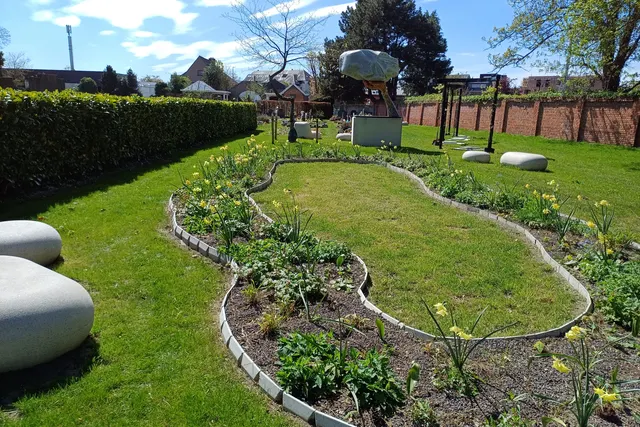
“The residential area will still be fully accessible to destination traffic, but it will look much more natural. For example, the planting beds will be set deeper into the ground and function as fully fledged rain gardens. Along the entire length of the street, rainwater will infiltrate into the soil through the planting beds. Only if water levels threaten to get too high in extreme conditions will it flow into the sewer via an overflow.”
A distinctive partnership
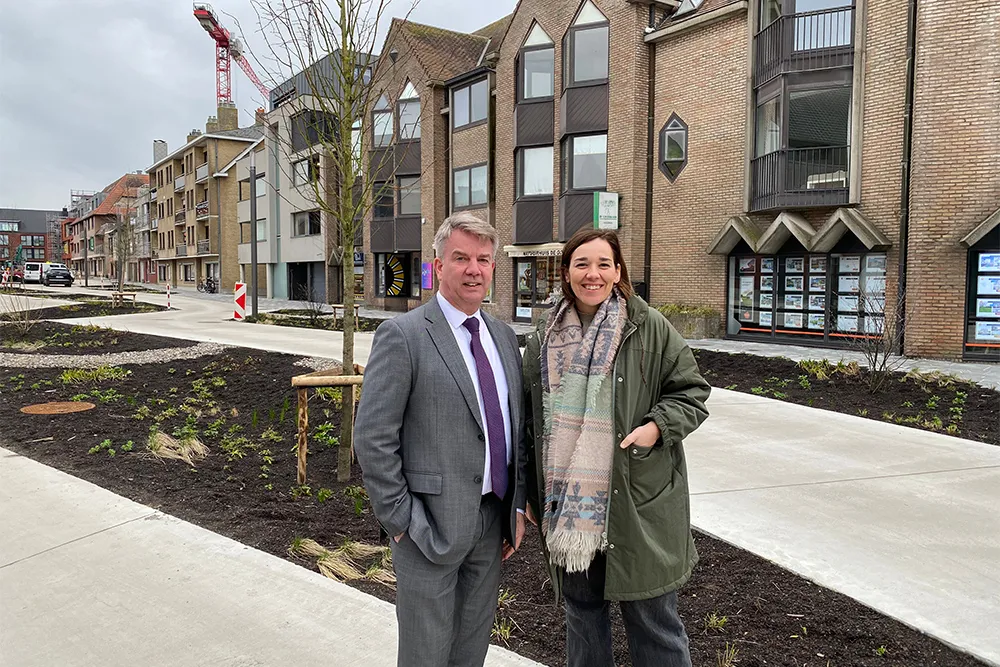
The municipal authority in Oostkamp also had to think creatively to realise the project’s ambitions. The many parking spaces removed at ground level had to be provided elsewhere. Mayor Jan de Keyser: “The conventional solution would be to build a new car park beneath the street, but that would of course limit the scope for planting and infiltration. A concrete basement is not a sustainable solution. So we partnered with a private new-build project on the corner of the street and bought two underground parking levels in it. Combining a project like this with a private initiative is by no means straightforward, but it ultimately safeguards the climate-resilient and water-sensitive design of the street.”
Climate-resilient and easy to maintain
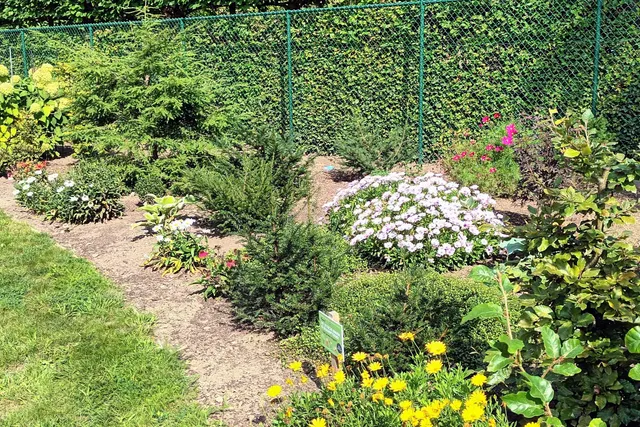
The design incorporates, among other things, light-coloured concrete products to reduce heat stress, and planting beds filled with lava to provide additional water storage capacity. The planting consists, or will consist, of a selection of low-maintenance species that are resistant to both wet and dry conditions.
“Fortunately, we have built up a lot of expertise in this area in recent years,” says Delphine Roels. “We have learned a great deal, particularly from the various depaving projects in our neighbourhoods. For example, we now realise that maintaining projects like these can be particularly demanding in the first few years, but that things do settle down after two to three years. In any case, they should require less labour in future than maintaining all those typical hedge beds.”
“One of the biggest challenges with projects like these is indeed ensuring they are manageable in terms of maintenance,” adds Jan de Keyser. “Climate-resilient and easy to maintain. From a public-sector perspective, those are the key requirements. I am sometimes surprised that the ornamental horticulture sector has not yet responded more to this. Cities and municipalities will continue to depave more and more areas in the coming years, so the market for green infrastructure will only grow. This represents a huge opportunity for the Flemish ornamental horticulture sector.”
Question about this story? Ask your question
Keep following this
Get an email when a new story is published. No account needed.
- ThemeGreen space for everyone
- SubjectCity in the spotlight