How Meerhout is tackling rainwater infiltration, depaving and greening
Text Sara DekeselImage Meerhout
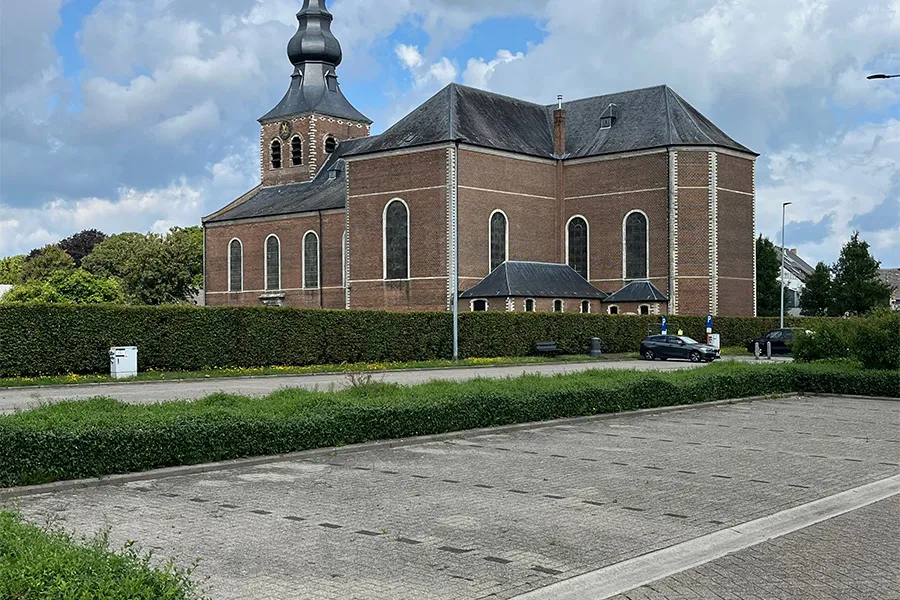
Climate solutions do not simply fall from the sky. Although… In Meerhout, they almost do. Churches, chapels and cemeteries that have been made more sustainable are helping to improve climate resilience. Walter Verbraeken, Alderman for the Environment, explains how the local authority is making use of its heritage for its rainwater and drought plan, and what other measures the municipality in the Campine region is taking as part of the Local Energy and Climate Pact 2.0.
Water diverted to moats and swales
Local rainwater infiltration is important both to prevent flooding and to maintain groundwater levels. “The roof of the town hall has been disconnected from the sewer system, and all the rainwater now flows into swales,” says Verbraeken. “We are now disconnecting three churches and a chapel too, allowing around 10,000 cubic metres more water to infiltrate locally.”
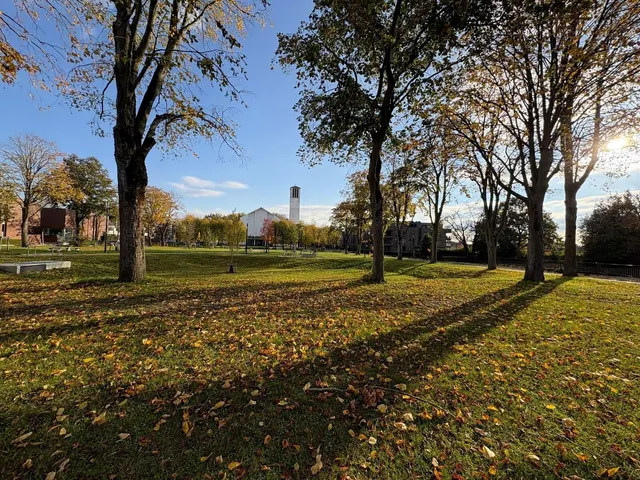
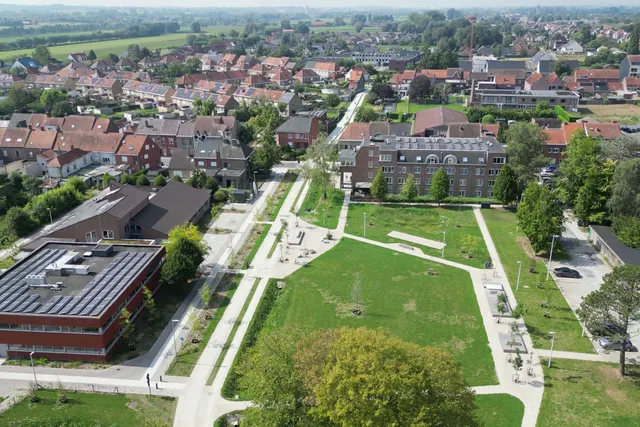
“In the hamlet of Gestel, water from the roof of Sint-Jozefskerk will flow into the moats around the presbytery. Next to Sint-Bavokerk in Zittaart, we are creating a swale for rainwater, as we are next to Sint-Trudokerk in the town centre. Beside the chapel in the hamlet of De Berg, we are depaving part of the car park to make room for a swale.”
Water storage for periods of drought
In 2022, 5,500 new trees were planted in Meerhout. “We draw water for planting from the Albert Canal. Sometimes water abstraction is prohibited there. To ensure we still have water in those cases, we applied for a permit to draw water from the fishing pond. A company in the municipality allows us to draw 80 m3 from its water reserve, and we hire water bladders with a capacity of 250 m3,” says Verbraeken.
Depaving and greening cemeteries
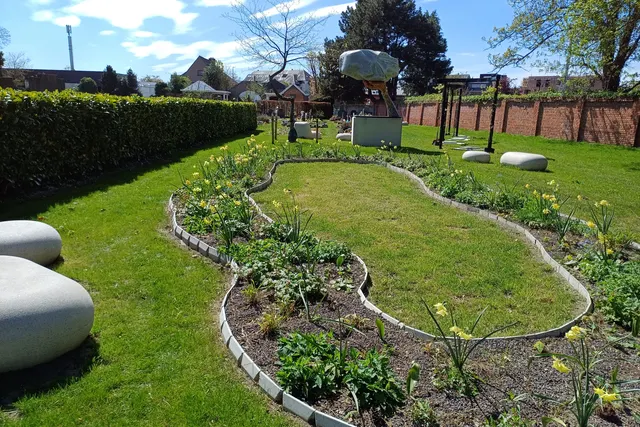
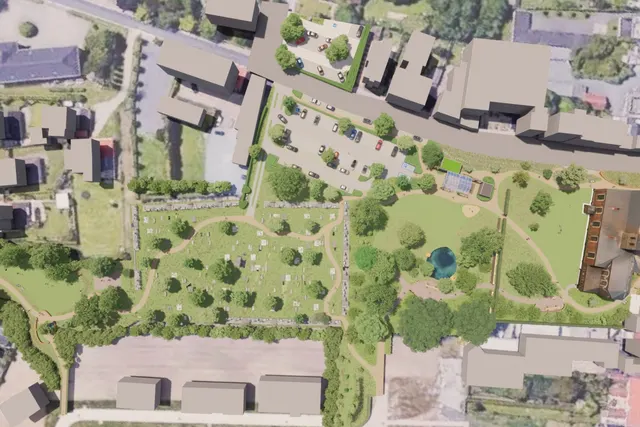
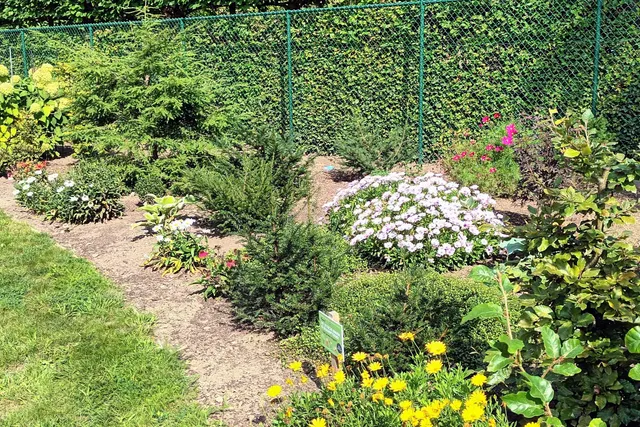
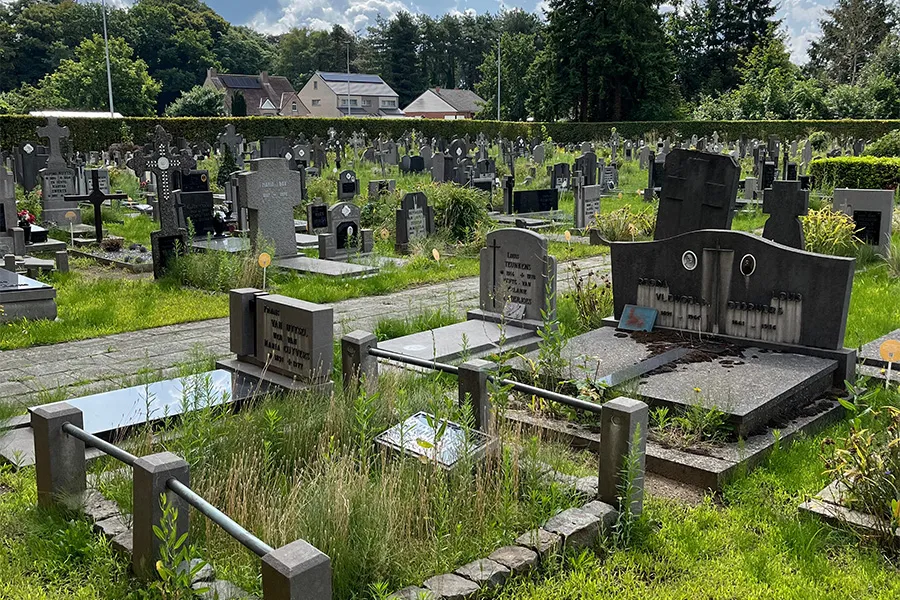
The municipality promotes tile-lifting and front gardens, and is busy depaving and greening squares and paths. Cemeteries are no exception to this drive to remove paving. At the ‘new cemetery’, the paved paths are being replaced with reinforced grass. No one has been buried in the cemetery around Sint-Trudokerk since 1977. “We want to enhance the site, but the cemetery is protected heritage because of its great variety of crosses. Of the thousand graves, four hundred must be retained. The others will make way for a park with a bee hotel, beehives, a wildflower meadow… The one-hectare park will be linked to Netepark by a path,” explains Verbraeken.
From Peer Plimp to LED lighting
The walking trail will be called Peer Plimp-pad. Verbraeken explains: “Peer Plimp was the village miller. He used his watermill to generate electricity for the streetlights. When there was little water, the bulbs in the streetlights flickered. In the Meerhout dialect, ‘flicker’ is ‘plimpen’. That is where his nickname comes from.” Flickering lights are now a thing of the past. The municipality is now working hard to switch its public lighting to LED.
Further sustainability measures
To round off, Verbraeken has more to say about making Meerhout’s building stock more sustainable: “To encourage homeowners to make their properties more energy-efficient, we are recruiting a renovation coach. At our village festivals, the ‘kattenfeesten’, we will hold climate cafés, where we aim to persuade 235 residents to contact the coach.”
The municipality will soon be making another major effort. “We are renovating one floor of the new town hall to accommodate the social services department. It is currently housed in the old monastery building, which is poorly insulated and suffers enormous heat losses. The building will be demolished and the site depaved.”
Three new wind turbines and two shared cars complete the picture of Meerhout’s current energy and climate efforts.
Question about this story? Ask your question
Keep following this
Get an email when a new story is published. No account needed.
- ThemeGreen space for everyone
- SubjectCity in the spotlight