High-quality green roofs in the city: a story of inspiration and awareness-raising
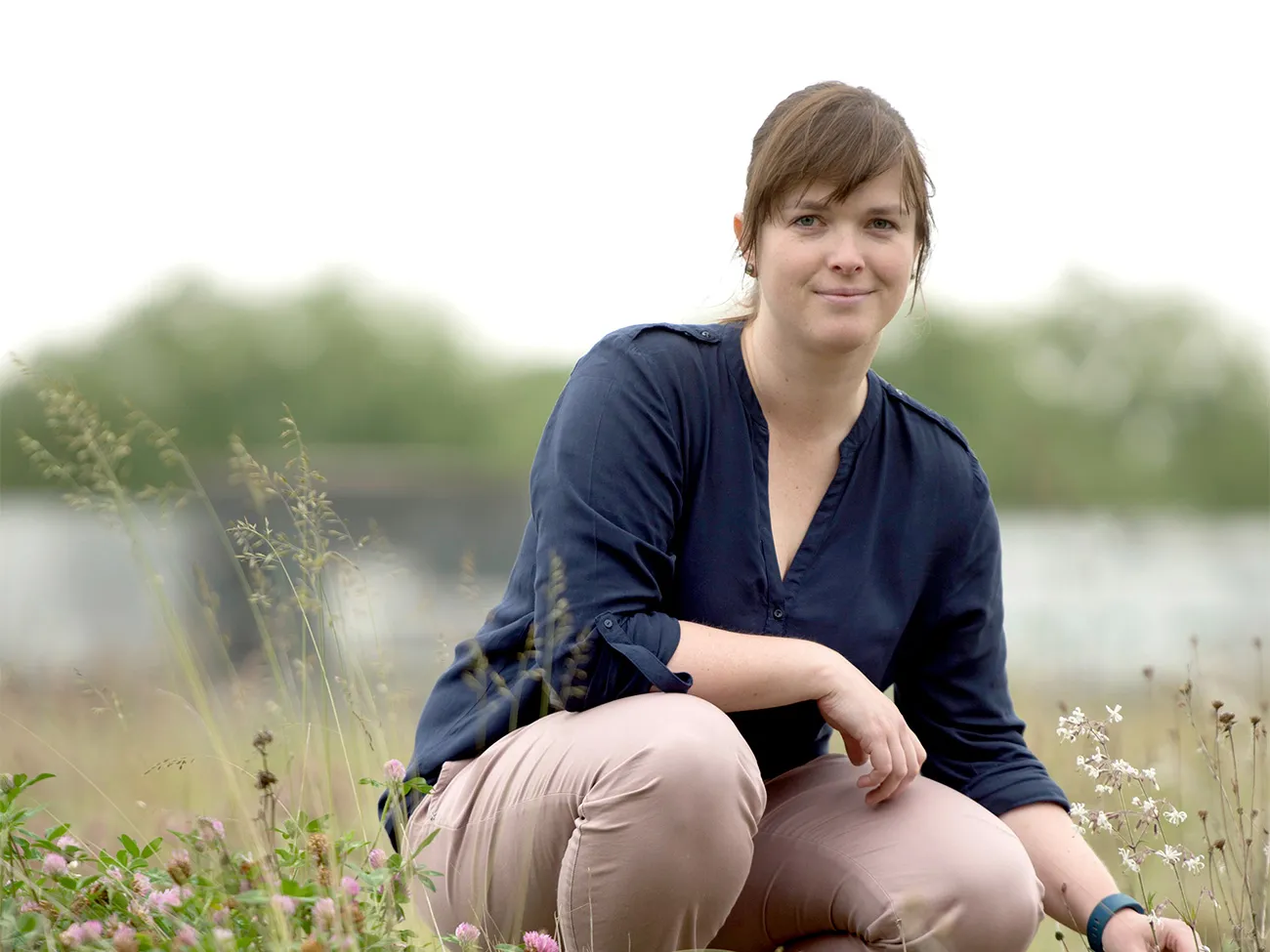
Carmen Van Mechelen
Ecologist with a passion for biodiversity and green roofs. Lecturer on the bachelor’s degree in Green Management at Hogeschool PXL. Researcher at PXL Bio-Research. PXL Bio-Research carries out applied research and service projects in the fields of biodiversity, public green space and molecular biodetection.
I sometimes say in my classes that ‘Flanders is a patchwork of concrete’. The root cause is the extensive fragmentation of green space, with a lack of high-quality nature as the inevitable result. Yet being close to nature and having a view of it are essential for our health and wellbeing, something that became abundantly clear during the coronavirus pandemic. Nature also provides us with ecosystem services such as water retention, air purification and a more pleasant temperature, giving us further reason to bring nature right into the heart of our cities. There is an enormous area of suitable, unused roof and façade space just waiting to be put to use!
When people think of green roofs and green façades, they may picture the inspiring designs of architects such as Vincent Callebaut, Luc Schuiten and Stefano Boeri. These may be visionary, but they are increasingly feasible too, as Bosco Verticale in Milan has shown. Alongside these architectural showpieces, numerous smaller initiatives are also taking shape. The Netherlands is leading the way in this field, with the Green Deal Groene Daken and the Nationaal Dakenplan promoting multifunctional roofs to the full. The Rotterdamse dakendagen festival and, in Antwerp, the Dakkan festival also showcase the many possibilities and help build broad support for green roofs and green façades.
In recent years, the number of green roofs being installed has risen sharply. The reasons vary, but all too often they are installed ‘because they have to be’ as part of new-build or renovation projects. This means that people continue to opt for extensive sedum roofs with a thin layer of substrate. These are certainly better than bare roofs and can also be installed on many types of structure, but green roofs have so much more to offer! If we want to bring high-quality nature into our cities, we need to enhance the natural character and biodiversity of green roofs. This is where so-called biodiverse roofs or green roofs planted with native species come in. A few things need to be considered, including a deeper substrate layer, which requires a stronger roof structure, suitable plant species with ecological value, and features for local insects. Architects and contractors also need to be on board. That is why, alongside continued awareness-raising about the benefits and possibilities of green roofs, it is essential to improve knowledge and expertise.
Many initiatives are already under way, targeting both the public and the construction sector, but there is still much to be done. Green-space companies, federations, research institutions and government bodies are pooling their expertise, improving general knowledge and helping to find high-quality materials and solutions. The commitment is certainly there, but it still needs to reach the entire target audience, from clients and designers to contractors and everyone in between.
Let’s transform our cities into a patchwork of high-quality green space, making an important contribution to climate adaptation, increased biodiversity and everyone’s wellbeing!
Question about this story? Ask your question
Keep following this
Get an email when a new story is published. No account needed.
- SubjectIn conversation