Liveable green spaces: sharing knowledge and experience is essential
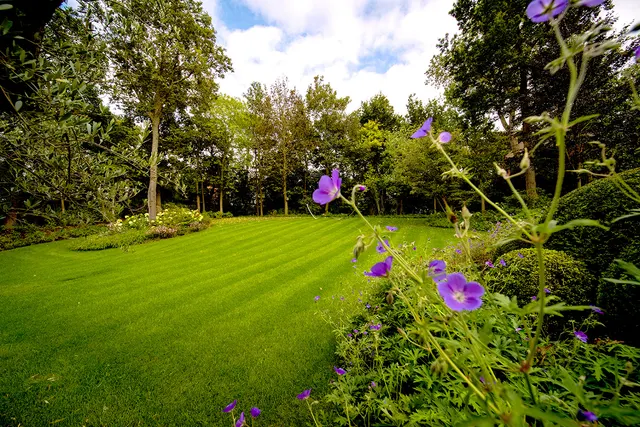
High-quality green spaces are important for our densely populated cities and municipalities. They make residential areas liveable, protect against heavy rainfall, support biodiversity and provide cooling… Growing awareness of these benefits among the public, local authorities, property developers and businesses has greatly increased support for creating green spaces. This positive trend was further boosted by the recent coronavirus pandemic. Landscape gardeners have more than enough work, and the number of new businesses is growing exponentially.
Where the focus used to be primarily on aesthetics, open green spaces in densely populated Flanders now increasingly need to serve a range of purposes: recreation, providing food for bees, butterflies, birds and people, water storage, cooling, air purification and so on. This also creates new challenges for both the public and private green sectors. In addition, the use of plant protection products by public authorities is largely prohibited, and restrictions on their use by landscape gardeners are also increasing. The aim, then, must be to create as much low-maintenance greenery as possible without compromising on quality. After all, nothing undermines growing public support more than poor examples.
Support for green-space professionals through trade associations, practical research and training sessions is vital to meeting these challenges. Knowledge of plant ranges suited to changing climate conditions and the urban environment, designs that combine buildings, water and greenery, and approaches to biodiversity and the prevention of diseases and pests enables green-space professionals to further develop their expertise and work more sustainably. Growing awareness that a garden does not always have to look completely immaculate is helping to promote the use of biodiverse, low-maintenance greenery. Sharing experiences with colleagues through a network such as the Green Deal Natuurlijke Tuinen makes it possible to discuss challenges and seek solutions together. Finding solutions can require considerable creativity, such as providing sufficient water storage for planting in urban environments, but they can also reduce workloads, as with adapted lawn-mowing regimes. Good communication between nurseries, landscape gardeners, garden designers, municipal green-space departments and property developers leads to many excellent projects on the ground. Nurseries are now growing the climate-resilient trees that green-space professionals will plant in our streets in ten years’ time. The various research organisations also meet and pool their knowledge, giving the sector practical insights to put to use.
Despite the heavy workload, it is therefore worthwhile for every green-space professional to keep building their knowledge through every available channel, so that together we can safeguard the quality of future green spaces.
Question about this story? Ask your question
Keep following this
Get an email when a new story is published. No account needed.
- ThemeGreen space for everyone
- SubjectIn conversation