The Pen | Bart Backaert, Head of the Green Team, City of Aalst

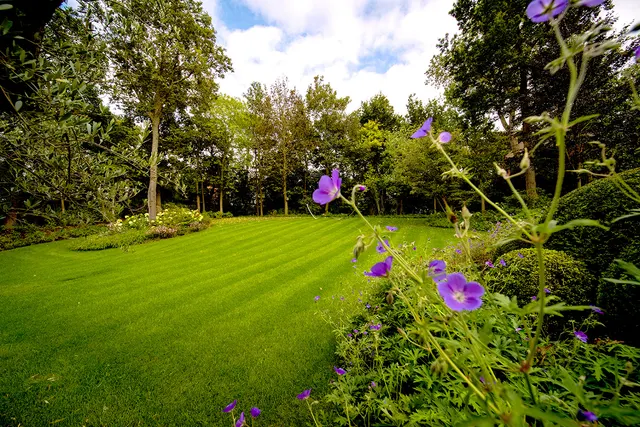
Policymakers and designers are full of talk about flower meadows, bee- and butterfly-friendly seed mixes, ecological management and climate-neutral planting.
Are municipalities and contractors ready for flower-rich grasslands?
But are our parks departments and landscaping contractors really ready to manage this kind of green space?
Increasing biodiversity in grasslands and other herbaceous vegetation is based on the principle of nutrient depletion, a management method that has long been used in nature conservation.
Nutrient depletion reduces the competitive strength of grasses in favour of herbs and flowers, which in turn increase biodiversity.
Reducing soil fertility is more or less the opposite of what we are used to doing in conventional gardening. For an ordinary grassland, this means depleting the soil by adopting a targeted mowing regime in which removing the cuttings (biomass) is the most important measure. In principle, this is comparable to roadside verge management (under the Verge Decree): the first cut is after mid-June (once spring flowers have finished blooming), and the second after mid-September (once summer flowers have finished blooming). In exceptionally nutrient-rich conditions, mowing can of course be more frequent. Contractors know that suitable equipment is needed for this, and manufacturers have brought appropriate machines to market.
But what about parks, public gardens and private gardens, where work is carried out on much smaller areas and sensitive soils? In recent years, many public authorities and contractors have invested in mulching mowers as an alternative to producing less green waste. But these machines continually add organic matter, require frequent mowing and are therefore unsuitable for extensive grassland management.
This type of management requires equipment that can cut tall vegetation short and either remove the cuttings immediately or leave them in place. If they are left, equipment must also be provided to remove them later. This needs to be taken into account when drawing up specifications and purchasing new machines.
Ecological grassland management may initially cost more than conventional management (more green waste, purchase of new equipment), but this is temporary. Ecological management pays off in the long term on every front. Once the nutrient depletion process gets under way, the amount of biomass to be removed decreases, less labour is needed, emissions and machine wear are reduced, and costs fall, while biodiversity increases. Flower-rich grasslands also provide habitats for the natural enemies of pests and parasites, such as the oak processionary moth. They create a microclimate with better water management and healthier soil life.
Nutrient depletion is the key to rich biodiversity. It requires our designers and managers to adopt a different mindset and approach, including when creating new green spaces.
Question about this story? Ask your question
Keep following this
Get an email when a new story is published. No account needed.
- ThemeGreen space for everyone
- SubjectIn conversation