Fertilising gardens: a word of explanation
Text ReplantImage Compo expert, DLV en Herplant
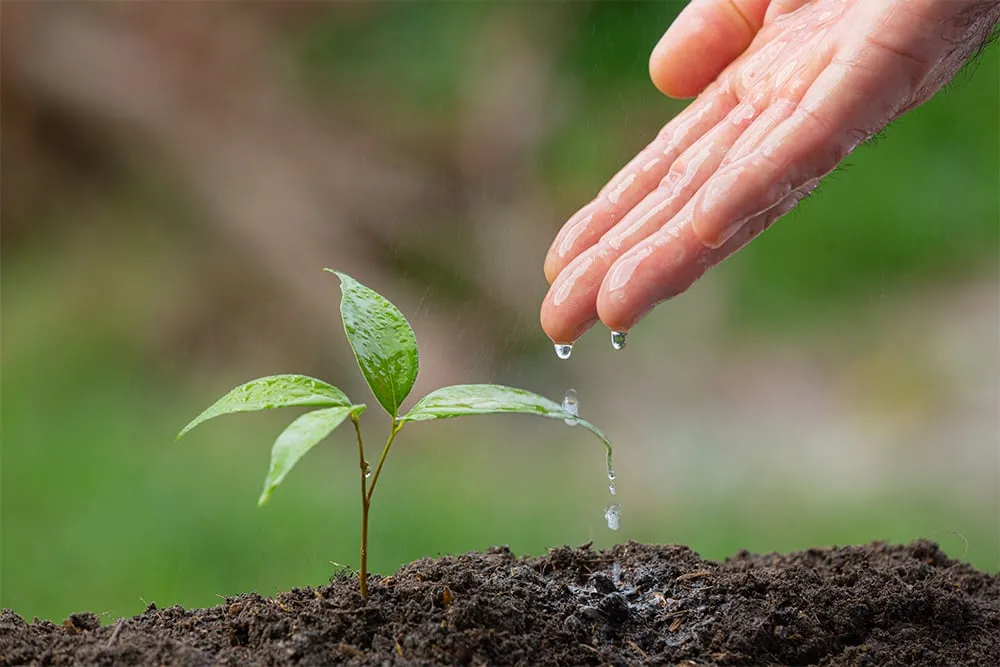
It is fascinating to see how plants spring back to life so quickly each year. Plants need nutrients to thrive. In natural environments, they obtain them from the soil as leaves and other organic materials break down. Gardens are a different story. We often want to keep everything tidy and clear away excess leaves. Grass is mown and the clippings are usually removed. Hedges are pruned regularly and the cuttings are taken away. That is why soil improvement and fertilisation are necessary.
The difference between soil improvement and fertilisation
It is important to distinguish between soil improvement and annual fertilisation, as the two are often confused.
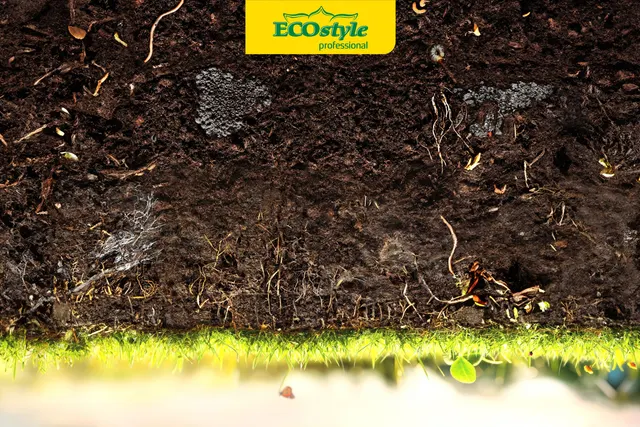
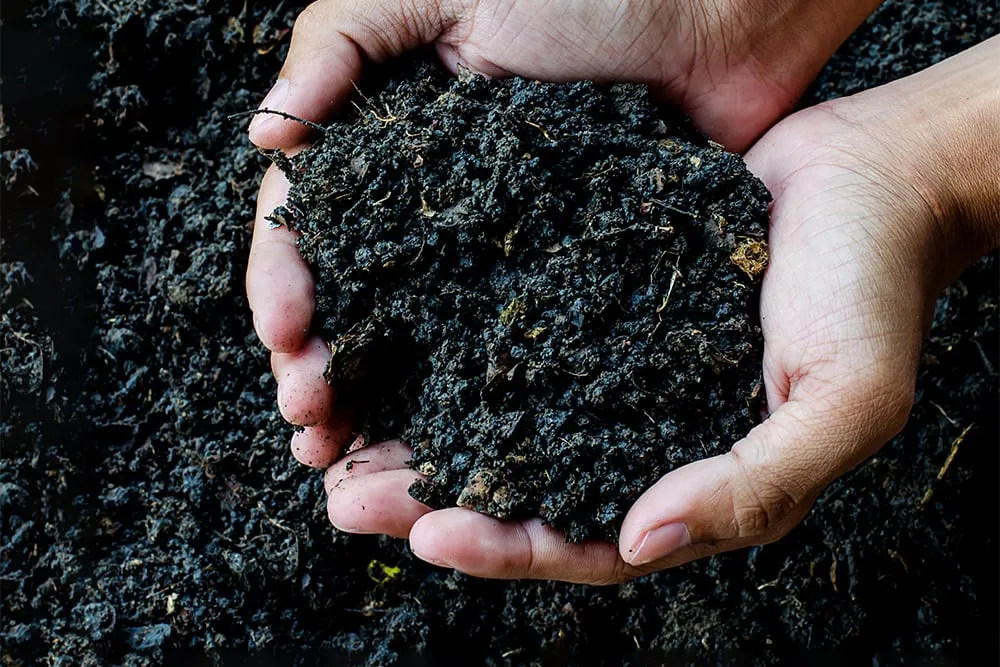
Soil improvement involves enriching the existing soil with green compost, well-rotted farmyard manure, peat or similar materials. These materials contain a lot of organic matter and relatively few nutrients. As this organic material breaks down, it increases the humus content of the soil. Humus can retain water and nutrients, leading to better plant growth. Clay particles can also hold on to nutrients, which explains why richer loam and clay soils generally need less fertiliser than sandy soils. Sandy soils low in humus, on the other hand, require more carefully considered fertilisation.
Good soil improvement naturally goes hand in hand with thorough soil preparation, carried out in favourable weather conditions. This can be challenging during the winter months and in years such as 2023, when rainfall was almost 50% higher than normal. Plants thrive best in well-aerated soil, free from compacted layers, which is essential for healthy root growth.
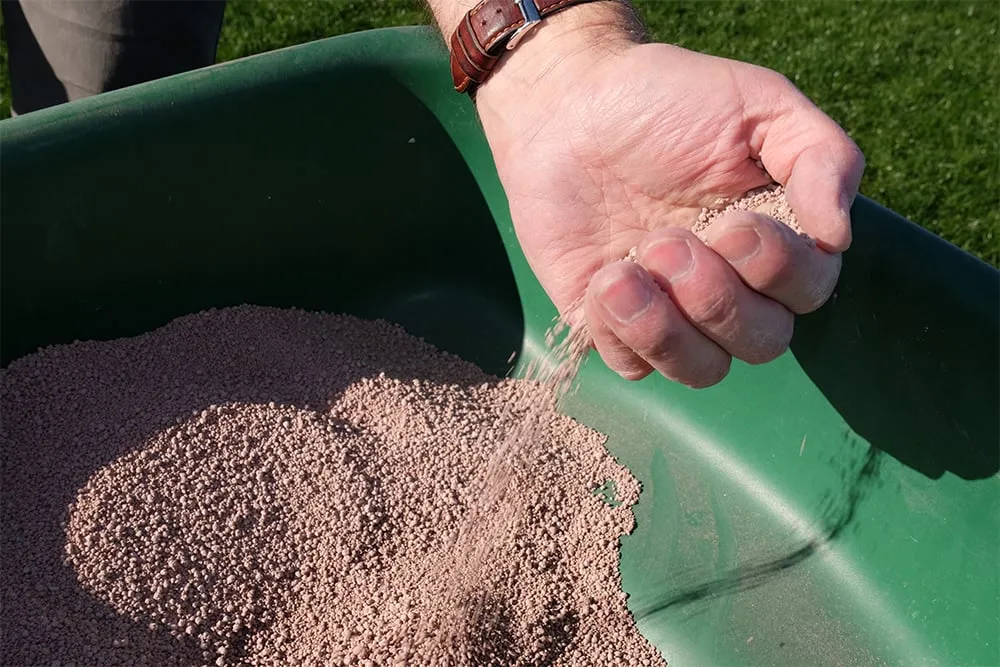
Shrubs, hedges and perennials need nutrients to stay in optimum condition. Initial fertilisation is often carried out, but in many gardens that is all. Over time, the soil becomes depleted and the more vigorous species take over, crowding out weaker plants. More and more garden owners and landscape contractors seem to be neglecting this aspect of gardening, perhaps due to a lack of knowledge or interest. In addition, the mainstream media sometimes wrongly claim that fertilisation is harmful, when in fact it is overfertilisation that causes problems.
Fertilisers contain various nutrients that are essential for healthy plant growth. A shortage of certain elements can lead to reduced growth or deficiency symptoms, but an excess of certain elements can also be harmful.
Nutrients are divided into primary nutrients, also known as macronutrients, and trace elements, also known as micronutrients. Primary nutrients need to be present in larger quantities because plants have a high demand for them. Trace elements, by contrast, need to be available in smaller quantities.
Trace elements
Plants absorb trace elements in small quantities, but they are essential for many processes within the plant. After good soil improvement and liming, for example with seaweed lime, most gardens generally have sufficient trace elements. Examples include iron (Fe), manganese (Mn), copper (Cu), boron (B), zinc (Zn), molybdenum (Mo) and others.
Fertilisers
Fertilisers contain one or more nutrients and can be divided into straight and compound fertilisers. The composition is shown on the packaging as an NPK formula, which often focuses on the nitrogen content. However, a good balance between nitrogen and potassium is important for many plants, while additional magnesium, especially in sandy soils, can promote greener, more attractive growth.
Fertilisers can also be divided into organic and artificial fertilisers. Organic fertilisers consist of organic materials of animal or plant origin and generally have an effective life of six to eight weeks. Soil organisms convert these organic materials into chemical elements that plants can absorb. Some manufacturers enrich organic fertilisers with chemical components, producing what are known as organo-mineral fertilisers.
Chemical fertilisers, by contrast, are produced through industrial processes or extracted from mines. They dissolve quickly and act quickly too, meaning that several applications a year are needed. The risk of nitrate leaching is high, as is the risk of a short-term spike in soil salinity, which can harm soil life and is detrimental to many plants. It is therefore crucial to apply the correct dose.
Another category of artificial fertilisers is coated fertilisers, which are enclosed in a coating (controlled-release fertilisers). The nutrients are released gradually, so there is very little leaching. There are products for use in pots and formulations for use in the open ground. Their effective life ranges from 2-3 months to 16-18 months. These long-lasting fertilisers are often used by professional growers, but are not yet widely used in landscaping. They eliminate the risk of scorching plants, and in many cases a single application a year is sufficient.
Timing
March, when the growing season begins, is a suitable time to start fertilising. The frequency of application and the type of fertiliser used vary depending on its composition and how long it remains effective. In general, a little more emphasis is placed on nitrogen fertilisation in spring to stimulate plant growth. As summer gives way to autumn, the focus shifts to potassium fertilisation. This is important to ensure plants go into winter in good condition and are prepared for the colder months.
Primary nutrients
Nitrogen (N)
Nitrogen is perhaps the best-known nutrient. It is highly mobile in the soil, which means it can leach out quickly and enter groundwater or surface water. Around 80% of the atmosphere consists of nitrogen as a chemical element.
Plants absorb nitrogen mainly in the form of nitrate (NO3-) and partly as ammonium (NH4+). Most ammonium must first be converted into nitrate by soil organisms through the nitrification process. Another form of nitrogen in fertilisers is urea, which is converted into nitrate in the soil in two stages.
Nitrogen is essential for the growth of all the green parts of a plant. It is an integral component of every amino acid and is therefore a building block of the plant, as well as of numerous essential enzymes and the plant’s DNA. Some crops, such as lawns, have a high nitrogen requirement, which results in an intense green colour and vigorous growth.
Phosphorus (P)
Plants absorb phosphorus mainly in the form of phosphate. Phosphate is not very mobile in the soil, leaches very little and binds to soil particles. Phosphorus is essential for healthy root development and abundant flowering.
Potassium (K)
Potassium, also known as potash, contributes to plant strength and fruit quality. It increases plants’ resistance to disease, pests, drought and frost.
Calcium (Ca)
Calcium is crucial for the formation of cell walls. Some plants need a lot of calcium and are therefore known as lime-loving, while others are acid-loving, such as rhododendrons and Ilex, and cannot tolerate high pH values. Calcium is the main component of lime, which is used to neutralise acidic soils. Soil acidity is expressed as pH: neutral soils have a pH of 7, acidic soils usually have a pH below 5 to 6, and alkaline soils have a pH above 7. Compost, for example, can contain up to 25 kg of lime per cubic metre, so it is important to take acid-loving plants into account. An average soil has a pH between 6 and 7.
Magnesium (MgO)
Magnesium is needed to produce chlorophyll, the green pigment in plants, and is essential for photosynthesis. Photosynthesis enables plants to produce all the substances needed for growth from simple elements. Magnesium gives plants a more intense green colour.
Conclusion
It is important to recognise that plants need nutrients, especially in gardens where we plant different species close together, often at much higher densities than in nature, as with hedges. Annual fertilisation is therefore certainly not a waste of money, but rather an investment in healthier plants.
Choosing the right type of fertiliser can sometimes be difficult, but fertilisers that release nutrients gradually and in a controlled way offer many benefits. They can also be combined effectively with organic fertilisers. This provides plants with balanced nutrition and contributes to healthy growth and flowering.
If you are unsure or know too little about the soil at a particular site, it is a good idea to take a soil sample and have it analysed. This will not only provide you with fertilisation advice, but also enable you to give your customers professional advice.
Question about this story? Ask your question
Keep following this
Get an email when a new story is published. No account needed.
- ThemeHealthy soil and smart water management
- SubjectGarden maintenance