What does the GSV Hemelwater mean for private garden projects?
Text Elise Noyez
For years, 40 m² was the key threshold for garden designers and landscapers: as long as the total area of paving or buildings stayed below this figure, no additional rules applied to rainwater drainage. That changed at the end of 2023. The revised Gewestelijke Stedenbouwkundige Verordening inzake Hemelwater (GSVH) brings major changes for both private and public projects. In this article, we explain the main principles for private garden projects.
Flanders has had a policy on rainwater drainage for some time. The 2023 revision of the GSVH replaces the previous regulations from 2013 and addresses increasing soil sealing, climate change and the growing need for water management. The rules have become much stricter.
When does the GSVH apply?
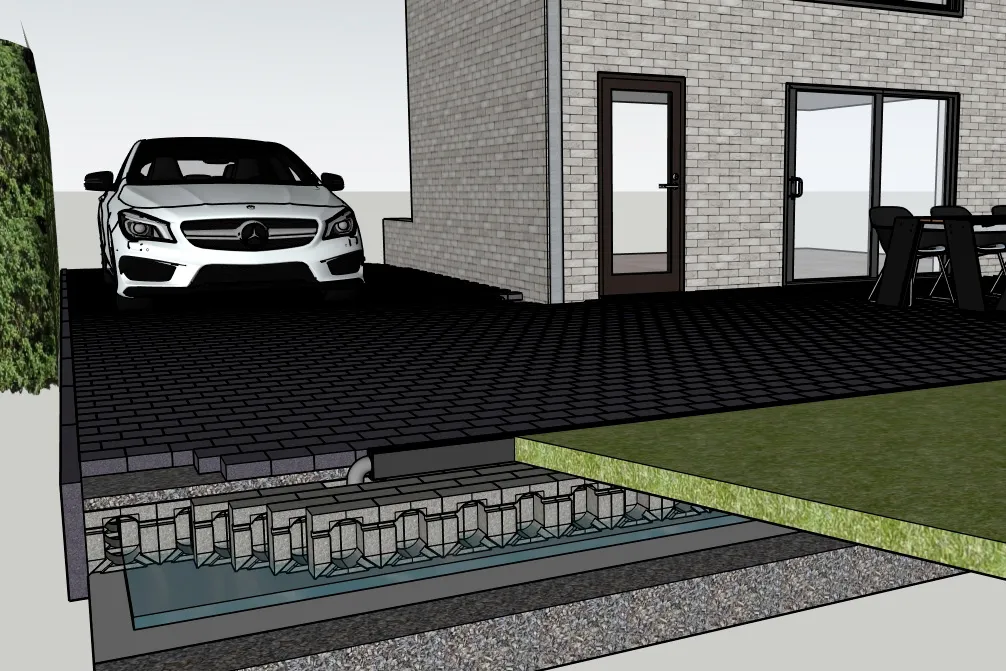
Since 2 October 2023, all private projects requiring an environmental permit or notification have had to comply with the tightened GSVH. The regulations apply to new-builds, rebuilds, extensions and renovations involving drainage work. The former 40 m² threshold has been removed entirely, so smaller projects are also subject to the regulation.
For garden projects, particular attention is needed when installing a driveway, patio, swimming pool, natural swimming pond, carport or garden shed. The GSVH requirements must also be taken into account when relaying paving if both the finish and foundation layers are renewed, or when new drainage is installed.
What does the GSVH require?
The core principle remains the same: rainwater must be collected, infiltrated and/or reused on site as far as possible. In other words, it must not be discharged into the public domain. This is managed through three facilities: a rainwater tank for reuse, an infiltration facility and, in certain cases, a retention facility.
Rainwater tank
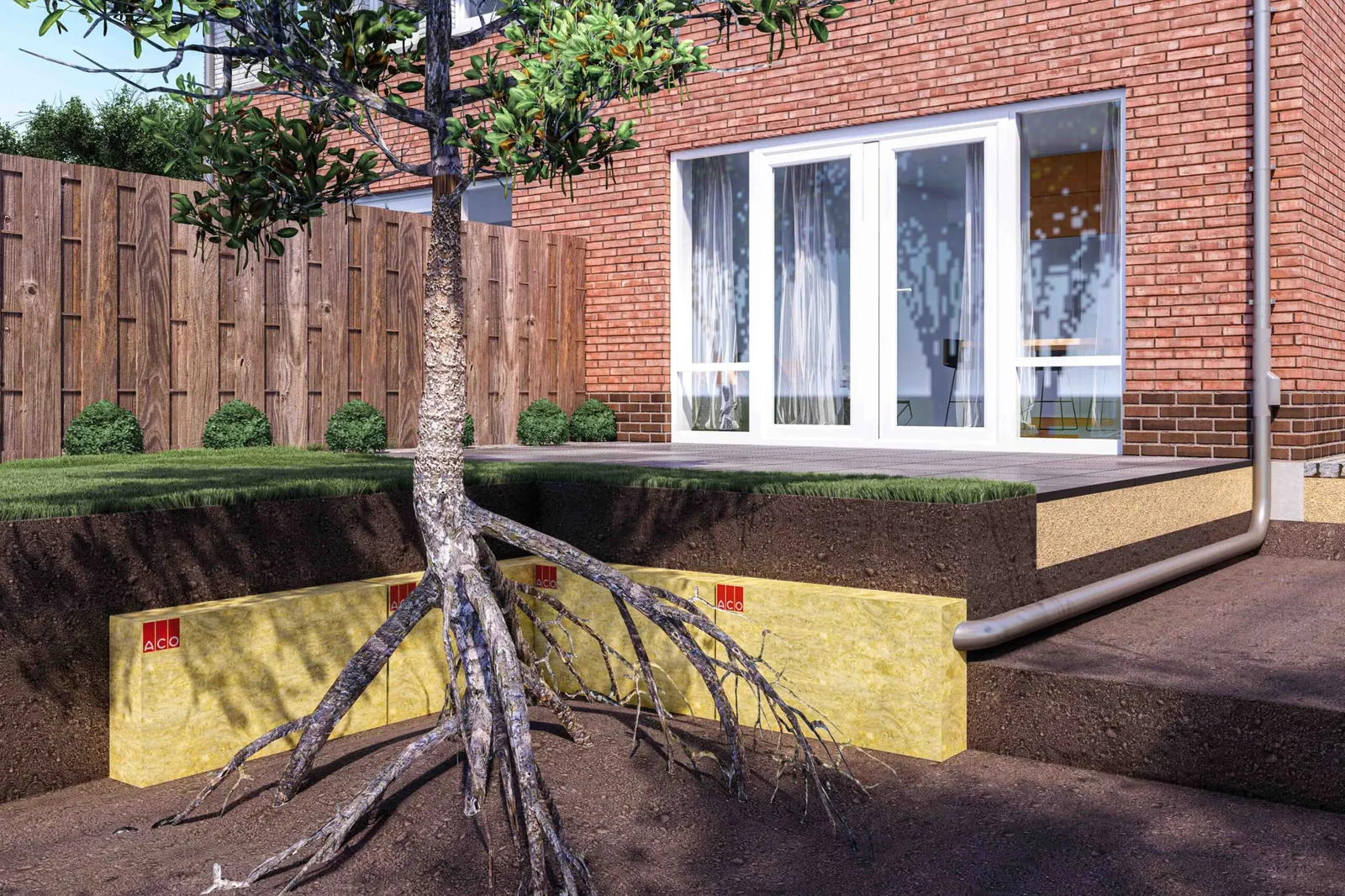
A rainwater tank is always required for new structures, extensions and renovations, unless a tank is already in place. This also applies to detached ancillary buildings such as verandas, garages and pool houses. Exceptions are only possible where there is no opportunity to use the collected water. A rainwater tank is not required for paved areas such as driveways and patios. The minimum capacity is 100 litres per square metre of catchment area.
Infiltration facility
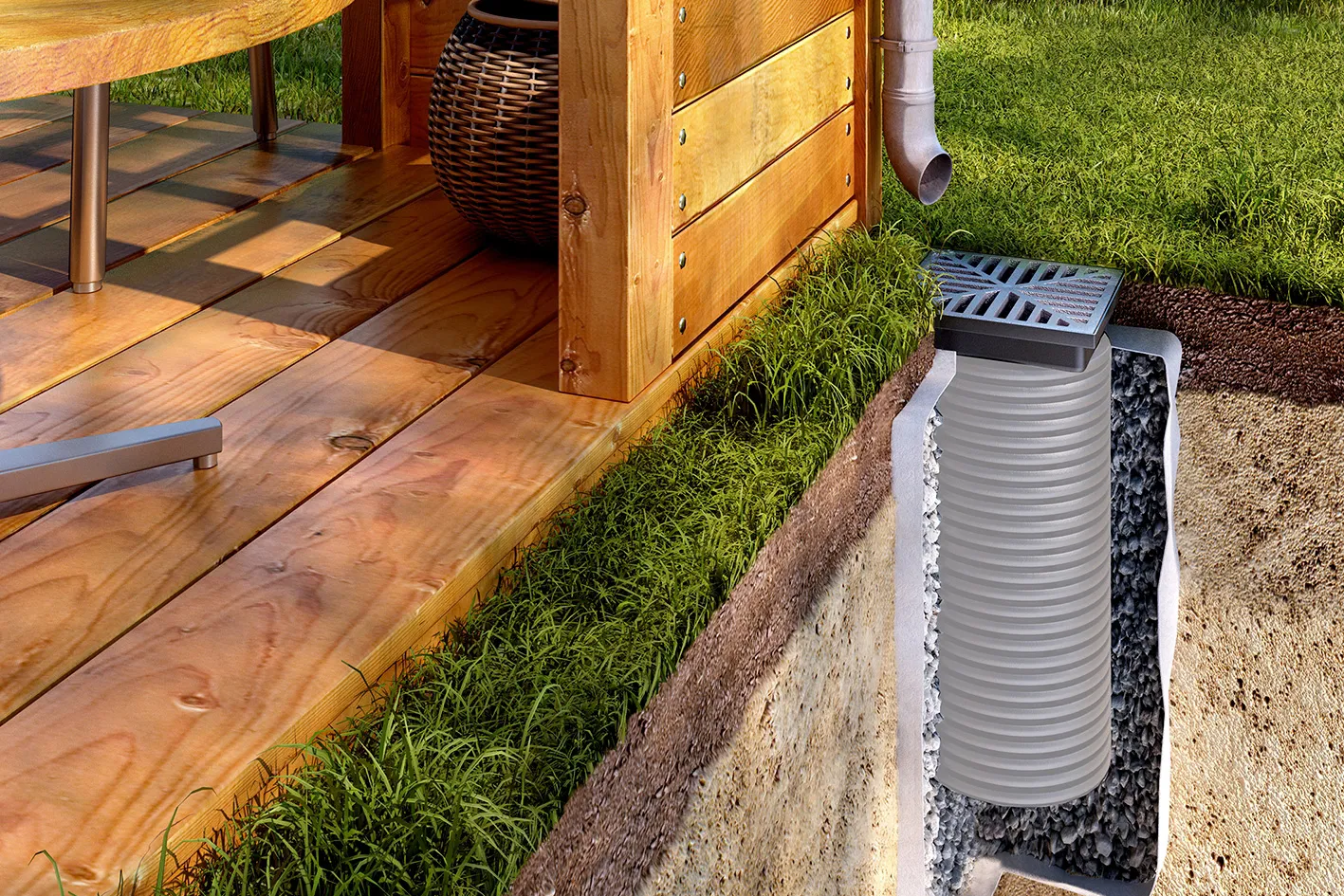
Infiltration facilities are generally required for all projects covered by the regulation, including paved areas, except on plots smaller than 120 m². If infiltration is not possible due to factors such as high groundwater levels or soil conditions, this must be demonstrated through infiltration tests. The overflow from the rainwater tank, green roofs and drainage from paved areas must be connected to an infiltration facility. Surface infiltration solutions, such as infiltration basins, are strongly recommended, while underground infiltration is only permitted with a sufficiently substantiated justification. Minimum sizing requirements are an infiltration area of 8% of the catchment area and an infiltration volume of at least 33 litres per square metre of catchment area.
Retention facility
Retention facilities are only required when infiltration is not possible and the catchment area is 1,000 m² or more. This is generally not an issue for garden projects. If a retention facility is required, it must have a minimum storage capacity of 43 litres per square metre of catchment area and a maximum discharge rate of 5 litres per second per hectare of catchment area.
How should you approach the GSVH?
The expanded scope of the GSVH means that smaller garden projects are now also covered by the regulations. This may seem challenging at first, but in practice there are many simple ways to meet the requirements without complex calculations or major infrastructure works. Smart design or material choices can often limit the impact of the regulation.
1. Opt for natural run-off and infiltration
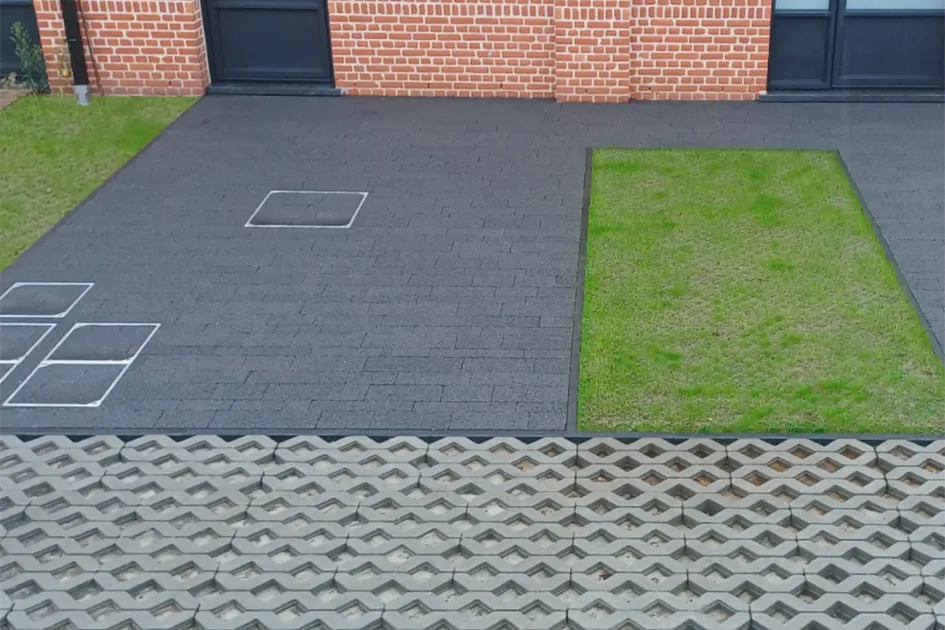
Structures and paved areas that, without a connected drainage system (excluding downpipes and gutters), allow water to run off into an unpaved area on the same plot may be exempt from the regulations under certain conditions. The unpaved area must cover at least 25% of the catchment area and must not contain underground structures. This means that a 40 m² patio or even a pool house that drains into a lawn of at least 10 m² falls outside the scope of the regulation. It is important to note that permeable materials such as gravel, bark or artificial grass are not considered unpaved areas.
2. Use permeable paving thoughtfully
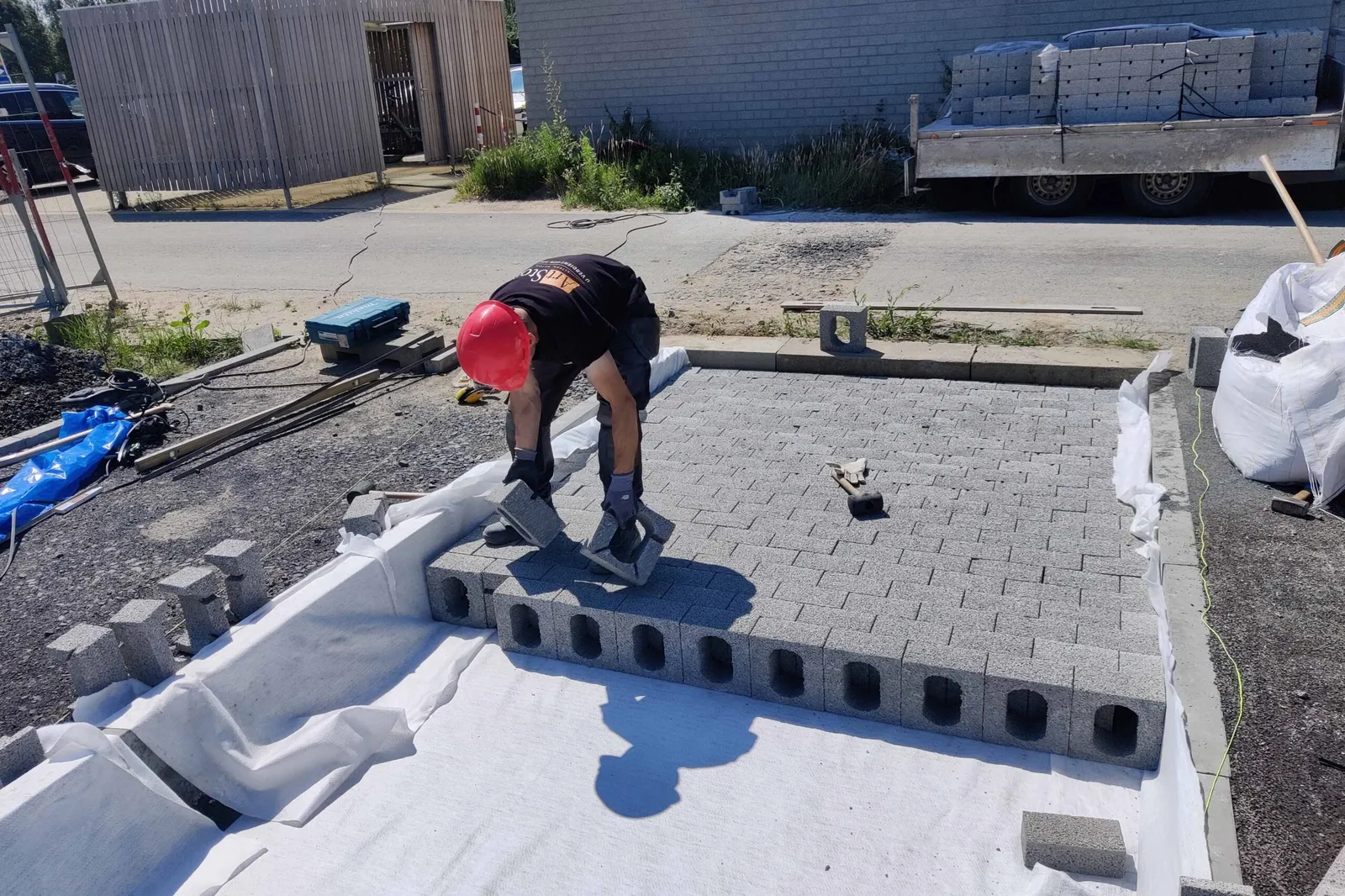
Under the GSVH, permeable and water-passable paving is also considered paving. This means that a driveway or patio made with permeable pavers is generally subject to the regulations, unless the water can drain into an unpaved area on the same plot. However, using this type of paving does offer some advantages.
Where the gradient of permeable paving is less than 2%, its area is not included in the catchment area. In practice, this means that no additional infiltration facility is required if only permeable paving is installed.
In addition, permeable paving has recently been recognised as an infiltration facility. In this case, the horizontal projection of the surface counts as the infiltration area, and only the storage volume actually available is taken into account. If necessary, this volume can be increased by using storage units.
It is important to note that permeable paving is considered an underground infiltration facility and therefore requires a clear justification. If the gradient exceeds 2% and there is no natural run-off, the paved area is still included in the catchment area.
3. Make infiltration facilities an asset
The new GSVH favours surface infiltration facilities such as swales, infiltration depressions and basins. These solutions are not only easier to inspect, but also reduce the risk of groundwater drainage caused by poor installation. They can also enhance the garden aesthetically and ecologically.
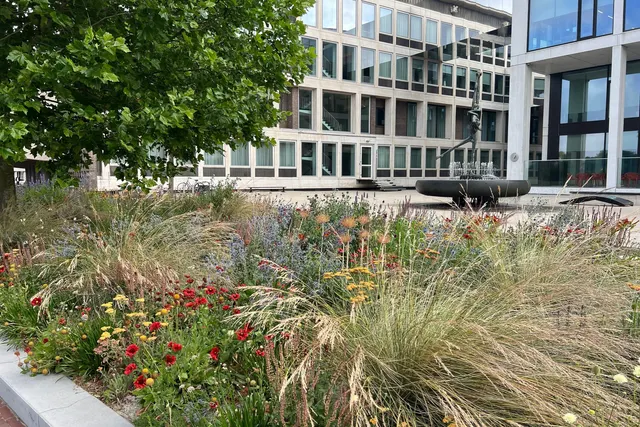
Surface infiltration facilities benefit from natural vegetation, such as grass, plants or shrubs, which helps maintain an open, healthy soil structure. Careful positioning and harmonious integration into the garden design can make these facilities not only functional water management features, but also valuable green spaces that boost biodiversity and add interest to the outdoor environment.
4. Think upwards too
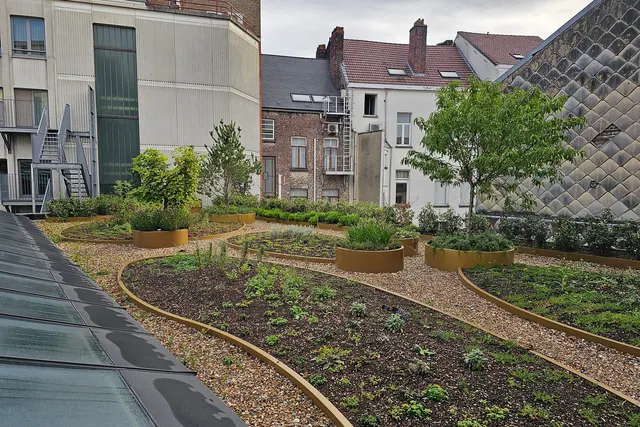
When constructing new buildings, it is worth considering whether the roof could offer a solution. For example, a green roof does not necessarily have to be connected to a rainwater tank, but can drain directly into an infiltration facility. If a green roof has a minimum storage capacity of 50 litres per square metre, only half of the roof area is counted as catchment area. This can help meet the regulations without adding further facilities.
If installing a new rainwater tank is mandatory but not practically feasible, a retention roof is a good alternative. This type of roof temporarily stores rainwater and slows its discharge, reducing peak loads on the drainage system and making optimum use of the soil’s infiltration capacity.
What is permeable paving?
Under the new GSVH, using permeable or water-passable paving offers several benefits. However, paving must meet specific requirements to be recognised as such.
- The permeability of the complete structure, including the surface finish, bedding layer, foundation and sub-base, must be at least 5.4 × 10⁻⁵ m/s.
- The maximum gradient must not exceed 5%.
- For water-passable paving, the joints must make up at least 10% of the surface, while the joint-filling material must have a permeability coefficient ten times greater than that of the paving as a whole.
- Suitable surface finishes include permeable paving blocks, stone chippings, dolomite paving, porous asphalt, grass pavers and even artificial grass.
Een zakelijke vraag aan Artstone NV? Get in touch
Companies in this story

Keep following this
Get an email when a new story is published. No account needed.
- ThemeHealthy soil and smart water management
- SubjectGarden maintenance
- CompanyArtstone NV