What does the GSV Hemelwater mean for public projects?
Text Elise Noyez
At the end of 2023, the Regional Urban Planning Regulation on Rainwater (GSVH) was revised. As well as significant changes and stricter requirements for rainwater reuse and infiltration in private projects, discussed in the first GreenPro issue of 2025, the new regulation also includes explicit rules for public works in the public domain for the first time.
The 2023 GSVH replaces the 2013 version and reflects changing views on rainwater, increasing surface sealing and increasingly extreme weather conditions. The regulation has become stricter in many respects: public projects are now subject to the rules too. The core message remains the same: retain more water locally to make our living environment more resilient to water.
When does the GSVH apply?
Public-sector projects generally have longer lead times. Projects in the public domain were therefore granted a temporary exemption. Since 7 January 2025, however, the GSVH has also applied to public infrastructure projects. From that date, projects to construct or reconstruct streets, squares and roads must also comply with the new provisions. The GSVH does not apply to works that are fully exempt from the permitting requirement, such as minor maintenance, although these remain subject to the Code of Good Practice for Sewerage (CGPR).
What does the GSVH require?
The essence of the regulation is clear: rainwater should be collected, infiltrated or reused locally as far as possible. Public projects are in principle subject to the same provisions as private projects, but the focus is naturally more on paved surfaces than on buildings. Rainwater storage tanks are not compulsory for paved surfaces, but infiltration and attenuation often are.
Infiltration
If rainwater from paved surfaces cannot drain into a green area covering at least 25% of the drainage area, an infiltration facility must be installed. Clear sizing rules apply: the infiltration facility must have a minimum surface area equal to 8% of the impermeable area draining to it and be able to accommodate a minimum volume of 33 litres per square metre of drainage area. The rainwater regulation also clearly favours above-ground infiltration systems, such as swales or infiltration basins, as these are easier to inspect and can enhance the design of public spaces. Below-ground infiltration facilities are only permitted when infiltration at ground level is technically or legally unfeasible. This may be due to a lack of space, the presence or need for sealed, impermeable surfaces, the need to avoid pumping when draining to higher-lying areas, or the need to minimise excavation of potentially contaminated soil.
Attenuation facility
If infiltration is technically or legally impossible and the drainage area is at least 1,000 m², the GSV Hemelwater requires an attenuation facility to be installed. It must be able to accommodate a minimum volume of 43 litres per square metre of drainage area. The maximum permitted discharge rate is 5 litres per second per hectare.
How should you approach the GSVH?
The expanded scope of the GSVH requires public authorities to give more consideration to rainwater and its discharge in their projects. Given the need for extensive paved surfaces and the often stringent requirements involved, the issue can seem complex. However, a wide range of solutions is already available.
Opt for natural drainage and infiltration
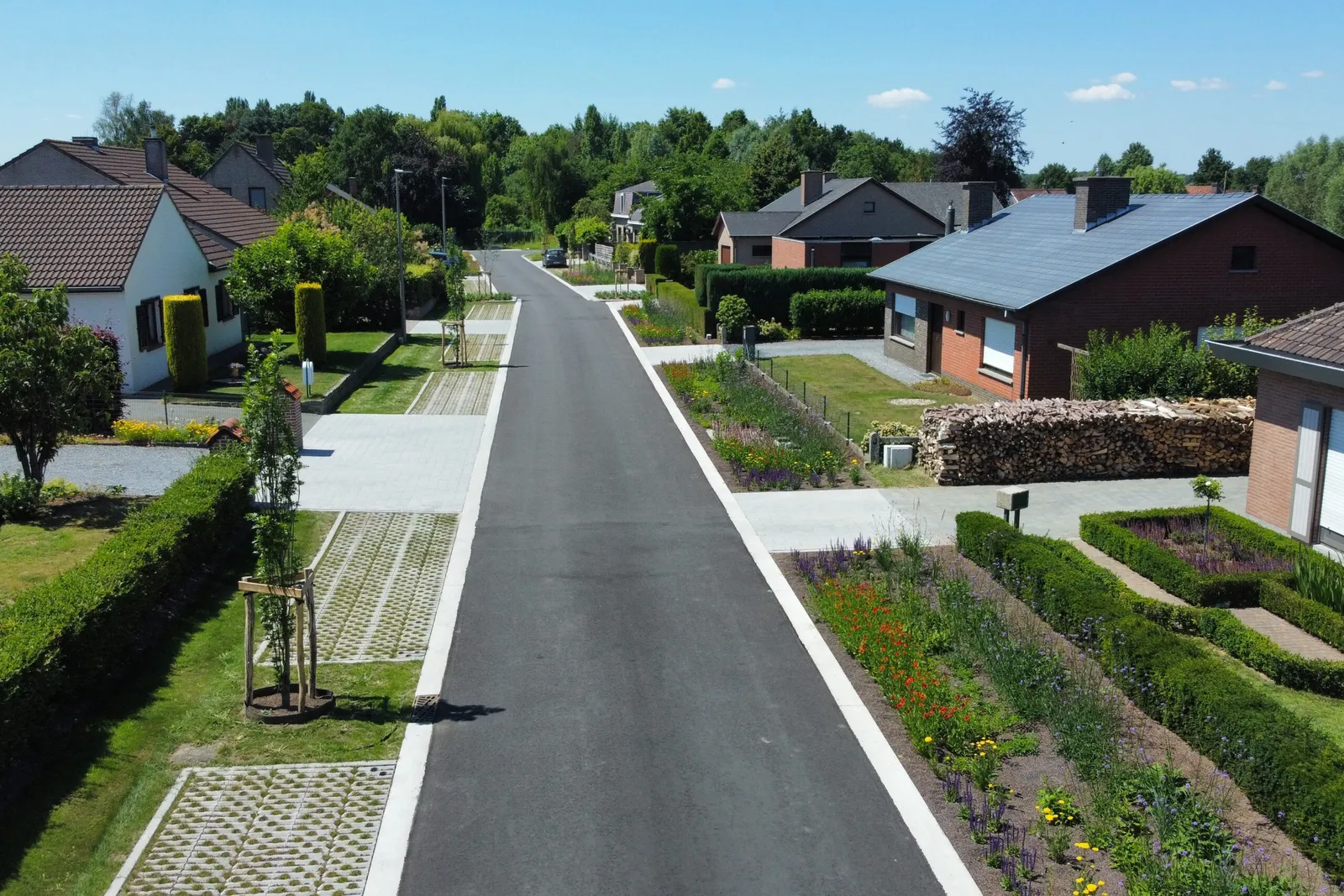
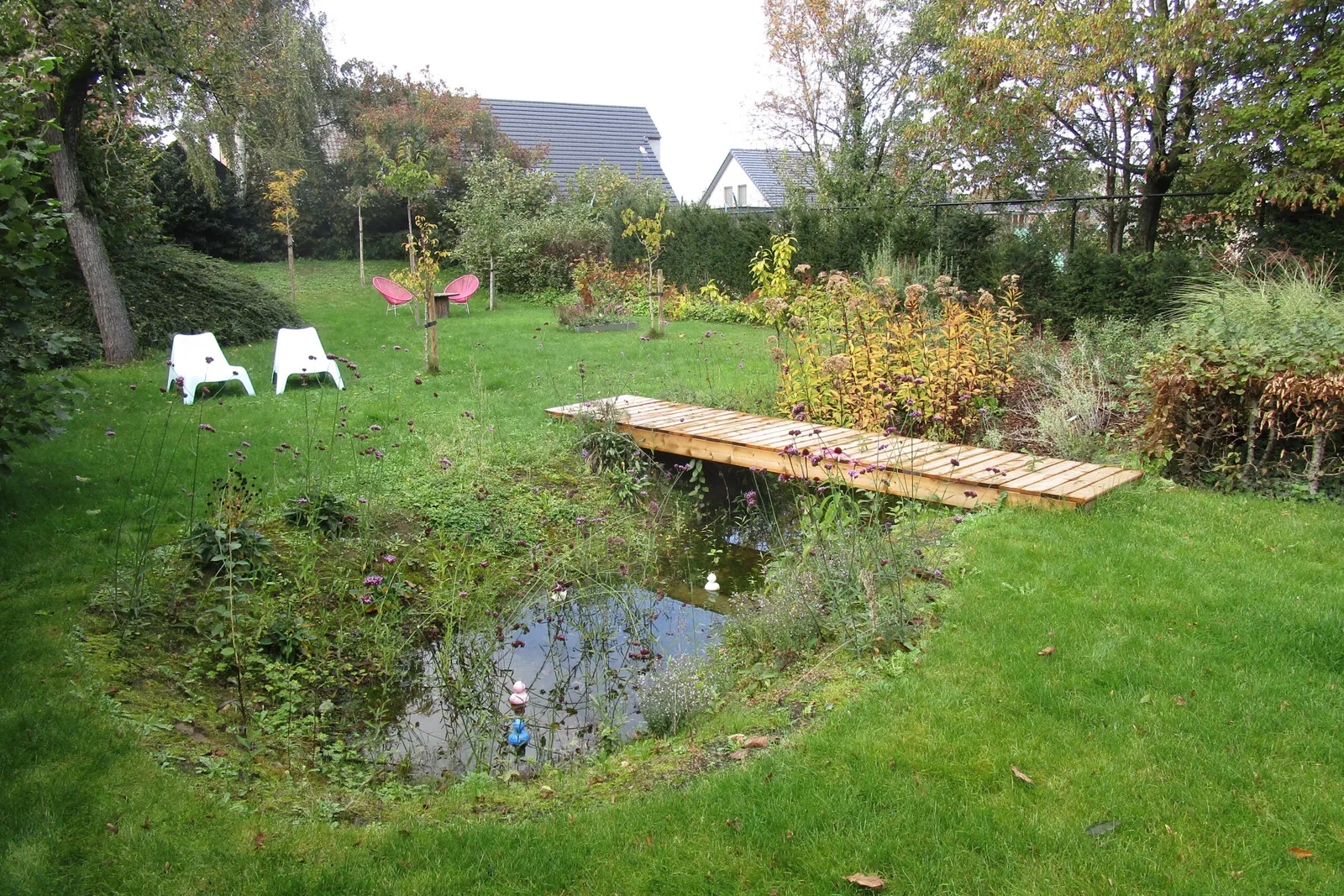
Paved surfaces that drain without a drainage system into an unpaved area on the same site, such as squares or paths that slope towards an adjacent green area, fall outside the scope of the GSVH. This applies only if the unpaved area covers at least 25% of the drainage area and there are no underground structures beneath it. Note that permeable paving, bark and artificial grass are not considered unpaved areas.
Make maximum use of permeable paving
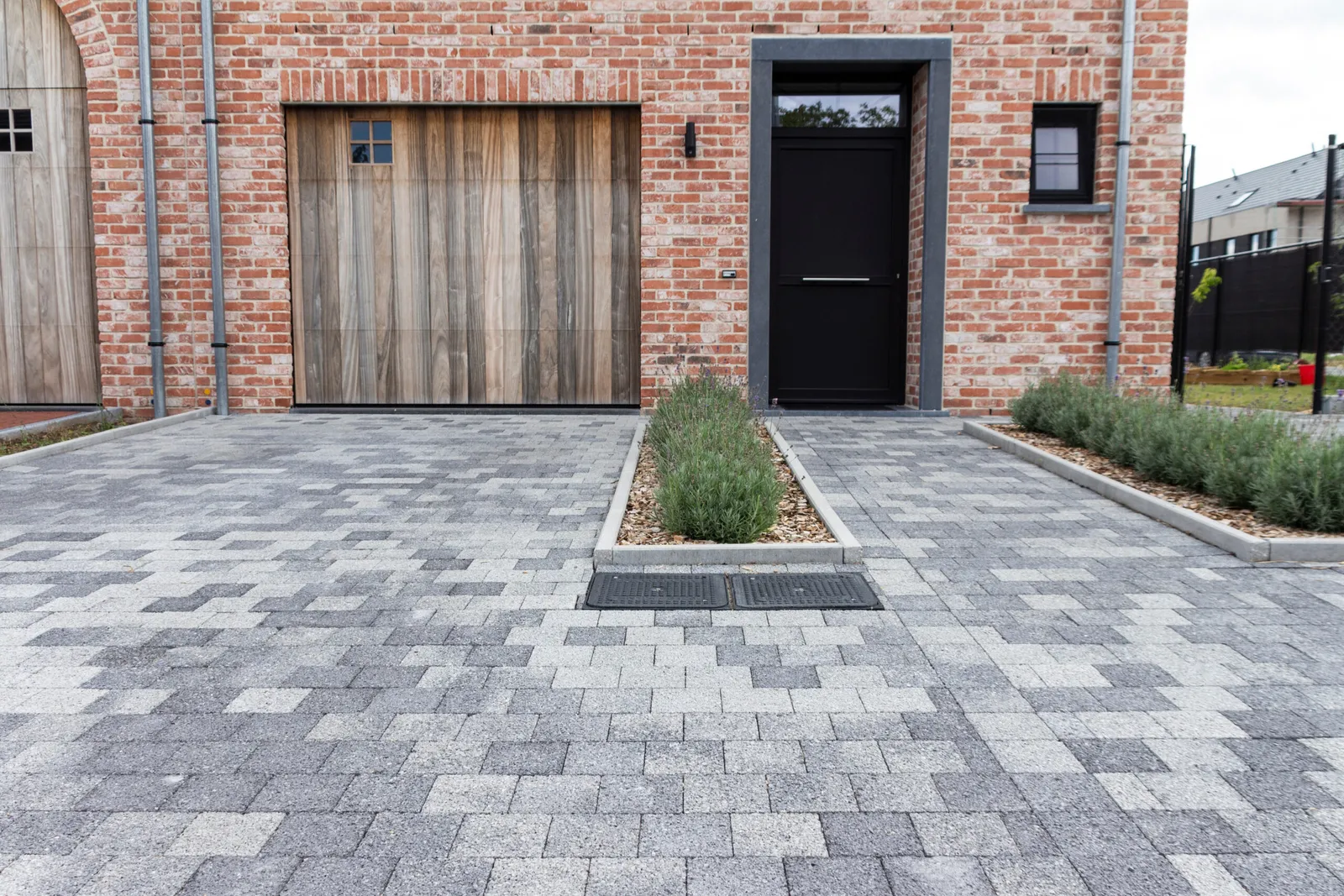
Although permeable and pervious paving is still formally considered a paved surface under the GSVH, meaning that squares or roads surfaced in this way remain subject to the regulation if they have a gully or drain, the rules make an important distinction. Where the gradient does not exceed 2%, the area of this paving does not have to be included when calculating the drainage area used to determine the required infiltration facility. In practice, this means that no additional infiltration facility is needed when installing permeable paving alone.
Such paving can also serve as a below-ground infiltration facility, to which rainwater from other paved surfaces or structures can be connected. Especially when combined with attenuation crates and supported by the appropriate justification, this can be a way to comply with the GSVH. The range of permeable paving products is also growing steadily, and suitable solutions are now available for a wide range of applications, including those subject to heavy traffic.
Make infiltration facilities an asset
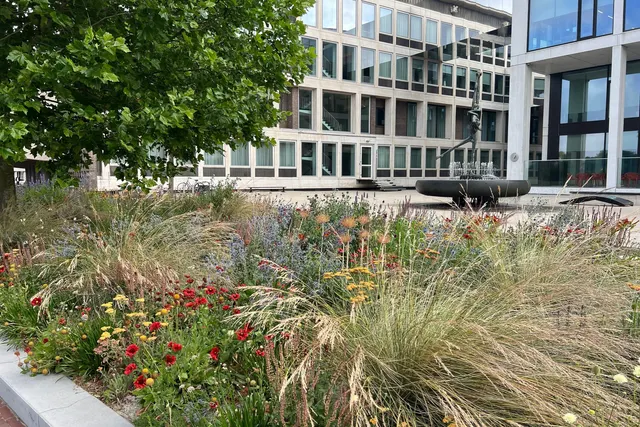
The new GSVH clearly favours above-ground infiltration facilities such as swales, infiltration basins or ponds. These systems are easier to inspect and prevent groundwater from being inadvertently drained due to poor installation. In squares and public spaces, they can also enhance spatial quality and the overall experience.
Make the most of rainwater reuse
Although installing a rainwater storage tank and reusing rainwater are not compulsory when constructing or reconstructing paved surfaces, that does not mean they offer no added value. Several manufacturers have now developed integrated systems that not only collect and store rainwater, but also put it to use, for example to irrigate public green spaces or even for reuse by local residents. In many cases, these systems are also equipped with filters for coarse debris, oil, tyre particles and other potential contaminants.
Question about this story? Ask your question
Keep following this
Get an email when a new story is published. No account needed.
- ThemeHealthy soil and smart water management
- SubjectGarden maintenance