Strong, climate-resilient plants for landscaping
Text Elise NoyezImage Kwekerij De Boever
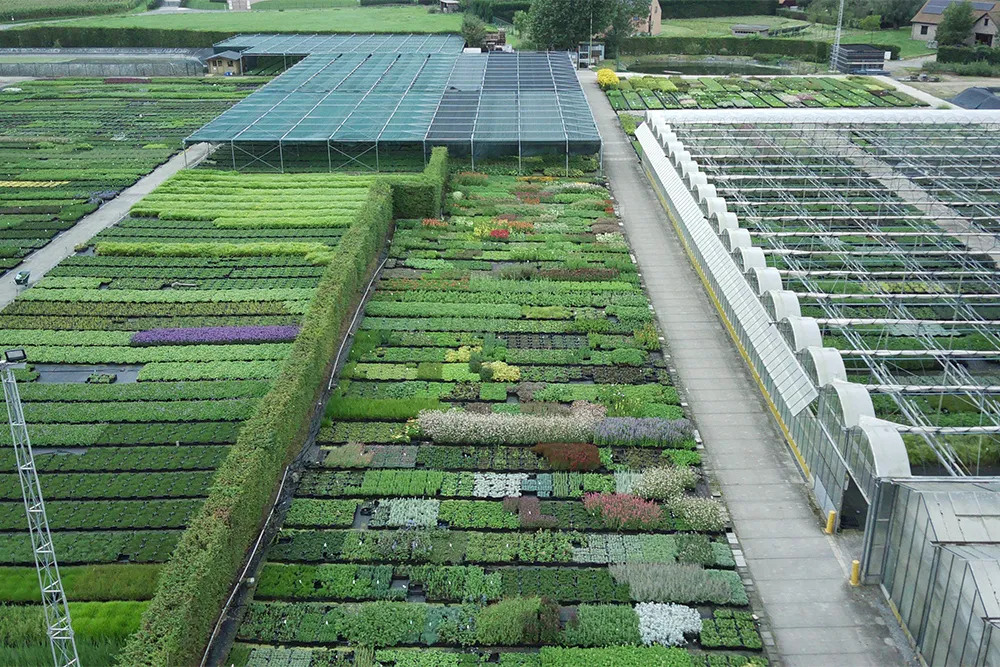
A mathematical enigma. That is how you might describe the way Kwekerij De Boever in Deinze is run at first glance. With a permanent team of just five people, the family business manages to grow 2,000 to 2,500 varieties of perennials and ornamental grasses, producing a total of 1.8 million plants a year, and distribute them to private customers, landscape contractors, and towns and municipalities. “It is quite a challenge,” admits co-owner Wouter Geurs, “and one that makes student workers, seasonal workers and well-considered decisions absolutely essential.”
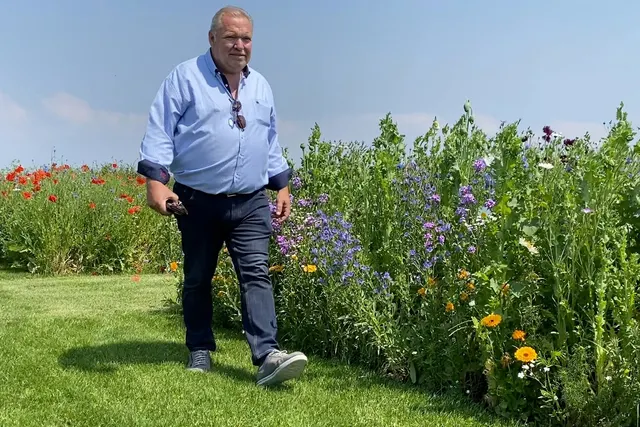
Wouter Geurs is visibly proud of the family business, which he joined through his wife Evelien De Boever, daughter of founders Patrick and Chris, and which is now also run by Christophe Christiaens, partner of the founders’ second daughter, Anneleen. “The family values we uphold are undoubtedly one of our greatest strengths,” says Geurs. “Customers have a clear point of contact, and our commitment is strong. For example, if a landscape contractor needs species, trees or shrubs for a particular project that are not in our range, we will do everything necessary to help make the overall concept a success. We also grow new and alternative species in our own garden to see how they perform, so that we can give our customers the feedback they need.”
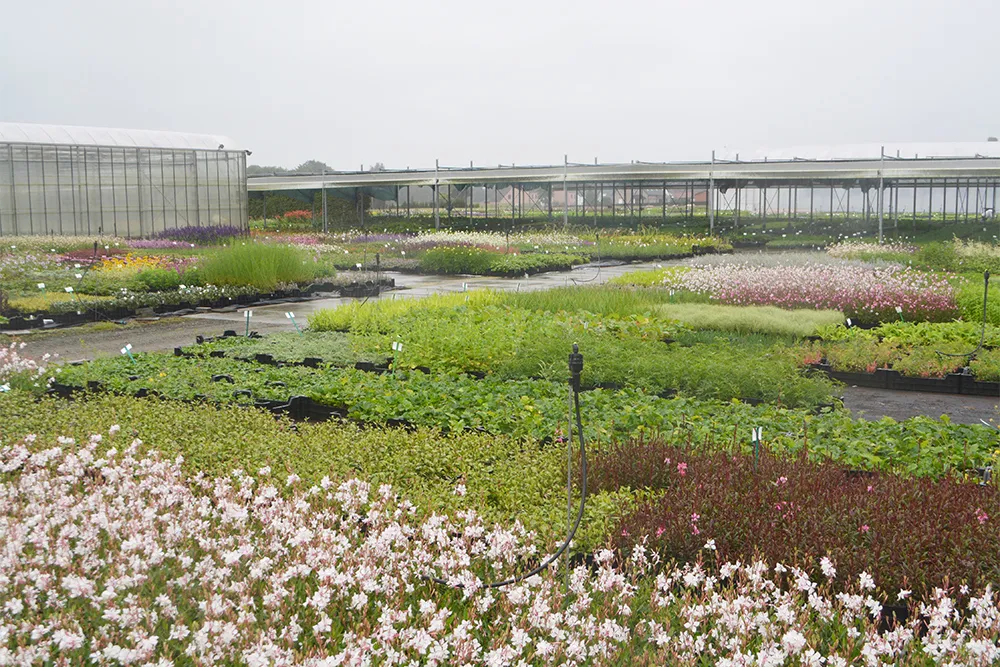
A focus on strong plants
The need for experiments of this kind is, of course, linked to climate change. “There is a clear shift towards plants that are drought-resistant and climate-resilient. Species such as Geranium macrorrhizum ‘White Ness’, Aster macrophyllus ‘Twilight’ and Liriope muscari ‘Moneymaker’, for example, are performing very well in this respect.”
Kwekerij De Boever is also committed to robust production, beyond its choice of plant species. “We focus less on appearance and more on the strength of the plant. Landscape contractors, towns and municipalities have little use for plants that look beautiful immediately after planting but fail to last a season. What matters most to them is that plants are properly hardened off and can establish roots quickly. That is why, for example, we aim to water as little as possible and cut our plants back at least once a year. This gives them room to breathe, reduces the scope for disease to develop and helps us produce well-branched plants.”
Low-peat potting compost
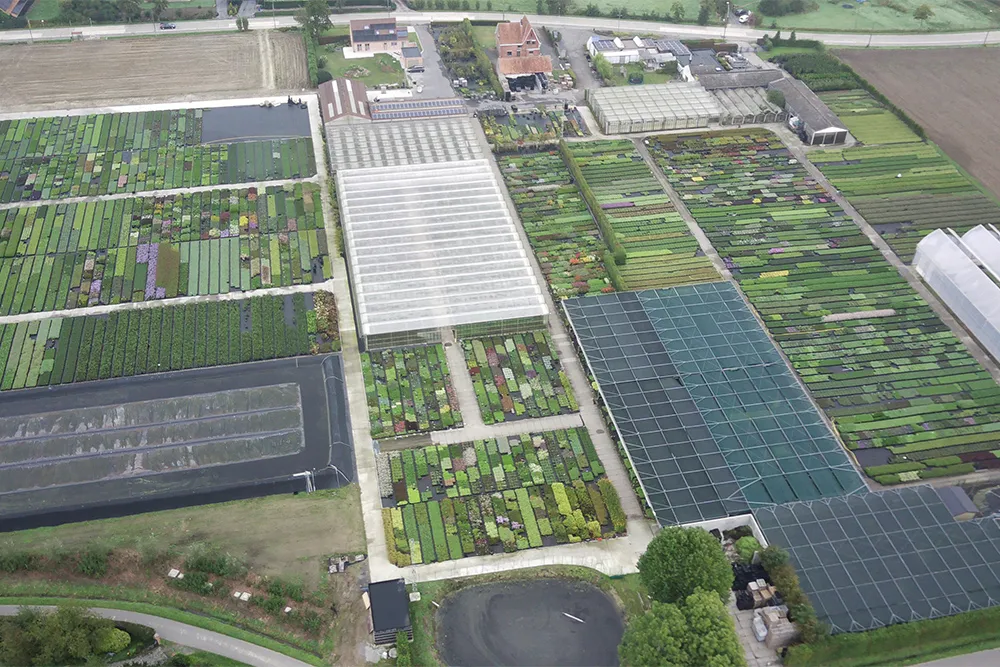
The decision to water as little as possible is also part of Kwekerij De Boever’s efforts to make production as sustainable and environmentally friendly as possible. “With this in mind, we now use only pots made from recycled materials and try to recover as much water as we can,” says Geurs. “Our grounds have a total water storage capacity of no less than ten million litres.”
The use of low-peat potting compost is also noteworthy. “There is not yet much focus on this in Belgium, but peat production has already been phased out in the United Kingdom, for example, and its use will be completely banned from 2030. Plants grown in peat will no longer be allowed to be imported either. Peat is not a renewable resource, and its extraction is far from sustainable. That is why we are already working with our supplier to find suitable substitutes and alternatives. Our potting compost is not yet completely peat-free, but we have managed to reduce its peat content to 65%.”
Automation
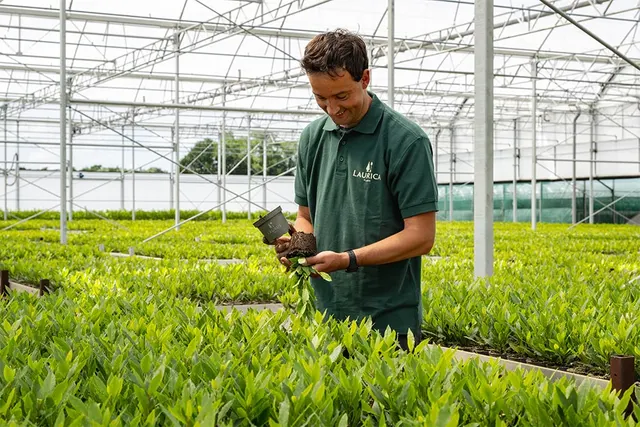
Kwekerij De Boever is embracing the ecological and climate challenges of the future, but there is one challenge that is causing the family business rather more concern: the shortage of staff. “Our entire sector is looking for suitable workers, and we are no exception. Fortunately, we can rely on student workers and seasonal workers. Combined with our decision to automate potting, this means we can still pot up to 40,000 plants a day.
Question about this story? Ask your question
Keep following this
Get an email when a new story is published. No account needed.
- ThemeGardens from design to construction
- SubjectTrees & plants