Garden designer or landscape architect: what’s the difference?
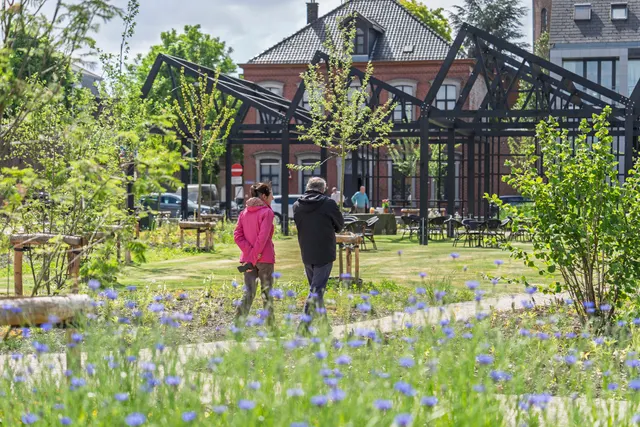
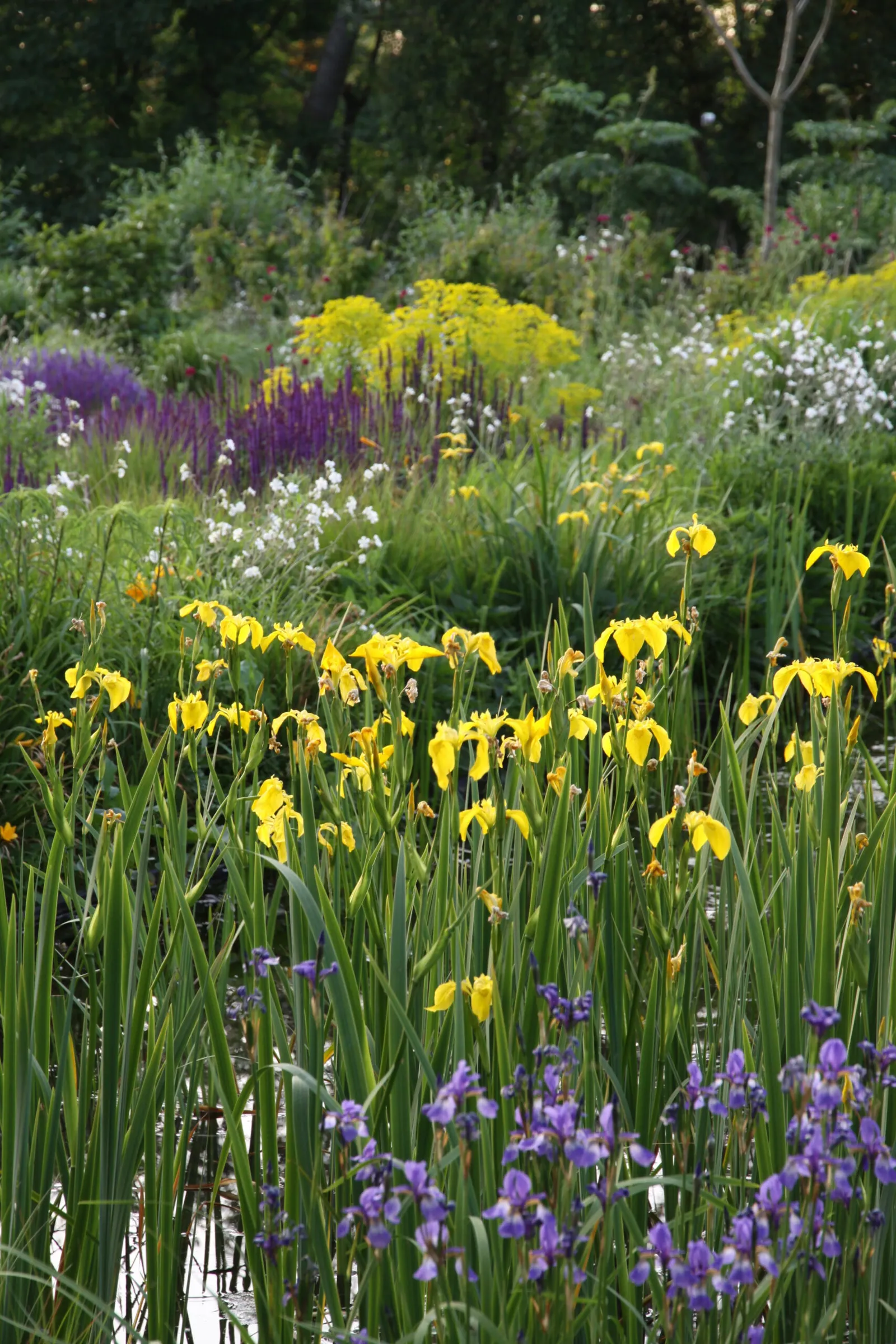
Text Nolanda KlunderImage Planting by Arjan Boekel / De Bloeimeesters
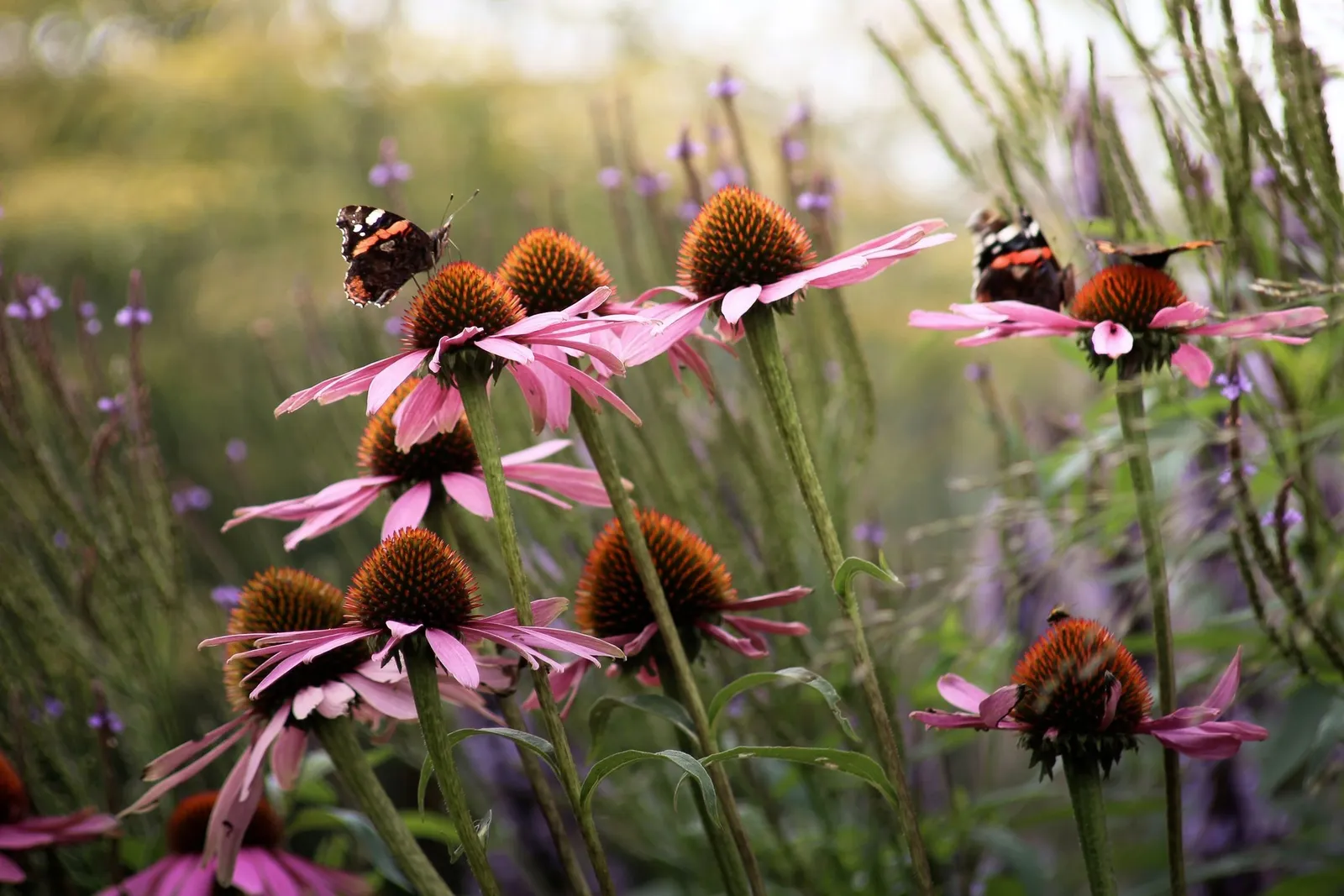
Not every landscape architect is also a garden designer, and vice versa. But just how different are they? “We have more in common than what sets us apart,” is the view. A discussion of the common ground and differences between the two professions, and the role of planting knowledge.
It’s a subject you could talk about for a long time: the differences between garden designers and landscape architects. GreenPro discussed it with five professionals: Joeri de Bekker of the Dutch Association for Garden and Landscape Architecture (NVTL), Hans Druart of the Flemish professional association Blikveld, and garden and landscape architects Arjan Boekel, Karin van Essen and Hank van Tilborg.
First of all, what do you see as the difference between garden designers and landscape architects?
Joeri de Bekker: “There is a great deal of overlap between the fields. Garden designers and landscape architects are both involved in planning and shaping outdoor spaces. Within this broad field, people choose which part of the spectrum they want to focus on. This creates differences between designers working at the scale of a garden or a landscape, for example, or focusing more on the process than the design.”
Karin van Essen: “At MAAKspace, we don’t really make that distinction. The same team of eleven people designs everything from a small roof garden to an entire residential neighbourhood of a thousand homes. What unites our team is a fascination with planting.”
Hank van Tilborg: “I see the main difference as one of approach. In landscape design, you are more restrained and modest. You set something in motion and then let it go; it is up to users and nature to shape it further. In garden design, you design much more directly, like an architect. There is also that struggle to control nature. That is a fundamental difference.”
Hans Druart: “There is also a striking cultural difference. In the Netherlands and Flanders, we make the distinction explicit in our job titles, but in other languages that distinction often does not exist. There is just one term. We are also gradually moving away from that divide in Flanders: here, you graduate as a garden and landscape architect.”
Arjan Boekel: “In practice, I often do see a dividing line. Landscape architecture usually involves more complex situations, whereas as a garden designer you are literally hands-on. I have experienced both worlds: first through Larenstein and then through a master’s degree in Wageningen. Those two courses really represent different worlds. Of course, there were students at Larenstein interested in larger scales, and people in Wageningen who focused more on planting, but the courses clearly have different areas of focus.”

What is the state of planting knowledge among the two professions?
Boekel: “Because of my background and love of planting, I can see a clear gap in knowledge between the two worlds. At Bloeimeesters, a collective of independent designers specialising in planting, we try to bridge that gap by advising, for example, landscape architecture practices.”
Druart: “That difference seems more pronounced in the Netherlands than in Belgium. What we hear is that planting receives more attention in courses and professional practice in Flanders. That seems to be a cultural difference between our countries.”
Van Tilborg: “In the Netherlands, it depends greatly on the design course you have taken. Did you come from a horticultural tradition, a design course or a more scientific discipline? That is reflected in your level of knowledge.”
de Bekker: “The NVTL is involved in the partnership between Dutch and Flemish design schools at higher professional and university level: ‘The Dutch Schools of Landscape Architecture’. A recurring topic of discussion is the choice of curriculum at these schools. In Wageningen, for example, the focus is not so much on plant species as on the entire supply chain. Bosco Verticale, the green building in Milan, for instance, has positive local effects on temperature and biodiversity, but the overall picture is less rosy when you consider the energy needed to grow, transport, install and maintain the plants. That is a new way of looking at things.”
You say it is a new way of looking at things. How is the profession changing?
Druart: “Climate change forces us to stay alert and keep looking at what is possible. Which plants can cope with higher temperatures? Which species can survive fluctuating water levels and periods of drought?”
de Bekker: “Change is accelerating. Biodiversity loss and the impact of climate change are progressing so rapidly that we can barely keep up with what they mean for our profession.”
Boekel: “Landscape architects bring everything together in their designs, but are also expected to know a bit about everything: from plants to legislation, social factors, water management, underground infrastructure and traffic flows. Everything is constantly changing, making the profession much more complex than it was forty or fifty years ago.”
Druart: “Climate change also has an impact on aesthetics. People are learning to appreciate the beauty of planting that looks more natural.”
Van Tilborg: “The landscape architect’s approach, which allows nature more freedom, is now influencing garden designers too. Traditionally, they sought to control nature.”
Van Essen: “To achieve the intended look, green spaces need to be maintained less intensively. This can be difficult for municipal authorities, which stick to set maintenance schedules. Fortunately, awareness and willingness to change are growing.”
Van Tilborg: “Private clients are increasingly open to it too. What still looks untidy now, such as flowering verges, will be the norm for future generations. Our idea of beauty is shifting. Take the winter landscape: faded plants and flowers are now allowed to remain, thanks in part to the work of Piet Oudolf. People see this in books and magazines and are increasingly coming to appreciate it.”
Are clients making sufficient use of the differences between garden designers and landscape architects? What about tenders, for example?
De Bekker: “At the NVTL, members tell us that clients often require tendering practices to demonstrate experience with similar projects. As a result, contracts often go to the most experienced firms, which are not always the most suitable.”
Druart: “I don’t see that as a problem in itself. You need to be able to demonstrate experience, but it doesn’t always have to be in exactly the same context. What matters more is a comparable scale, level of complexity or setting.”
Van Tilborg: “What I find more concerning is that sometimes no garden designer or landscape architect is commissioned at all. Private clients would rather invest in their home and interiors than in outdoor space.”
Van Essen: “Fortunately, that is changing in public spaces. In the past, we only came on board once the architect’s design was complete, and were then asked to add the planting at the last minute. Now we are involved from the outset, before an architect has even been selected. There is strong demand for garden designers and landscape architects.”
Van Tilborg: “Precisely because our profession encompasses such a wide range of profiles, clients can make much more of that diversity. A good tender can help ensure that you choose not just someone who can do the job, but someone who is a good fit for both the project and your vision.”


Question about this story? Ask your question
Keep following this
Get an email when a new story is published. No account needed.
- ThemeGardens from design to construction
- SubjectPublic green spaces