Room for roots with a tree bunker
Text Yannick BaayImage Greenmax
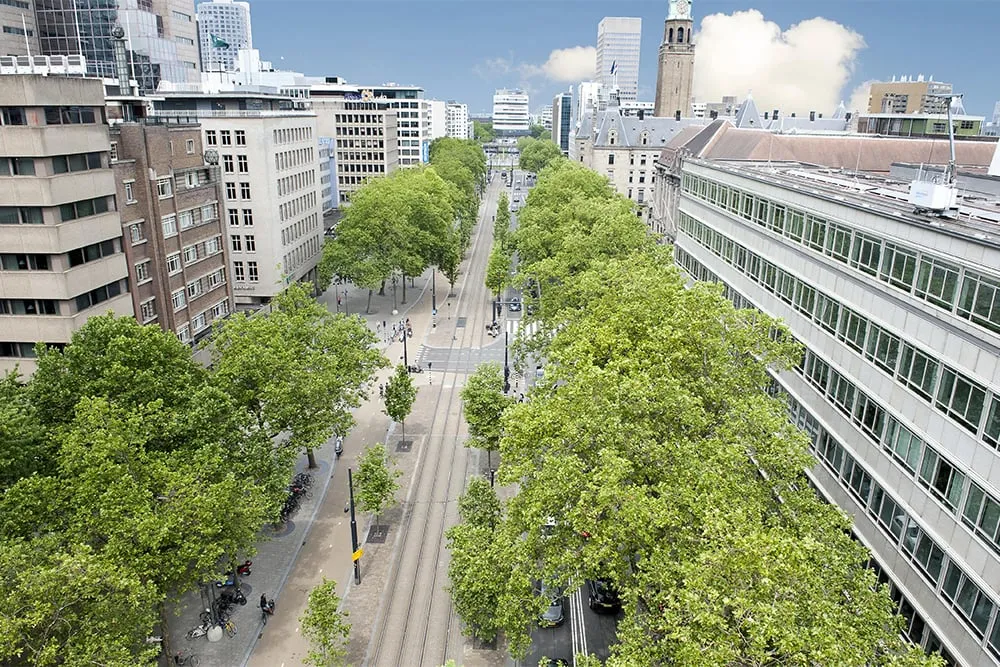
In the past, planting a tree was fairly straightforward. You dug a hole, planted a tree and then filled the hole with local soil. If we want trees to live longer, something needs to change, says Bert van Gils, product consultant at GreenMax and TreeBuilders. “We have designed a solution in the form of a compromise between the city and the forest.”
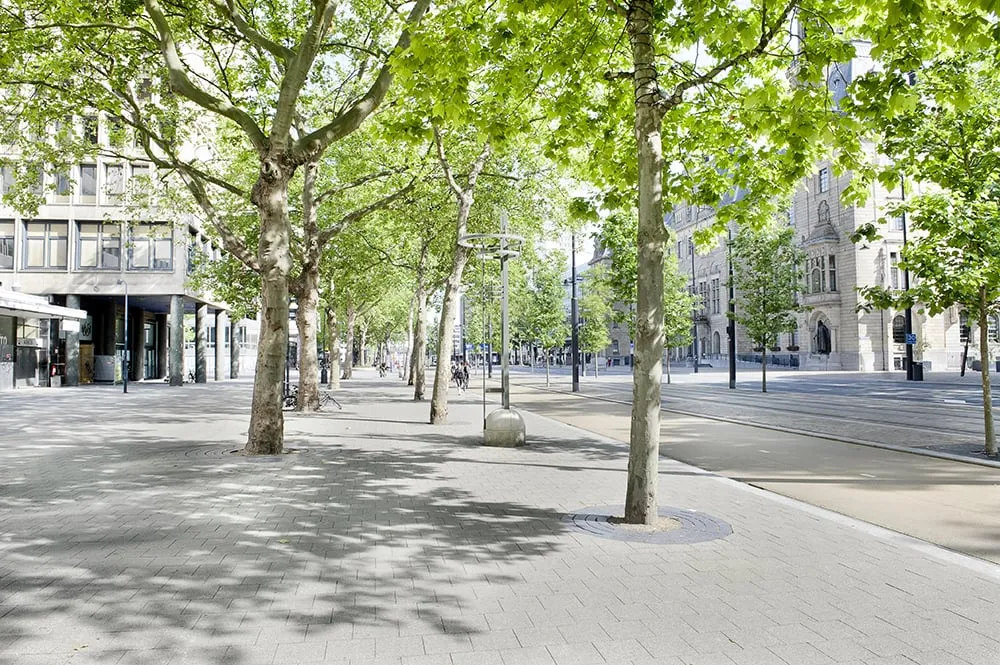
Planting trees in cities has a great many benefits. They support biodiversity, provide shade and absorb CO2 and particulate matter. But before you can enjoy these benefits, the tree needs to be planted properly. And that can be a challenge in a city. Van Gils says: “Ultimately, a tree belongs in the forest. There, you have rich soil, with leaves that decompose and create new nutrients. You don’t have that in the city.”
There is also the risk that the roots of mature trees will damage infrastructure. “Mature trees are strong enough to break up pavements and other hard surfaces, or damage pipes and sewers. Naturally, you want to prevent that.”
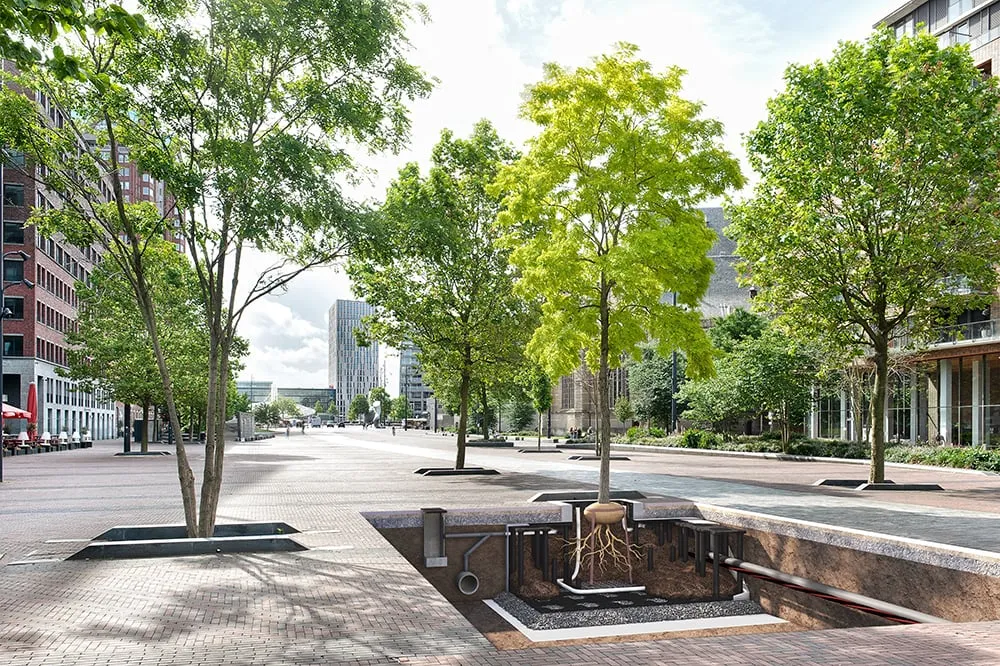
A bunker for the tree
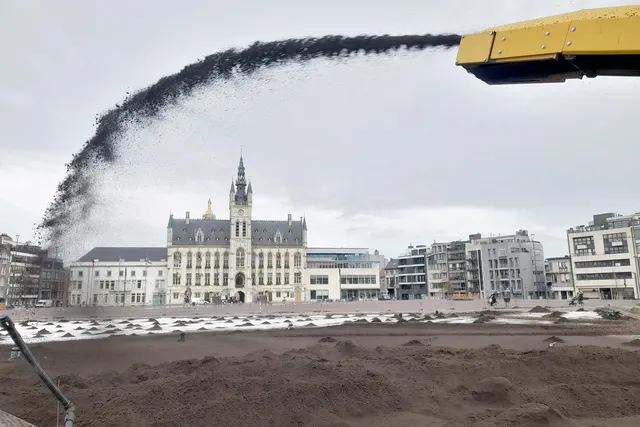
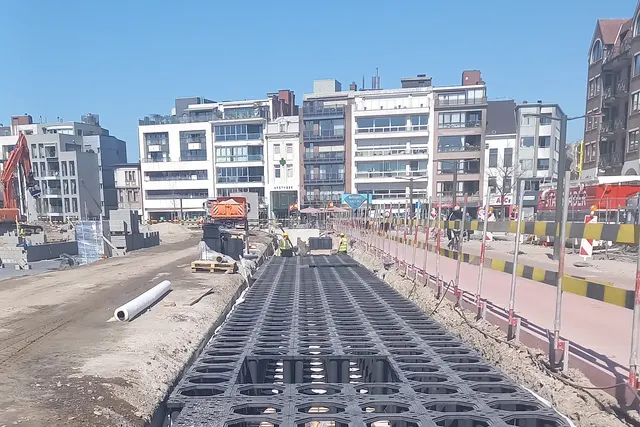
TreeBuilders has specialised in tree bunker systems for twenty years. “It is a structure made up of piles with a platform on top, which creates underground space for the tree roots. The materials we use mean the bunker can withstand a pressure of 70 tonnes per square metre. We fill the bunker with high-quality soil. Not tree sand or tree soil aggregate, but soil for trees. This soil provides much more room for root growth, as well as for the biological ecosystem you would normally find in a forest.”
The result? It speaks for itself, according to Van Gils. “Some of that soil for trees is made up of humus, which acts like a sponge. This allows it to capture much more water. Thanks to this natural cycle in the soil, trees also live much longer. We expect them to reach 60 to 80 years of age, but they could live much longer. Only time will tell.”
The great thing about the tree bunker is that it can also be combined with water storage. “Think of those heavy downpours in summer. The 10 to 12 millilitres of rainwater would normally flow into the sewer, but it can just as easily go into the tree bunker. The tree will be very happy to have it when the temperature suddenly reaches 30 degrees again a few days later. It seems like a great win-win situation to me.”
The company also supplies a potato-based polymer that enables soil to retain forty times as much water. “In a tree’s early years, this can make all the difference, because it ensures that water is always available in sufficient quantities.”
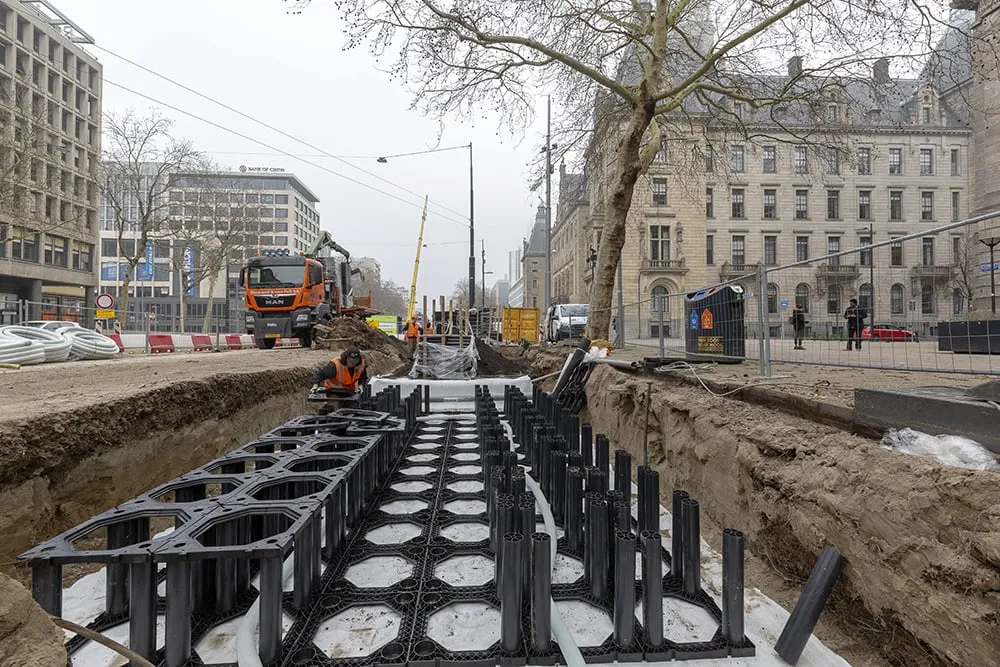
Essential
The need to plant trees is becoming increasingly clear, says Van Gils. “Municipalities now understand that planting trees really does make cities more liveable. It is also great that the trees we plant promote our work for us. They grow much faster than trees in other soils. You don’t have to be a tree expert to see that a tree looks much better in soil that supports its growth.”
Question about this story? Ask your question
Keep following this
Get an email when a new story is published. No account needed.
- SubjectPublic green spaces